
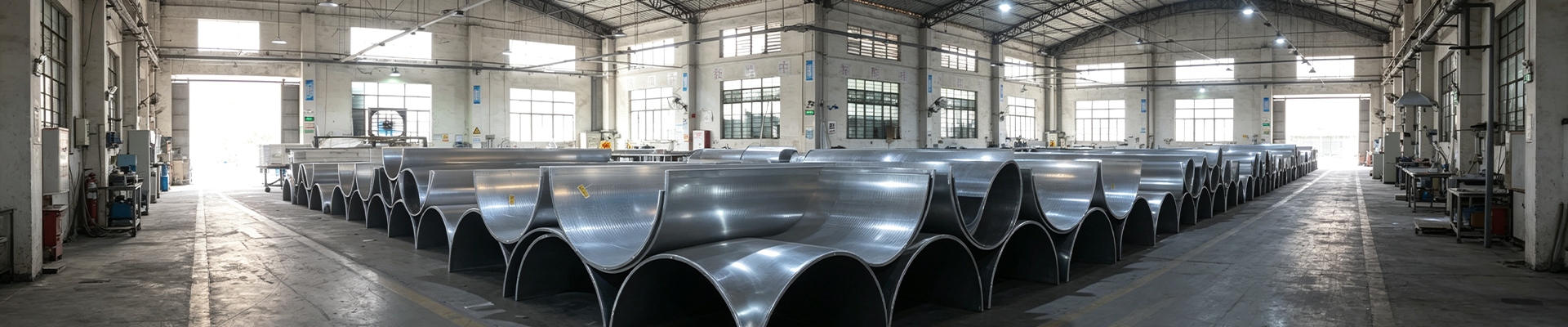
Aluminum Honeycomb Composite Panel
1. Product Overview
Derived from composite honeycomb panel technology originally developed for the aviation industry, an aluminum honeycomb composite panel uses a conventional sandwich structure. It consists of a face sheet, a back sheet and an aluminum honeycomb core between them, bonded together using precision processes at high temperature and pressure.
The honeycomb core features a specially fabricated hexagonal aluminum honeycomb structure. As the load-bearing core of the sandwich structure, it bears pressure in the tangential direction. Dense and interlocked honeycomb cells act like evenly distributed small I-beams, uniformly dispersing loads from the core across the entire panel. It effectively transfers pressure applied on the face sheet to achieve uniform stress distribution and minimize shear stress. This structure gives the panel superior overall stability, bending resistance and compressive performance. It resists deformation and delivers excellent flatness, maintaining exceptional surface flatness over a long service life even for large-format panels.
With vibrant coating finishes and excellent machinability, this product has become a mainstream material in architectural decoration. Comprehensive customization options are available. Different face sheet thicknesses and honeycomb core specifications can be selected according to project requirements, with a wide range of options for panel shape, dimensions, coating finish and color.
2. Panel Construction
The aluminum honeycomb composite panel consists of five bonded layers, listed from the face sheet to the back sheet:
| Structural Layer | Material Name | Primary Function |
|---|---|---|
| Top Layer | Aluminum Alloy Face Sheet | Provides a decorative finish, impact resistance and weather protection |
| Upper Bonding Layer | Structural Adhesive | Provides high-strength bonding between face sheet and honeycomb core |
| Core Layer | Aluminum Honeycomb Core | Distributes panel stress, improves overall rigidity and significantly reduces self-weight |
| Lower Bonding Layer | Structural Adhesive | Provides high-strength bonding between back sheet and honeycomb core |
| Bottom Layer | Aluminum Alloy Back Sheet | Seals the core structure and guarantees overall panel stability |
3. Main Materials
- Face Sheet and Back Sheet: Both face and back sheets are made of 3003 aluminum alloy. This grade uses manganese as the primary alloying element and features excellent formability, strong corrosion resistance and high compressive strength. It also has good weldability and electrical conductivity, ensuring panel flatness and overall mechanical performance.
- Honeycomb Core Material: The honeycomb core is pressed from corrosion-resistant 3003 aluminum alloy foil. It provides consistent performance in both indoor and outdoor applications, featuring high structural strength and long-term corrosion resistance.
- Adhesive Material: A two-component polyurethane structural adhesive is used, capable of withstanding high compressive and shear loads. After an aging test lasting 500 hours at 95%–100% relative humidity and 76°C, followed by a 4-day rest period, the strength retention exceeds 70%. This ensures the panel remains free from deformation, delamination and debonding under extreme temperature and humidity conditions.
- Surface Coating: Panel surfaces can be treated with coil coating (a precoating process with a baked finish) or pure polyester electrostatic powder coating. Highly weather-resistant fluorocarbon paint (fluorocarbon resin content ≥70%), widely recognized in the construction industry for superior weather resistance, is also available. It delivers outstanding resistance to weathering, corrosion, UV radiation and contamination. The color and gloss remain bright and long-lasting, maintaining a like-new surface appearance over time.
4. Standard Product Specifications
| Total Thickness (mm) | Face Sheet Thickness (mm) | Back Sheet Thickness (mm) | Mass per Unit Area (kg/m²) | Honeycomb Core Foil Thickness (mm) |
|---|---|---|---|---|
| 6 | 0.7 | 0.5 | 4.9 | 0.06 |
| 8 | 0.8 | 0.5 | 5.1 | 0.06 |
| 10 | 0.8 | 0.5 | 5.3 | 0.06 |
| 15 | 1.0 | 0.7 | 7.0 | 0.06 |
| 20 | 1.0 | 0.7 | 7.4 | 0.06 |
| 25 | 1.0 | 0.7 | 7.8 |
0.06 |
In addition to these standard specifications, customized design and manufacturing are available to meet specific project requirements for different applications.
5. Key Technical Specifications
5.1 Mechanical Properties
| Property | Value |
|---|---|
| Moment of Inertia (cm⁴/m) | 19.85 ~ 31.67 |
| Section Modulus (cm³/m) | 19 ~ 24 |
| Composite Panel Stiffness (kN·cm²/m) | 139000 ~ 2217000 |
| Elastic Modulus of AA 5754A Al-Mg Alloy Face Sheet (N/mm²) | 70000 |
| Tensile Strength of Face Sheet (N/mm²) | Rm ≥ 220 |
| 0.2% Proof Stress (N/mm²) | Rp0.2 ≥ 130 |
| Elongation (EN485-2:1994) A50 | ≥ 8 |
| Linear Thermal Expansion of Aluminum | 2.4 mm/m (at 100°C temperature difference) |
5.2 Surface Coating Performance
| Property | Value |
|---|---|
| Coating Type | Fluorocarbon Coating / Baked Finish |
| Initial Gloss | 30% ~ 40% |
| Pencil Hardness | HB ~ F |
5.3 Acoustic Performance
| Property | Value |
|---|---|
| Airborne Sound Insulation Index | 23 ~ 25 dB (compliant with international sound insulation standards) |
| Normal Sound Absorption Coefficient | 0.05 |
| Noise Reduction Coefficient of Acoustic Panel | ≥ 0.7 (perforated structure + imported fire-resistant sound-absorbing paper) |
Acoustic panel construction: Both face and back sheets are perforated, and imported fire-resistant sound-absorbing paper is attached to the back sheet to achieve efficient noise reduction and sound absorption.
5.4 Thermal Performance
| Property | Value |
|---|---|
| Thermal Conductivity (W/m·K) | 2.25 ~ 2.7 |
| Thermal Resistance (m²·K/W) | 0.0089 ~ 0.0093 |
| Heat Transfer Coefficient (W/m²·K) | 5.575 ~ 5.59 |
The thermal conductivity of composite panels is related to total thickness; parameters vary slightly with different panel thicknesses.
5.5 Honeycomb Core Parameters
| Property | Value |
|---|---|
| Honeycomb Cell Size | 6.3 mm |
| Core Density | approx. 80 kg/m³ |