Product Overview
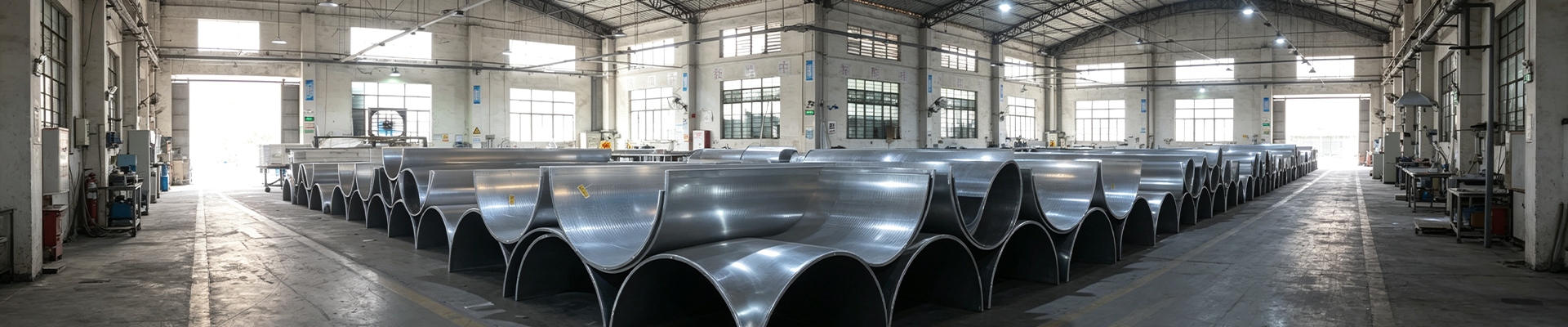
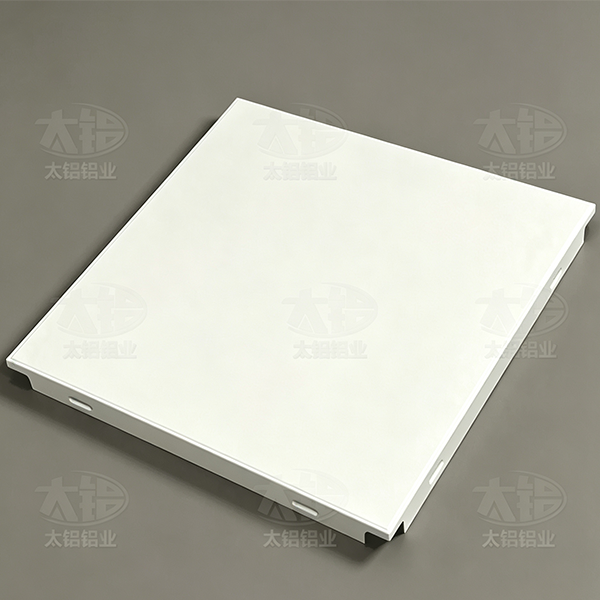
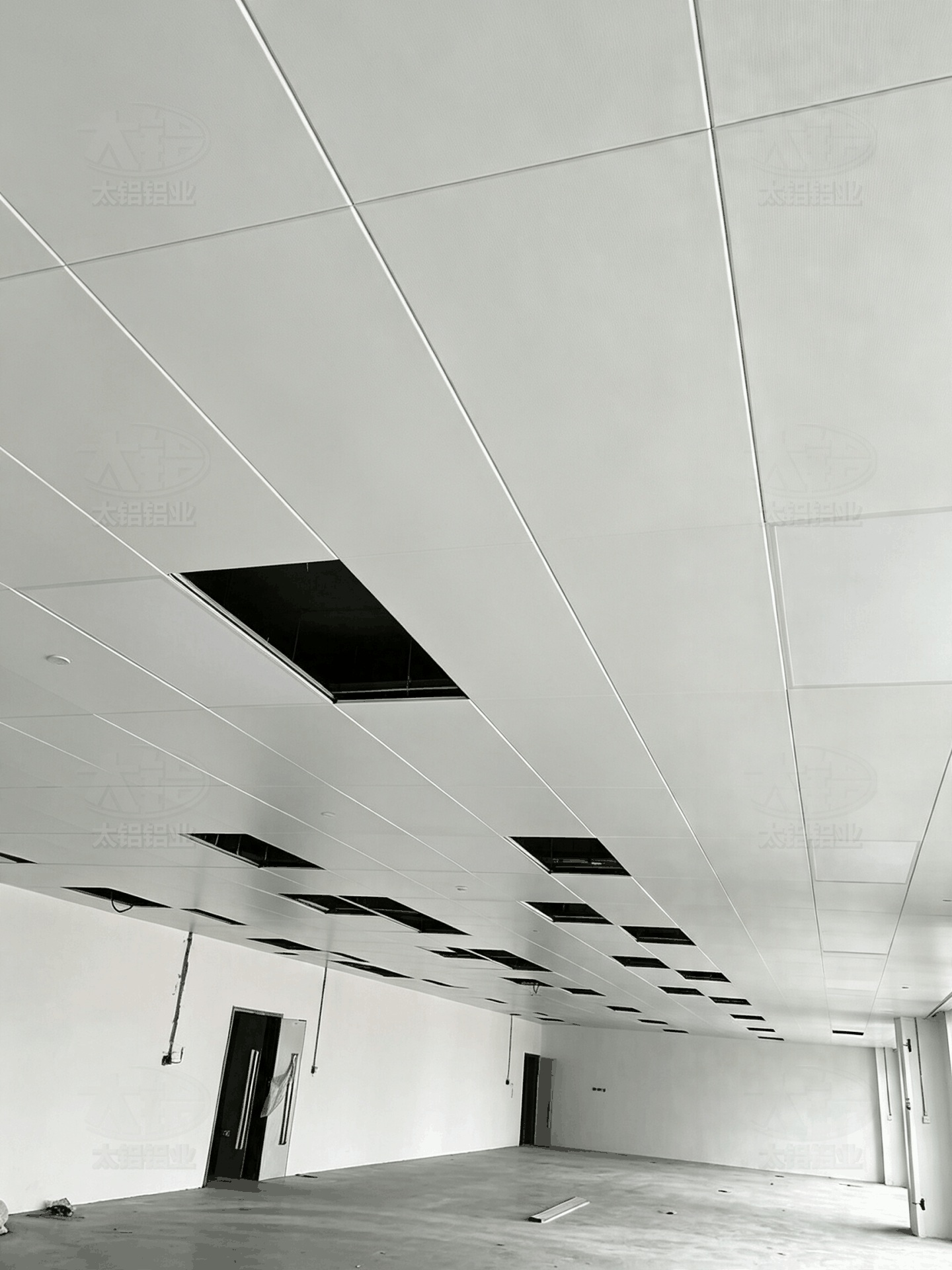
Aluminum ceiling panels are modular decorative ceiling panels made from aluminum alloy sheets as the base material. After cutting, bending and stamping, the panels receive surface treatments such as spray coating, roll coating, film lamination and anodizing. They are the most widely used metal decorative materials for residential interiors and ceiling applications in construction projects. The aluminum ceiling panels produced by Guangzhou Tailv Aluminum Co., Ltd. strictly comply with both GB/T 23443-2024 "Aluminum Single Panels for Building Decoration" and GB/T 34454-2017 "Building Metal and Metal Composite Ceiling Panels". They use primary aluminum-magnesium/aluminum-manganese alloy base materials and are produced through an automated process. Their key benefits include low weight, high strength, waterproof and fireproof properties, and easy maintenance. They can be combined with the same series of solid aluminum panels and aluminum baffle ceilings to create a consistent interior style, and are widely used in residential, commercial and public building ceiling projects in Guangzhou and southern China.
Key Benefits
1. Waterproof & Fireproof, Suitable for Multiple Applications
The metal base material meets Class A non-combustibility requirements, fully addressing the limitations of flammable PVC panels and moisture-sensitive gypsum boards. It is waterproof, moisture-proof and rust-free, suitable for sustained use in humid and oily environments such as kitchens, bathrooms and balconies. It can also be used in factory buildings, equipment rooms and other construction projects with fire protection requirements.
2. Stain Resistant & Easy to Clean, Ultra-Low Maintenance Costs
The dense surface coating is smooth and stain-resistant. Kitchen grease and condensation in bathrooms can be directly wiped clean with a soft cloth, without stain penetration or yellowing. Unlike gypsum boards and PVC panels that require regular replacement or repainting, daily maintenance costs are nearly zero.
3. Stable Structure, No Deformation for Long-term Use
The primary aluminum-magnesium / aluminum-manganese alloy substrate features excellent toughness and high strength. Installed with a standard ceiling suspension system, it will not sag, deform or warp during long-term service. The panel is stress-relieved, free from arching and cracking under temperature fluctuations. Its normal indoor service life can reach 15–20 years.
4. Modular Installation, Convenient & Fast Maintenance
Standard clip-in / hook-on installation enables efficient dry construction. Two workers can install 100 m² of ceiling in one day. Individual panels can be removed independently without damaging the whole ceiling, facilitating later inspection of above-ceiling pipework and replacement of electrical equipment.
5. Eco-friendly & Safe, Ready for Occupancy Right After Installation
The all-aluminum substrate emits no formaldehyde or VOCs. Its surface treatment meets indoor environmental standards. The space is usable immediately after installation with no need for ventilation to remove odors, ideal for homes, hospitals, schools and other sites with strict environmental requirements. The product is 100% recyclable, complying with green building specifications.
6. Versatile Style, Suitable for All Applications
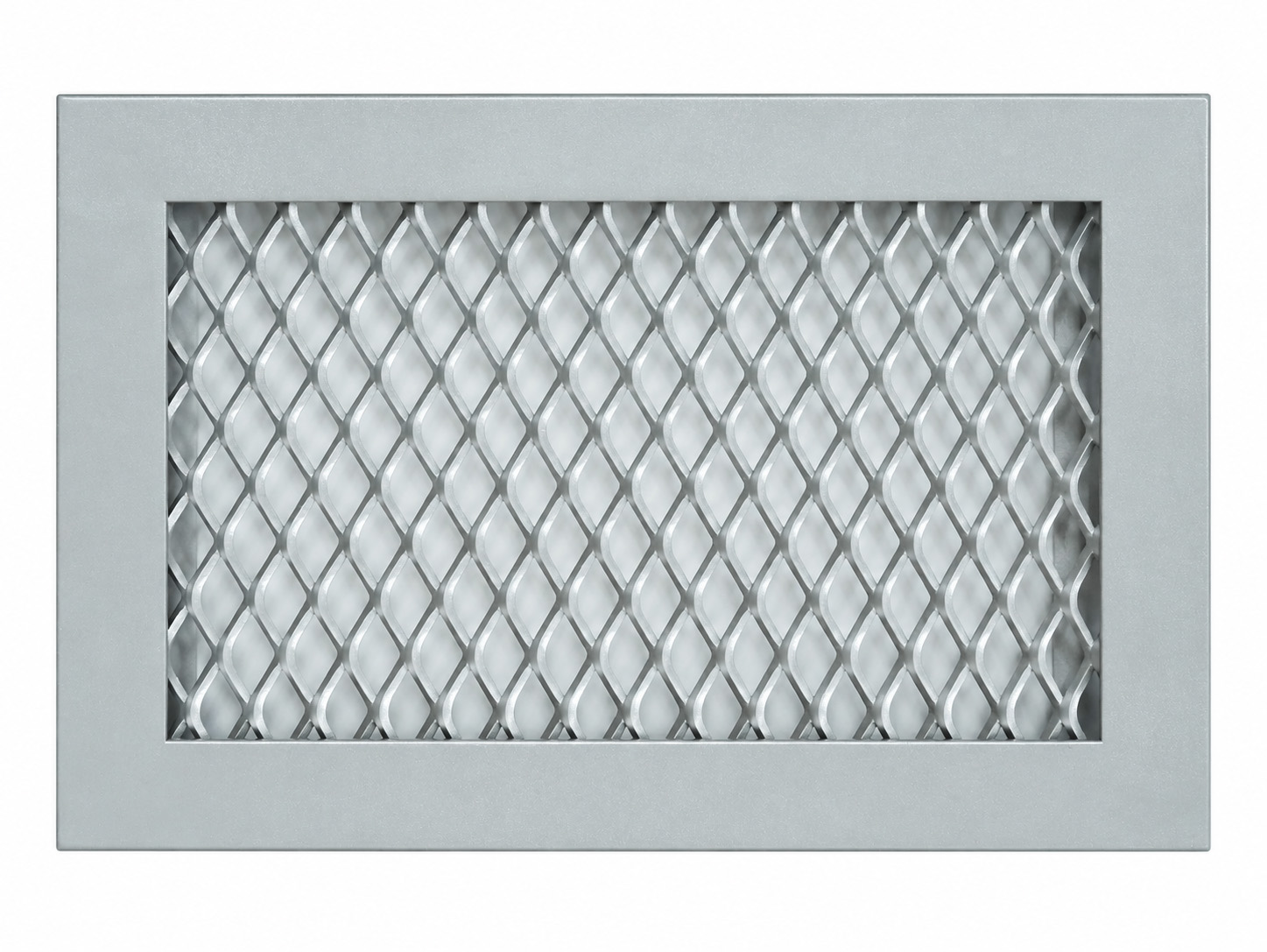
A wide range of surface finishes, colors and specifications is available, including solid colors, wood-grain finishes, perforations, custom shapes and other decorative effects. It matches various decoration styles including modern minimalist, understated luxury, industrial and contemporary Chinese. It can meet demands ranging from home kitchen & bathroom ceilings to large public building ceiling projects.
Product Classification & Selection Guide
1. Classification by Surface Finish
- Roll-coated aluminum ceiling panel: Uses an imported coating applied by rollers and subsequently cured. Features strong coating adhesion, scratch & abrasion resistance, excellent resistance to oil stains, no color difference and no yellowing. It delivers the best value for money and is the preferred finish for kitchens and bathrooms in residential projects.
- Film-laminated aluminum ceiling panel: Laminated with a PVC decorative film on the surface. It offers a wide range of patterns at an affordable price, but has limited resistance to high temperatures. Suitable for dry areas such as balconies and corridors. Not recommended for long-term use in high-temperature kitchen environments.
- Powder-coated aluminum ceiling panel: Finished with a polyester powder coating. Wide range of color options at low cost, widely used for cost-sensitive commercial projects such as factory buildings and underground parking garages.
- Anodized aluminum ceiling panel: Surface treated by anodizing. Coating-free, high hardness, scratch & wear resistant, strong metallic texture, non-peeling and non-fading. It is a premium option for residential interiors and is recommended if budget permits.
- Fluorocarbon-coated aluminum ceiling panel: Finished with a fluorocarbon coating. Outstanding weatherability and corrosion resistance, suitable for ceiling applications on balconies, outdoor canopies and semi-open spaces.
2. Classification by Functional Properties
- Standard decorative panels: Solid color panel, suitable for dry spaces without special functional requirements such as corridors, offices and living rooms.
- Oil-stain-resistant panels: A nanoscale oil-repellent surface coating repels grease and can be wiped clean in one swipe. Specially designed for grease-prone environments such as kitchens and restaurants.
- Antibacterial panels: Antibacterial ions are incorporated into the coating, inhibiting ≥99% of common bacteria. Suitable for places requiring high cleanliness, including hospitals, schools and food factories.
- Perforated acoustic panels: Uniform microperforations are stamped into the panel, with sound-absorbing material and non-woven fabric attached to the back. Noise reduction coefficient (NRC) ≥ 0.6. Ideal for acoustically demanding spaces like equipment rooms, cinemas and meeting rooms.
- Wind- and shock-resistant panels: A hook-on structure securely connects each panel to its supporting carrier. Strong wind uplift resistance, applicable for high-wind and vibration scenarios such as metro stations, airports and factories.
3. Classification by Installation Method
- Clip-in integrated ceiling system: Installed on triangular carriers to form tight, seamless joints. Fits small-size panels 300 × 300, 300 × 600 for residential use, compatible with lighting, bathroom heater and other electrical modules.
- Exposed-grid system with tegular-edge panels: Mounted on an exposed T-bar grid. Easy installation and convenient maintenance. The most common installation solution for 600 × 600 commercial panels, widely used in offices, factories and schools.
- Concealed-grid flush ceiling system: Concealed suspension system. Seamless flat surface after installation with no visible grid members, delivering high aesthetic performance. Suitable for high-end sites such as shopping malls and hotels.
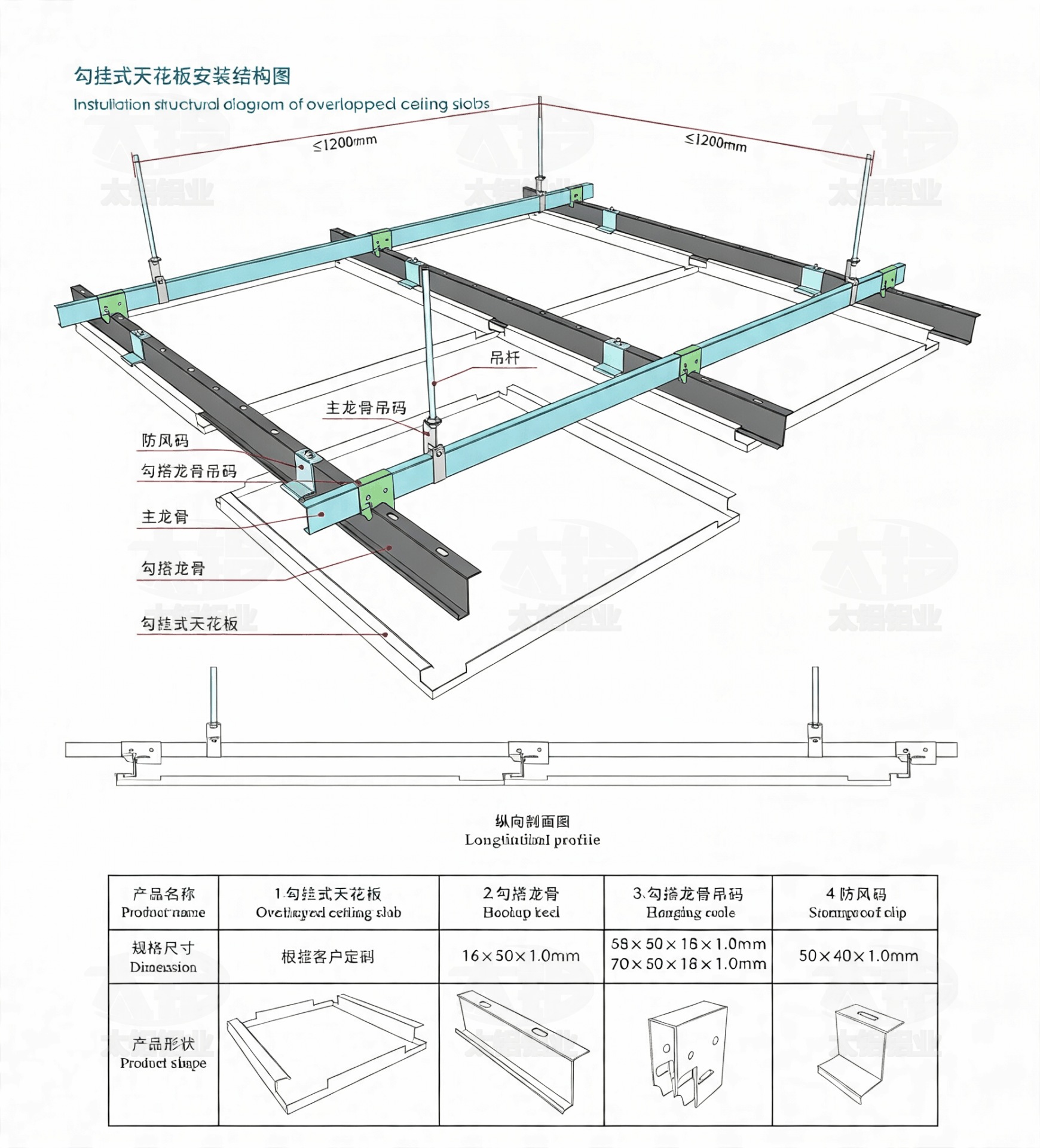
- Hook-on system: Panels lock onto suspension rails using a hook-on connection. Robust structure and good sealing performance, suitable for large-size panels and public spaces requiring high wind resistance.
4. Selection Recommendations
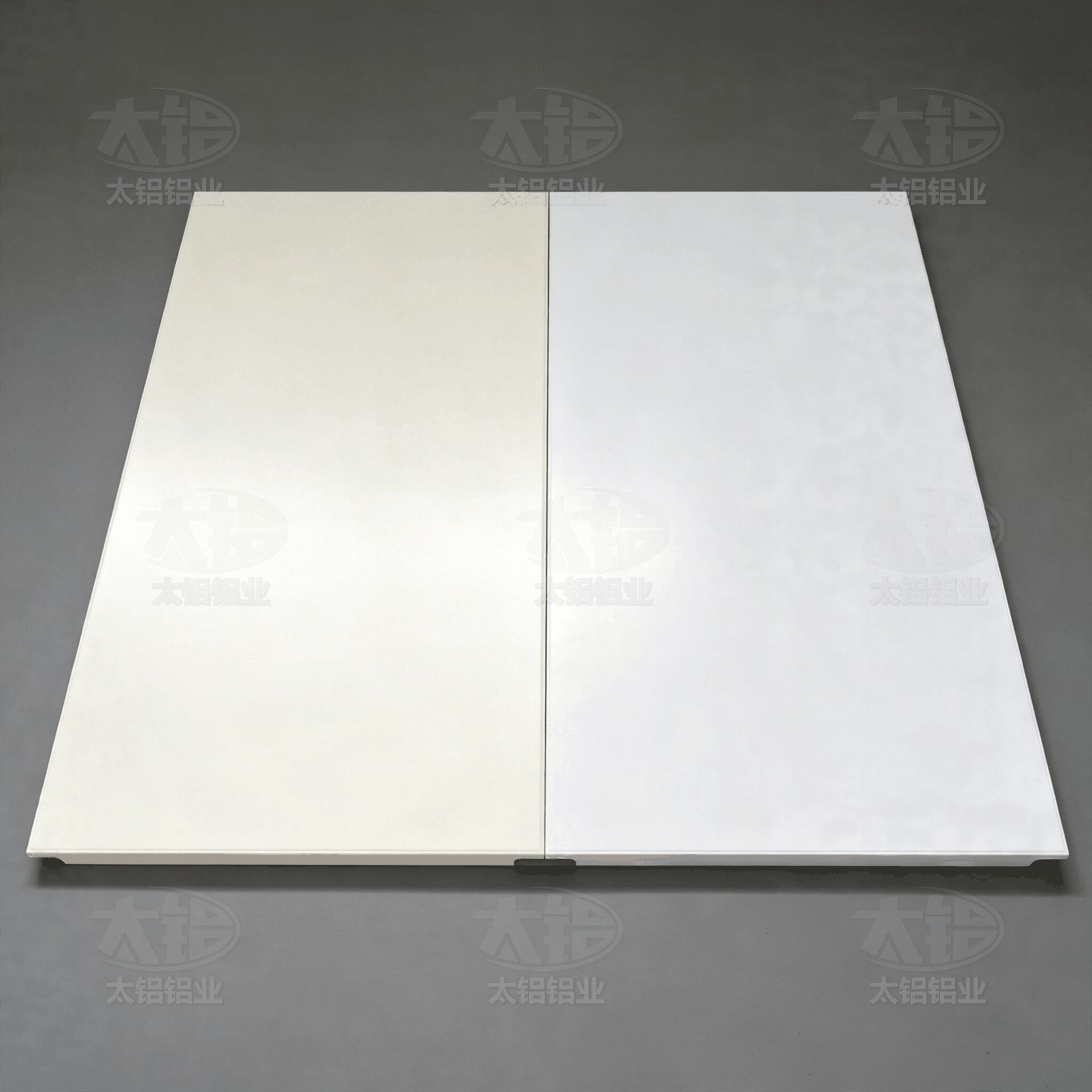
- Residential Kitchen & Bathroom: Prioritize 0.6–0.7 mm roll-coated oil-resistant panels. Choose 300 × 300 mm for small areas, and 300 × 600 mm for large or open kitchens & bathrooms.
- Office / School / Factory: 0.8–1.0 mm, 600 × 600 mm matte white exposed-frame commercial panels. Excellent cost efficiency and fast installation.
- Hospital / Food Processing Facility: 0.8–1.0 mm antibacterial panels to meet sanitary requirements.
- Equipment Room / Cinema / Meeting Room: Perforated sound-absorbing panels for decoration and noise reduction.
- Balcony / Semi-outdoor Space: Fluorocarbon-coated panels of ≥1.0 mm for superior weathering and resistance to aging.
5. Installation System Composition
Aluminum ceiling systems fall into two categories according to their application. Guangzhou Tailv Aluminum Co., Ltd. can supply all matching accessories.
- Residential Integrated Ceiling System: Expansion bolts + fully threaded suspension rods + light-gauge steel main runners + triangular carriers + aluminum panels + edge trim + matching electrical modules. The finished surface is flat with minimal gaps, directly compatible with lighting, bathroom heater and ventilation modules of the same size.
- Commercial Ceiling System: Expansion bolts + suspension rods + main runners + T-section cross tees (exposed frame) / hook-on carriers (concealed frame) + aluminum panels + edge trim. Large-scale projects can add access panels for convenient future maintenance of above-ceiling services.
6. Applications
- Residential Spaces: Ceilings for kitchens, bathrooms, balconies, entryways and corridors
- Commercial Spaces: Ceilings for shopping malls, supermarkets, hotels, restaurants, retail stores and offices
- Public Buildings: Ceilings for schools, hospitals, metro stations, airports, exhibition halls and gymnasiums
- Industrial Spaces: Ceilings for factories, equipment rooms, warehouses and underground parking garages
- Special Applications: Ceilings for semi-outdoor spaces including open balconies, rain canopies and equipment rooms
FAQs
1. What are the differences between aluminum ceiling panels, PVC panels and gypsum board ceilings?
A: The core differences lie in performance, service life and suitable applications:
- Aluminum ceiling panel: A metal panel that is waterproof, fireproof, mildew-proof and deformation-resistant, with a Class A reaction-to-fire classification. It is easy to clean and can be removed for maintenance. Suitable for most scenarios including kitchens, bathrooms and construction projects, with a service life of 15–20 years.
- PVC panel: Plastic material, low price yet prone to aging and yellowing, low fire rating, and may release harmful substances under high temperature. Only fit for temporary low-budget renovation.
- Gypsum board: Excellent design flexibility and sound insulation, but vulnerable to water and dampness, non-demountable and troublesome for repairs. Better for decorative ceilings in dry spaces such as living rooms and bedrooms.
2. Is an integrated ceiling the same as an aluminum ceiling panel?
A: No, they are different concepts. An aluminum ceiling panel is the base panel material used in a ceiling. An integrated ceiling uses aluminum panels as the base, integrating electrical modules (lighting, ventilation, heating, cooling fans) with panels into one ceiling system, combining functionality and decoration. It is the mainstream solution for residential kitchens and bathrooms.
3. Does a thicker aluminum ceiling panel always mean better quality?
A: Not necessarily. 0.5–0.7 mm thickness fully meets residential requirements. Excessively thick panels only raise costs. Some dishonest suppliers use recycled aluminum to produce thicker panels; such panels contain many impurities with poor toughness and deform easily. The key selection criteria are primary aluminum substrate, panel flatness and surface finish, not merely thickness.
4. What size of aluminum ceiling panel is suitable for home use?
A: Select according to the size of the space:
- Small kitchen & bathroom of 4–6 m²: 300 × 300 mm. Flexible installation, low material waste and better coordination with electrical modules.
- Large kitchen & bathroom over 6 m² / open kitchen: 300 × 600 mm. Strong visual extension for a more minimalist and elegant look.
- Balconies and corridors: Both sizes are available, matched with the overall decoration style.
5. How do I choose between film lamination, roll coating and anodizing finishes?
A: Select based on the application and budget:
- Limited budget, dry areas (balconies, corridors): Film-laminated panels for excellent value for money.
- Preferred for home kitchens & bathrooms: Roll-coated oil-resistant panels, scratch & stain resistant, non-yellowing and best value for money.
- Sufficient budget, premium quality: Anodized aluminum panels, higher hardness, non-peeling, premium texture and longer service life.
6. How can I assess the quality of aluminum ceiling panels?
A: Simple inspection method: Look, Feel & Bend
- Look: Flat panel free of scratches, color difference and particles; uniform anti-corrosion coating on the back with a stamped brand mark.
- Feel: A smooth, fine-textured surface; a straight panel with no warped edges; and neat, burr-free corners.
- Bend: Gently bend the panel corner. Premium primary aluminum features good toughness and rebounds with no obvious creases after release. Recycled aluminum is brittle and tends to crack or leave permanent creases after bending.
7. What is the price per square meter of a 600 × 600 mm commercial aluminum ceiling panel?
A: A standard 0.8 mm matte white commercial panel: material cost approx. USD 5–8 /m²; turnkey installation approx. USD 12–18 /m². Prices rise with thicker gauge and additional features (sound absorption, antibacterial, fluorocarbon coating). Final price is calculated based on project quantity, thickness and technical requirements. Volume orders enjoy project discounts.
8. How much clearance is needed above an aluminum panel ceiling?
A: 8–10 cm clearance for ordinary flat ceilings. If installing bathroom heaters, fresh air systems, duct fans or other equipment, reserve 15–25 cm according to equipment thickness. Subject to the actual dimensions of selected devices.
9. How do I remove heavy kitchen grease from aluminum ceiling panels?
A: Remove everyday dust with a dry cloth. For heavy grease, dilute neutral detergent with water, wipe gently with a soft cloth and then wipe again with a damp cloth. Do not use steel wool, strong acid or strong alkaline cleaners, to avoid scratching or corroding the surface coating.
10. Will aluminum ceiling panels deform or sag?
A: Qualified products installed properly will not deform or sag. Deformation usually arises from three causes: insufficient panel thickness / recycled aluminum; excessive suspension-grid spacing and uneven installation; long-term close exposure to high temperature from bathroom heaters. Choose genuine products and professional installation teams to fully avoid this issue.
11. Do you stock standard sizes? How long is the lead time for custom orders?
A: Our warehouse in Panyu, Guangzhou stocks 0.6–1.0 mm matte white, silver gray and other standard specifications for immediate shipment. Custom colors, special sizes and functional panels take 3–7 days for production. Delivery is available within the Pearl River Delta region.
12. Can a single damaged aluminum ceiling panel be replaced?
A: Yes. Aluminum panels use a modular installation system. Use a suction cup to remove the damaged panel and replace it directly with a new panel of the same specification. There is no need to dismantle the entire ceiling, making replacement straightforward and keeping maintenance costs low.