Product Overview
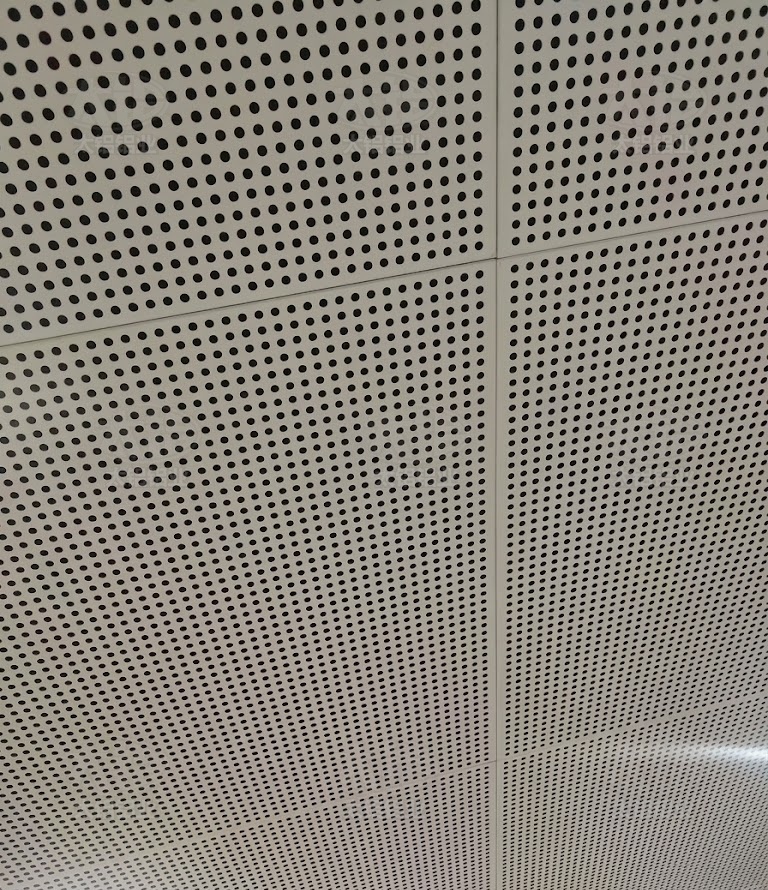
Perforated aluminum buckle panels (also known as perforated aluminum buckle panels or sound-absorbing aluminum buckle panels) are functional aluminum buckle panels with regular hole shapes processed through CNC stamping technology based on aluminum alloy substrates. They combine decorative value, acoustic adjustment, and basic protection capabilities, and are widely used in ceiling and wall decoration in public buildings, functional computer rooms, and commercial spaces in Guangzhou and South China.
Core Advantage
1. Adjustable acoustic structure for efficient noise reduction and absorption
By pairing the rear acoustic cotton with the top cavity, a resonant sound-absorbing structure is formed. By adjusting the aperture, perforation rate, and thickness of the acoustic cotton, it precisely adapts to the reverberation control needs of different spaces, effectively reducing ambient noise and improving the acoustic environment.
2. Stable base material performance, safe and durable
Inheriting the core characteristics of Class A fireproof, moisture-proof, corrosion-resistant, and rust-resistant aluminum alloy substrates, it emits no formaldehyde and can adapt to complex scenarios with humidity, dusty environments, and high heat dissipation requirements. Its service life is much longer than traditional ceiling materials such as mineral wool board and gypsum board.
3. Rich perforation craftsmanship, strong decorative adaptability
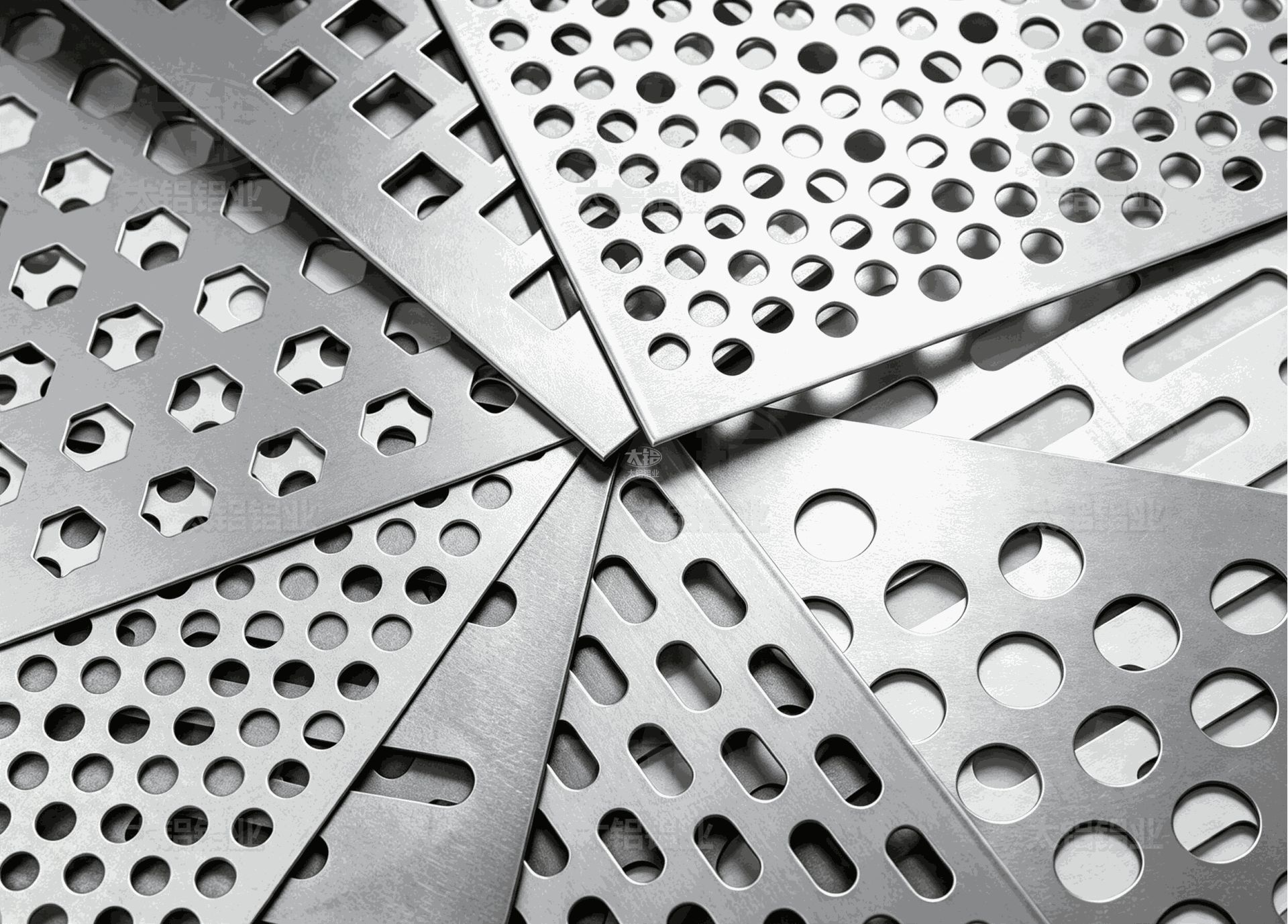
Supports various standard hole shapes such as round holes, square holes, long strip holes, and plum blossom holes, and can also be customized with artistic patterns, brand logos, and gradient punching effects. The surface can be treated with polyester bake paint, fluorocarbon spraying, wood grain transfer printing, lamination, and other treatments to suit various decoration styles.
4. Ventilation, breathability, and heat dissipation, adapting to equipment space
The perforated structure offers excellent air circulation, allowing concealment of top piping equipment while ensuring air circulation up and down the space, assisting equipment heat dissipation, especially suitable for equipment densities and continuous cooling in machine rooms, power distribution rooms, and other scenarios.
5. Modular installation for easy inspection and maintenance
Uses a standardized snap-and-bolt/keel installation system, allowing individual panels to be detached independently without damaging the overall ceiling structure, facilitating later pipeline maintenance and equipment overhaul, and significantly reducing subsequent operation and maintenance costs.
Product Classification & Selection Guide
1.Classified by hole type
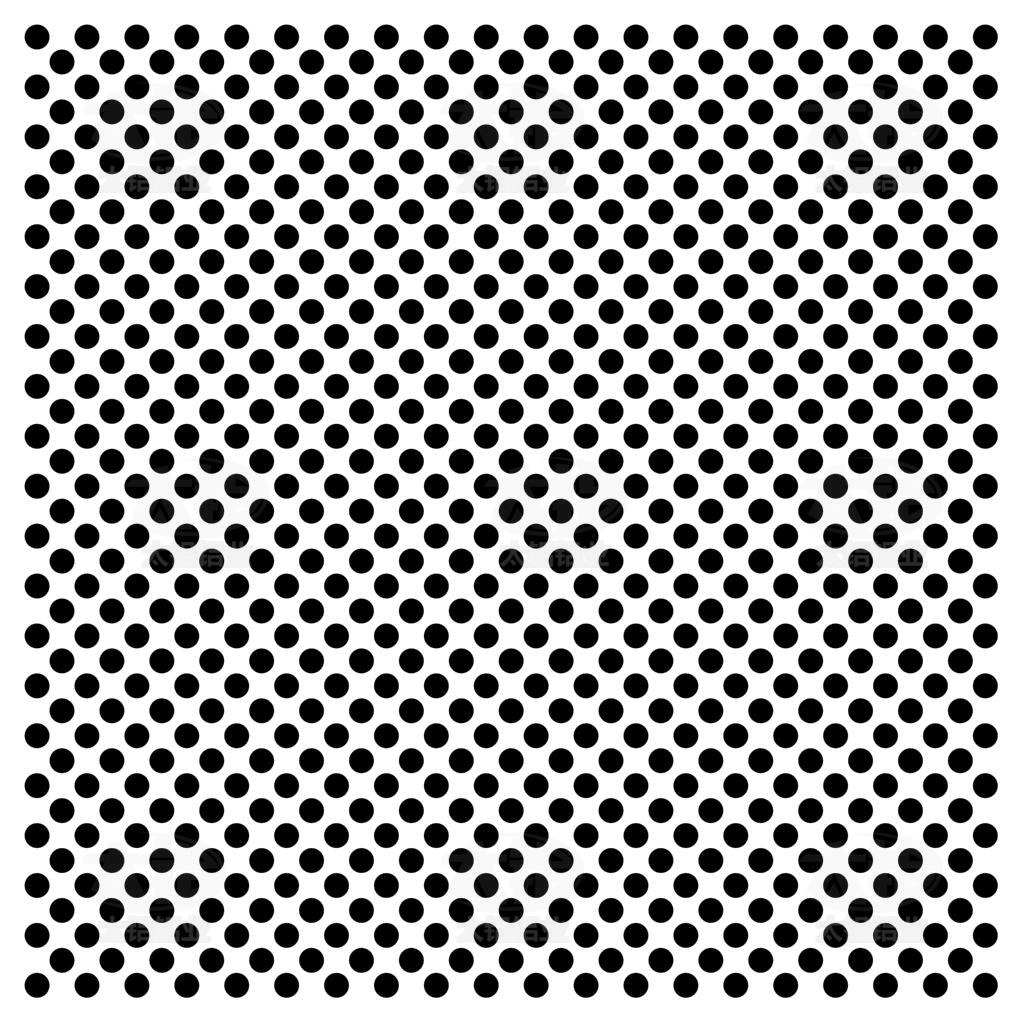
- Round Hole Perforated Plate: The most versatile category, featuring uniform hole diameter, mature production technology, and moderate cost, suitable for most public and commercial scenarios.
- Long Holes/Square Panels: Stronger lines, styles leaning towards industrial and minimalist styles, commonly used in corridors, open office areas, and similar spaces.
- Custom Artistic Punching: Can stamp brand logos, artistic patterns, and gradient hole spacing according to design requirements, commonly used in showrooms, brand stores, and special public spaces.
2.Classified by perforation rate
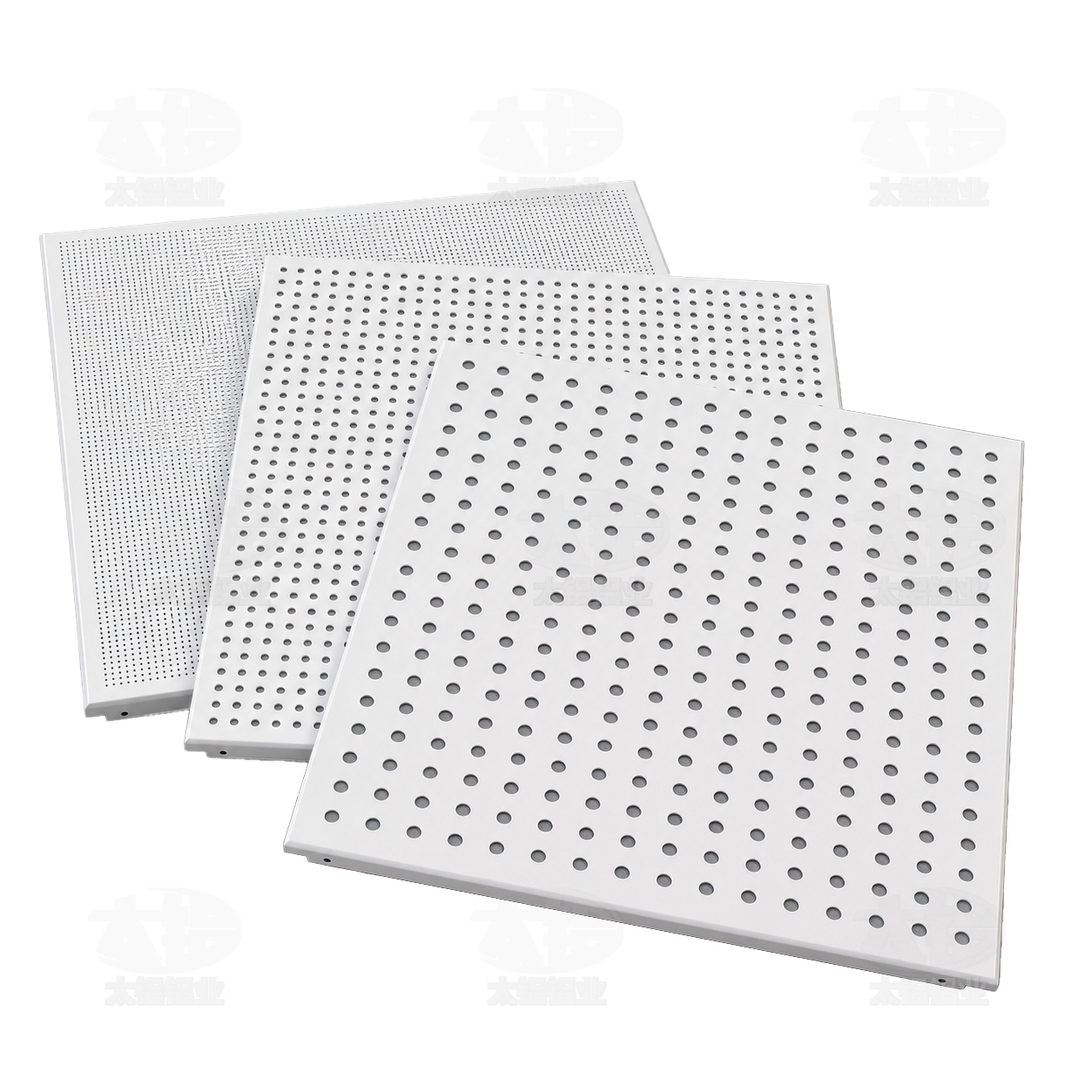
- Low perforation rate (≤10%): mainly for decorative purposes, slightly improving the acoustic environment, suitable for ordinary spaces with low sound absorption requirements.
- Medium perforation rate (10%-20%): Balancing decoration and sound absorption, this is the most commonly used range for engineering projects, suitable for offices, shopping malls, hospitals, and other scenarios.
- High perforation rate (≥20%): Focused on acoustic functionality, often paired with thick sound-absorbing cotton, used in professional settings with high noise reduction requirements, such as studios, conference rooms, and stadiums.
3.Classified by functional structure
- Plain perforated board: only stamped perforated type, no additional sound-absorbing material, mostly used for decoration, ventilation, and heat dissipation.
- Composite acoustic panel: The back is covered with non-woven fabric or fiberglass acoustic cotton. The finished product has direct sound absorption capabilities, easy installation, and stable acoustic performance.
4.Perforated aluminum buckle plate installation system
The standard ceiling system consists of hangers, main keels, triangular keels (or T-shaped exposed frame keels), perforated aluminum panels, and corner lines. Sound-absorbing cotton and nonwoven fabrics can be optionally added as needed. Among them, the concealed triangular keel scheme offers high flatness and small joint gaps, making it the mainstream choice for indoor ceilings; The exposed frame T-shaped keel solution makes assembly and disassembly more convenient, and is mostly used in data centers and frequently maintained equipment spaces.
5.Application Scenarios
- Public spaces: airport terminals, subway stations, high-speed rail stations, hospitals, schools, libraries, gymnasiums, shopping mall corridors
- Functional spaces: computer room, power distribution room, studio, conference room, cinema, recording studio, equipment room
- Renovated/commercial spaces: kitchen, bathroom, balcony, open-plan office, branded store, showroom walls
FAQS
1. What are the standard specifications for perforated aluminum buckle panels? How to choose?
- Common household sizes are 300×300mm and 300×600mm, with a thickness of 0.5-0.7mm, compatible with integrated ceiling universal keels.
- Common engineering sizes are 600×600mm, 600×1200mm, with thicknesses of 0.8-1.2mm. For large span spaces, optional thickened panels ensure surface flatness.
- The length of the sheet can be customized as needed, with a maximum length of 6 meters for perforated plates.
- Selection principle: Choose small-sized panels for small spaces; choose 600×600mm or above for large spaces to improve construction efficiency; If you need sound absorption, prioritize styles with medium and high perforation + composite sound-absorbing cotton.
2. How to choose aperture size and perforation rate? What level of sound absorption can it achieve?
- Standard hole diameters include 2mm, 3mm, 5mm, and 8mm, with 3mm and 5mm round holes being the most widely used.
- For pure decorative and ventilation purposes: choose a perforation rate of about 5%, with larger aperture to ensure visual texture.
- Standard noise reduction scenarios (offices, corridors, hospitals): Choose a 10%-15% perforation rate, pair with non-woven fabric or 15mm thick sound-absorbing cotton, with a noise reduction coefficient of about 0.4-0.6, which can significantly improve spatial reverberation.
- Professional acoustic scenarios (conference rooms, venues, recording studios): Choose a perforation rate of 15%-20%, pair with Grade A fireproof sound-absorbing cotton of 25mm or more, achieve noise reduction coefficient NRC of 0.6-0.85, meeting professional acoustic design requirements.
3. What is the difference between perforated aluminum buckle sheets and ordinary flat aluminum buckle sheets?
| Contrast dimensions |
Perforated aluminum buckle plate |
Standard flat aluminum buckle panels |
| Core features |
It combines decoration, sound absorption, ventilation, and heat dissipation |
Basic decoration, enclosed dustproof and waterproof |
| Acoustic performance |
Adjustable spatial reverberation reduces ambient noise |
It has no active sound-absorbing capability, only reflects sound |
| Breathability |
Air circulation is facilitated, facilitating heat dissipation for equipment |
Fully sealed, with stronger dust and water barrier properties |
| Visual effects |
The surface has a porous texture, enhancing the design sense |
The surface is smooth and simple, with good overall integrity |
| Applicable scenarios |
Public spaces, computer rooms, and places with high acoustic requirements |
Closed demand scenarios such as kitchen and bathroom, regular office, and home decoration |
| Cost |
For the same specifications, 10%-30% higher than flat models |
The base model is even more cost-effective |
4. Will perforated aluminum panels accumulate dust or get in small insects? Is it easy to clean?
- Conventional engineering holes are usually 2-5mm in diameter, and the back is usually covered with non-woven fabric or sound-absorbing cotton, effectively blocking dust and insects from entering the ceiling. In daily use, there will be no obvious dust leakage or insect ingress.
- Easy cleaning and maintenance: surface dust can be wiped off with a feather duster or a dry cloth; Oil stains and stubborn stains can be wiped with a neutral detergent and a damp cloth; Dust accumulated in hole gaps can be cleaned with a soft brush or vacuumed by vacuum cleaner. Aluminum alloy material is water- and washable, with cleaning costs far lower than mineral wool boards and gypsum boards.
5. Can perforated aluminum buckle panels be used in bathrooms and kitchens? Will there be water vapor leaks?
- It can be used. The aluminum alloy base material is waterproof and rust-resistant, and will not mold or deform.
- For kitchen and bathroom use, it is recommended to choose styles with low perforation rate (5%-10%) + backed by waterproof non-woven fabric. This not only preserves breathability but reduces stuffiness inside the ceiling, but also blocks large amounts of moisture and oil fumes from entering the ceiling. The surface prefers laminated or polyester baking paint processes to prevent oil stains and easy to clean.
- Note: Perforated structures do not have complete waterproof sealing. If there is a leak risk at the top, the problem must be addressed first. Unlike sealed panels, upper layers cannot be blocked from leaking.
6. Is sound-absorbing cotton mandatory? What should you pay attention to?
A: Not mandatory; you can choose based on your needs:
- For decoration, ventilation, and heat dissipation only: no need to install sound-absorbing cotton, resulting in lower procurement costs.
- Noise reduction and acoustic environment improvement are needed: sound-absorbing materials must be used; otherwise, the sound absorption effect of perforated panels alone is very weak, causing sound to penetrate directly and failing to achieve noise reduction.
Precautions: Prioritize Class A fire-resistant glass fiber sound-absorbing cotton, and avoid inferior materials that are flammable or prone to slag; In damp spaces, waterproof and moisture-proof sound-absorbing cotton should be chosen to prevent moisture absorption and mold.
7. What is the approximate cost per square meter of perforated aluminum buckle panel?
A: Prices are greatly influenced by specifications, thickness, perforation rate, surface finish, and whether acoustic cotton is used:
- Household 300×300mm laminated perforated model (excluding sound-absorbing cotton): labor and materials included about 60-100 RMB/㎡
- Common engineering 600×600mm baked paint perforated models (excluding sound-absorbing cotton): labor and materials included at about 80-150 yuan/㎡
- Paired with grade A sound-absorbing cotton + full set of keel accessories: about 120-200 RMB/㎡
- Custom models such as fluorocarbon spraying, custom hole shapes, thickened panels, and artistic punching are priced higher, usually above 200 yuan per square meter.
8. Is the installation method compatible with ordinary aluminum buck panels? Is the construction difficult?
- The concealed triangular keel scheme is completely interchangeable with ordinary integrated aluminum clip panels, with the same installation process, and is a modular dry operation with low construction difficulty.
- For small household use, you can install it yourself with hands-on ability; For large areas, professional construction is recommended to ensure flat panel surfaces, uniform seams at joints, and smooth and complete sound-absorbing cotton installation.
- Additionally, there is a surface-mounted T-shaped keel solution, which makes assembly and disassembly more convenient, mostly used in computer rooms and equipment rooms with high maintenance frequency.
9. Can you customize patterns and logo punching? How is the accuracy?
- Supports CNC custom punching, allowing you to create brand logos, artistic patterns, gradient hole spacing, silhouettes, and other effects according to design drawings. The punching accuracy can reach 0.1mm, accurately reproducing complex design details.
- Custom models are non-standard products, with minimum order quantities and unit prices higher than conventional perforated panels, suitable for showrooms, brand stores, public art spaces, and other scenarios with high design requirements.
10. Does the perforated aluminum buckle board meet fire resistance standards? Is it suitable for use in a data center?
- The aluminum alloy substrate itself is Class A non-combustible material. Combined with a complete system of Class A fireproof sound-absorbing cotton, the fire resistance level can reach Class A non-combustible standards, fully meeting the fire safety acceptance requirements for public spaces and computer rooms.
- At the same time, the ventilation and heat dissipation characteristics of the perforated structure can assist in cooling equipment in the computer room. The panels are easy to assemble and disassemble, facilitating maintenance of top wiring and equipment, making it one of the mainstream ceiling solutions for data rooms, distribution rooms, and weak generator rooms.
11. Are perforated aluminum buckle panels prone to deformation? How long is its lifespan?
- As long as the thickness meets standards (household ≥ 0.5mm, engineering ≥ 0.8mm), proper installation and use will not cause deformation. For large sizes and large spans, thickened panels can be selected to further improve surface flatness.
- Under normal indoor conditions, polyester painted models can last 10-15 years; The fluorocarbon version has stronger weather resistance and can be used outdoors for over 10 years, requiring no refurbishment or replacement during this period, with extremely low maintenance costs.