Product Overview
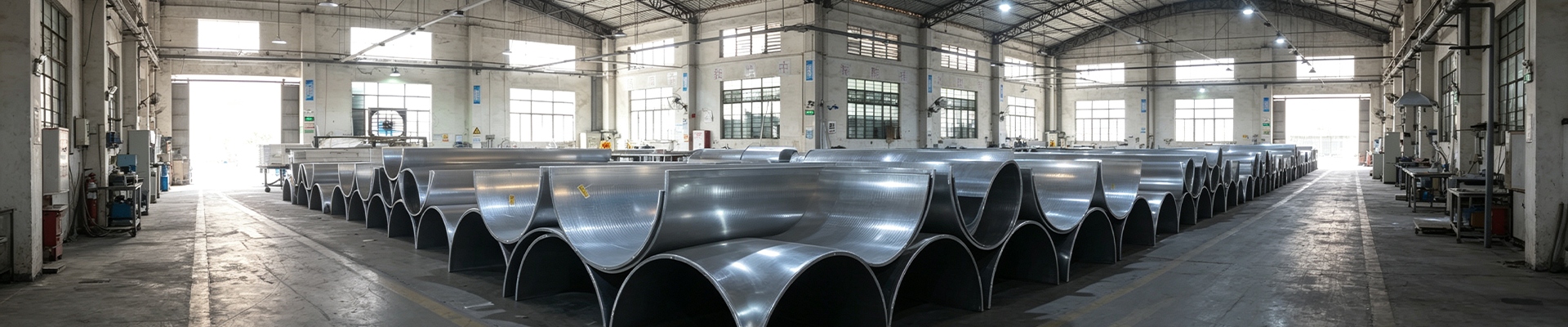
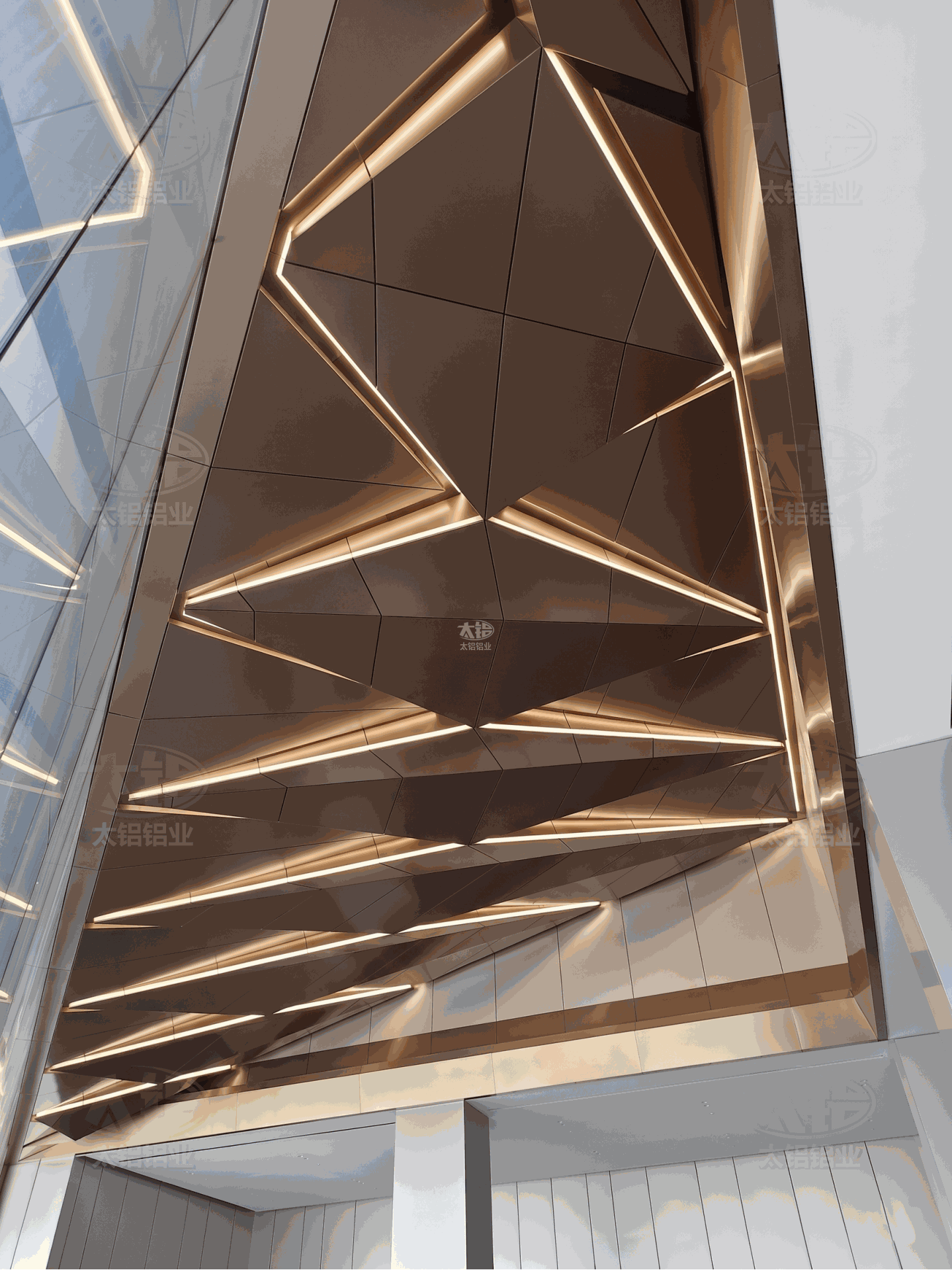
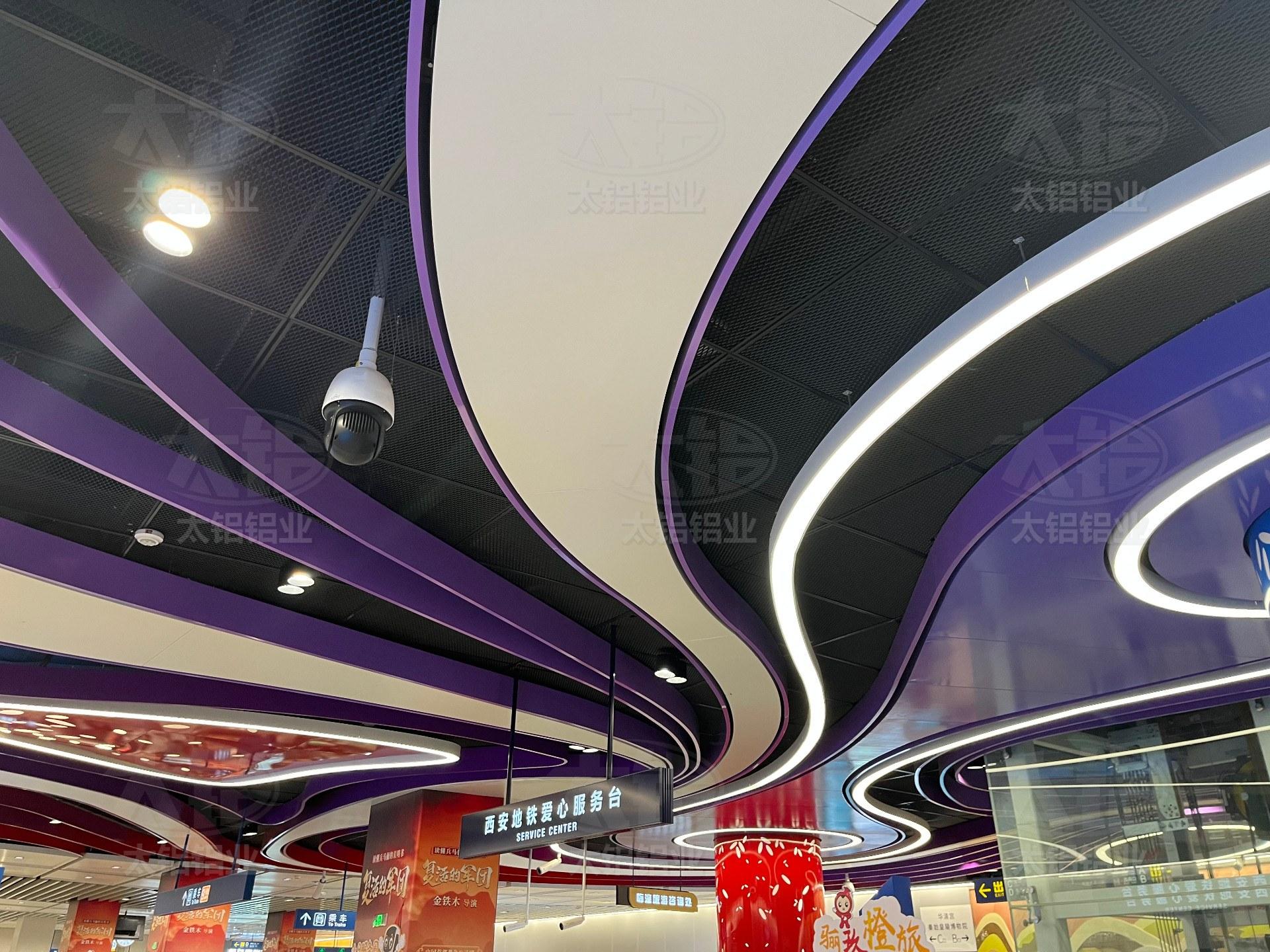
Shaped aluminum panels are customized architectural decoration materials made from high-strength aluminum alloy sheets as the base material, formed through precision processes such as CNC bending, stamping, engraving, and arcing, then surface treatments such as fluorocarbon spraying and powder coating. As a high-end product in the aluminum panel category, it breaks through the traditional flat panel shape limitations and can achieve complex three-dimensional shapes such as curved surfaces, irregular shapes, hollow-out, and relief sculptures. It is one of the core decorative materials for modern architectural aesthetics and functional expression.
Core Advantage
1.Highly malleable
supports any shape customization including single curve, double curve, spherical, twisted, and wavy, with processing accuracy up to ±0.3mm, enabling precise implementation of architects' creative design proposals.
2.Lightweight and high-strength
Aluminum alloy has a density only one-third that of steel, is lightweight, yet boasts excellent tensile strength (100-280N/mm²), significantly reducing the main load-bearing capacity of buildings and suitable for high-rise and large-span buildings.
3.Weather-resistant and durable
The outdoor lifespan of fluorocarbon-coated products can reach 20-25 years without fading, resisting acid rain, UV rays, and temperature changes, adapting to various extreme climate environments.
4.Environmentally friendly and recyclable
100% aluminum is recyclable, can be reforged after demolition, has a high residual value rate, and meets green building evaluation standards.
5.Functional compounding
Can combine perforation and engraving techniques to achieve ventilation, noise reduction, light and shadow transparency, shading and heat dissipation, balancing decorative and practical use.
Product Classification & Selection Guide
1.Classified by shaping techniques
- Single-curved aluminum panel: Formed by bending in a single direction (such as arcs and waves), processed by CNC rolling bending machines for cold bending. The process is mature and the cost is moderate, and it is commonly used in building column wrapping, eaves, curved exterior walls, and other scenarios.
- Hyperbolic aluminum panels: bidirectional curved surfaces (such as spherical, ellipsoidal, twisted surfaces), requiring 3D modeling combined with hot pressing or segmented assembly processes. They are difficult to process and require strict precision, mostly used for irregular facades of landmark buildings.
- Perforated/carved aluminum panels: Patterned holes and hollow textures are formed through CNC punching or precision engraving processes. Custom hole diameters, spacings, and artistic patterns can be customized, combining light and breathability with decorative effects. Suitable for curtain walls, ceilings, landscape partitions, and more.
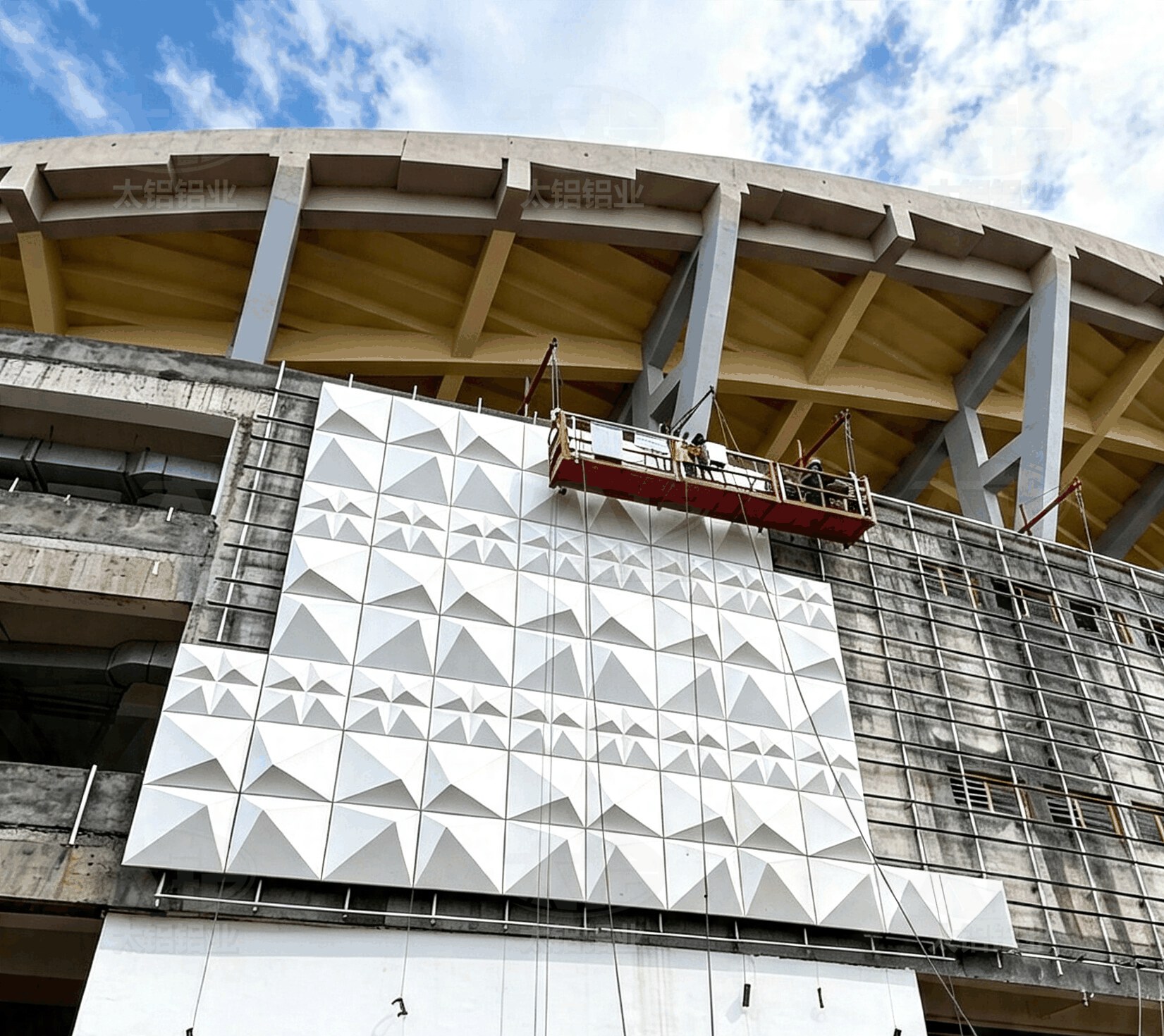
- Special-shaped aluminum panels: Non-standard custom products, including angles, cones, pyramids, geometric splices, and other unconventional forms. Produced entirely according to project drawings, customized to suit creative scenarios such as architectural facades and landscape installations.
2.Application Scenarios
- Building exterior walls: facades of curtain walls in commercial complexes, office buildings, hotels, venues, etc
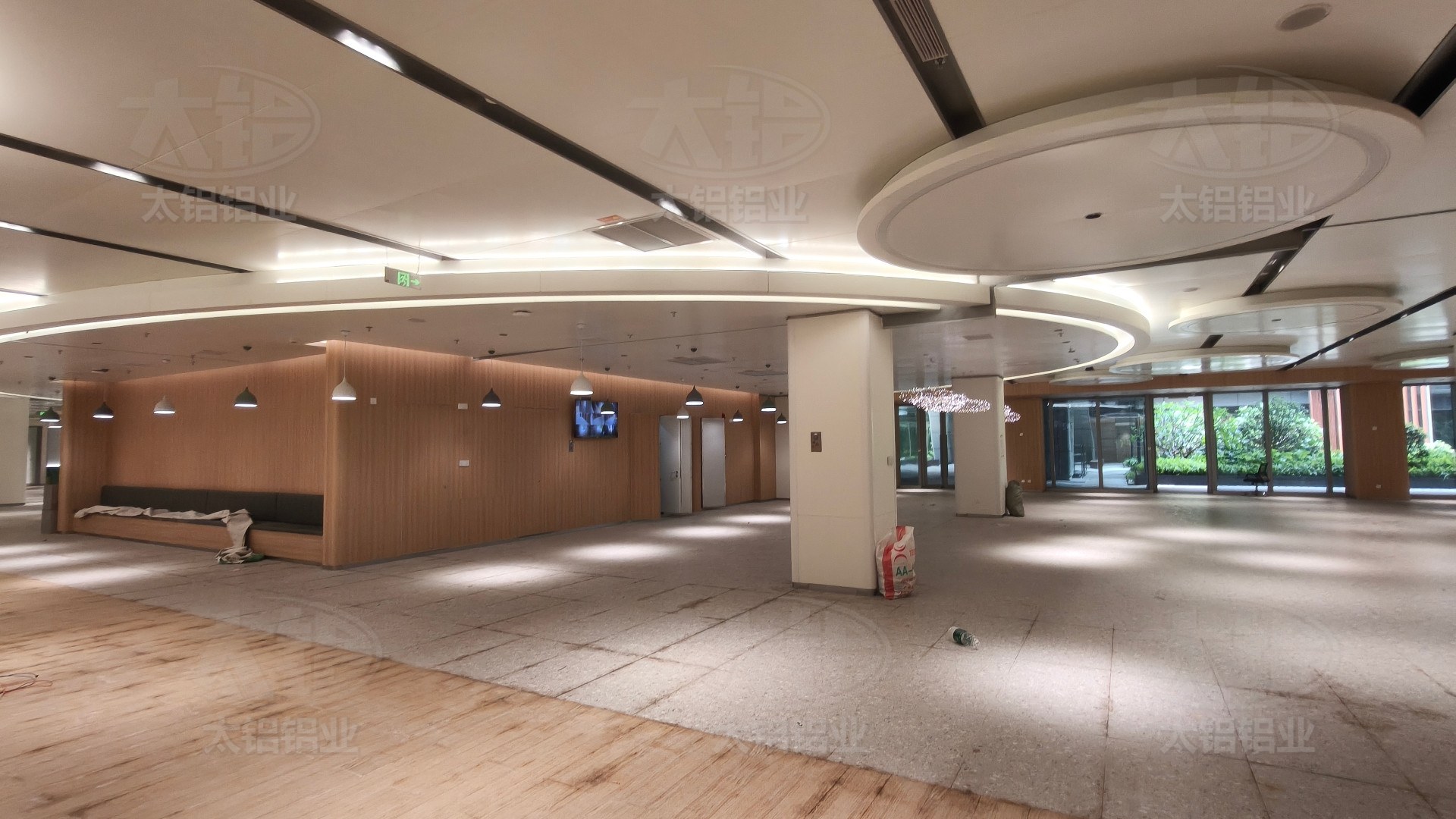
- Interior decoration: high-end spaces such as lobby ceilings, feature walls, column cladding, and elevator lobbies
- Special areas: storefront signs, canopy eaves, landscape corridors, equipment covers
- Public buildings: airports, high-speed rail stations, museums, stadiums, and other iconic structures
3.Application Scenarios
- Base material selection: Commonly uses 3003 anti-rust aluminum alloy; for coastal areas with high salt spray, 5052 alloy aluminum is recommended; Common thicknesses range from 1.5mm to 3.0mm, and high-rise curtain walls can be customized with thickened panels of 4.0mm-5.0mm.
- Surface finish: Outdoor prefers fluorocarbon spraying (second/third/fourth), while indoors commonly use powder coating and polyester spraying; Other special effects such as wood grain transfer, stone grain transfer, anodizing, and brushing are also available.
FAQS
1: What is the difference between molded aluminum panels and ordinary flat aluminum panels?
A: Shaped aluminum panels add bending, arc rolling, welding, and engraving processes to the flat aluminum panel, enabling curved, irregular, hollowed, and other three-dimensional effects. The main differences are:
- Process complexity: Shaped boards require precise CNC equipment for forming, while some double-curved boards require five-axis machining centers, resulting in more steps and higher precision requirements
- Cost difference: Molded boards have higher processing wear and longer labor times, so their unit price is usually 30%-100% higher than that of flat panels, and the price for complex hyperbolic molding doubles
- Application positioning: Flat panels focus on standardized curtain wall decoration, while shaped panels emphasize artistic expression and visual highlights in architectural features
2: What is the approximate price of shaped aluminum panels?
A: Prices are affected by thickness, material, molding complexity, and surface finish, with reference ranges (panels only, excluding installation accessories):
- Conventional single-curved/curved boards: 300-600 yuan/㎡
- Perforated/carved shaped panels: 220-500 RMB/㎡
- Hyperbolic/complex shaped panels: 600-1200 RMB/㎡
- Comprehensive on-road price including keel auxiliary materials + installation: single-curve about 980-1180 RMB/㎡, double-curved about 1180-1350 RMB/㎡
It is recommended to provide detailed drawings to the manufacturer for itemized quotations to avoid overspending solely by looking at bare board prices.
3: How should I choose the thickness? Is there a difference between indoors and outdoors?
- Indoor scenes (ceilings, walls): 1.5mm-2.0mm is recommended, as long as the decorative strength is met
- Outdoor low-rise (under 10 floors): recommended 2.0mm-2.5mm
- For high-rise outdoor buildings and large sections: 2.5mm-3.0mm is recommended; for extra-large spans, 4.0mm is recommended
- Hyperbolic/special-shaped plates: It is recommended not less than 2.5mm to ensure structural stability after forming
Thickness selection should be evaluated comprehensively based on slab size, wind pressure resistance requirements, and molding complexity.
4: What are the surface treatment processes? How to choose?
| Process types | Applicable scenarios | Weather Endurance | Features |
|---|---|---|---|
| Fluorocarbon spraying | Outdoor curtain walls, coastal areas | 15-25 years | Optimal weather resistance, corrosion resistance, and fading resistance |
| Powder coating | Interior decoration and interior walls | 8-12 years | Rich colors and high cost performance |
| Polyester spraying | Indoor/semi-outdoor | 5-8 years | Lower cost and a wide variety of color options |
| Wood grain/stone pattern transfer printing | High-end interior decoration | 10-15 years | Realistic reproduction of natural textures |
| Anodizing | Humid environment, subway | More than 20 years | Strong metallic texture, wear-resistant, and scratch-resistant |
For outdoor projects, prioritize fluorocarbon spray products that meet AAMA2605 standards.
5: What are the installation methods?
A: Mainstream installation methods each have their pros and cons:
- Angle Yard Type: Fixed to the keel bolts by corner brackets, the structure is stable and has strong load-bearing capacity. It is suitable for exterior walls and curtain walls, and is the most commonly used method
- Hook type: The board edge folds and hooks directly to the keel, allowing for quick installation and easy disassembly, and is mostly used for indoor ceilings
- Hanging type: Uses a floating hanging system with adjustable spacing to adapt to thermal expansion and contraction, facilitating later maintenance and replacement, suitable for high-rise curtain walls
Due to the special shape of shaped aluminum panels, a combination of corner panels + custom hangers is usually used, requiring strict construction according to detailed drawings.
6: How long is the service life of shaped aluminum panels?
- Structural lifespan: The aluminum alloy substrate itself can last more than 50 years
- Coating lifespan: High-quality fluorocarbon sprayed outdoors for 15-25 years without obvious fading, powder sprayed indoors for over 10 years
- Actual service life: Under normal maintenance, the overall service life is 20-30 years; Corrosive environments such as coastal and industrial zones require higher-grade materials and coatings
Reputable manufacturers usually offer a 10-15 year coating warranty.
7: Why are double-curved aluminum panels much more expensive than single-curved panels?
A: The high price of hypercurved panels is mainly due to process difficulty and material waste:
- High equipment requirements: requires five-axis linkage machining centers and 3D scanning calibration equipment, requiring significant equipment investment
- The process is more complex: requires 3D modeling, mold making, hot press forming, manual shaping, multiple rounds of grinding, and other steps, with labor times 3-5 times longer than single production
- High material waste: There is a lot of scrap at the corners during double-curved forming, and the finished product rate is over 30% lower than that of flat panels
- Strict precision requirements: Surface deviations must be controlled within ±0.5mm, requiring high experience from skilled workers
8: How is daily maintenance and upkeep?
- Cleaning cycle: 1-2 times a year outdoors, once every 2-3 years indoors
- Cleaning method: Use a neutral detergent with a soft cloth or sponge to avoid scratching the coating with strong acids, alkalis, steel wool, or other hard tools
- Inspection and maintenance: Regularly check whether hanger bolts are loose and sealants are cracked, and address any issues promptly
- Precautions: Do not stand on the board or apply heavy objects to avoid sharp objects causing scratches
Under normal use, the maintenance cost of shaped aluminum panels is much lower than that of stone or glass curtain walls.
9: How long is the custom production cycle?
- Regular tablet: 7-10 days
- Single/perforated shape: 10-15 days
- Hyperbola/Complex Shapes: 15-25 days (including sample confirmation)
- Special color/texture customization: an additional 5-7 days for color grading
It is recommended that the project allow sufficient production time; complex shapes can be sampled first to confirm the effect before mass production.
10: What should be noted when selecting in coastal areas with high salt spray?
- Base material upgrade: Selected 5052 or 5005 series aluminum alloys, with better corrosion resistance than 3003
- Coating upgrade: Uses fluorocarbon triple or quadruple coating processes, with a coating thickness of no less than 40μm
- Auxiliary materials: Hardware such as keels and bolts should be made of 316 stainless steel or hot-dip galvanized material
- Structural design: The panel surface should avoid water-collecting grooves, and seams should be properly sealed and waterproofed
- Maintain strict maintenance: It is recommended to clean twice a year and regularly check the corrosion of coatings and connection points