
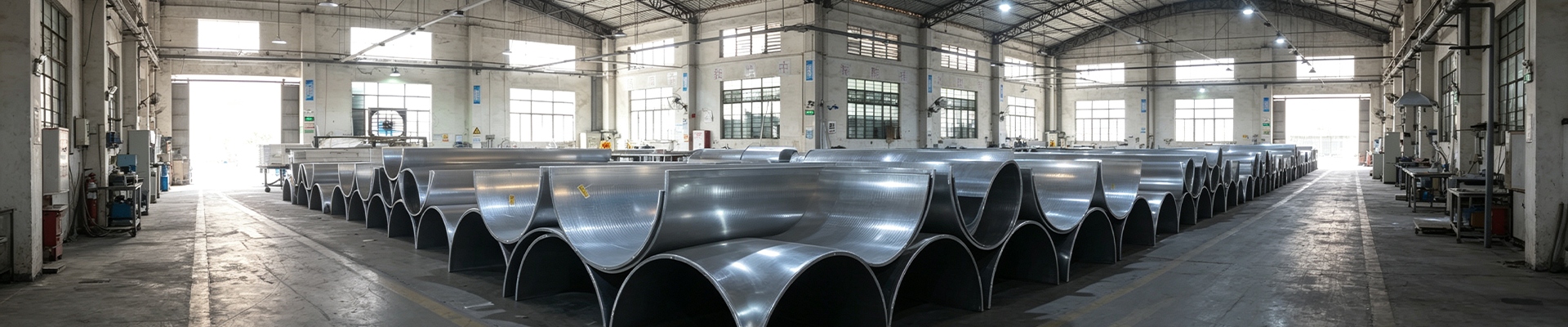
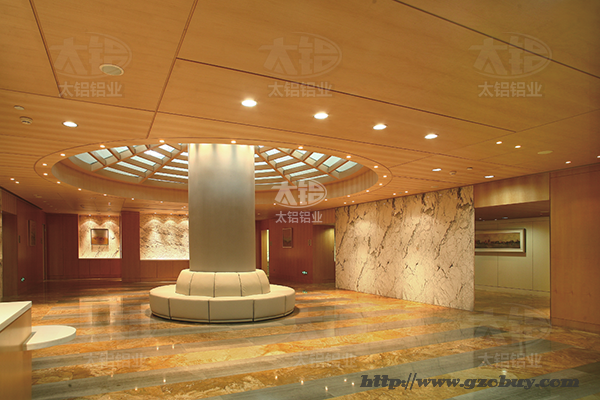
n shopping malls, office buildings, airports, and metro stations, we often see metal walls or ceilings with very large areas and smooth surfaces—many of these use aluminum composite panels.
It is not a single solid thick aluminum sheet, but rather more like a "sandwich": aluminum sheets on the outside, a core material in the middle, and some products also have an aluminum sheet on the back. Different core materials result in different panel weight, hardness, flatness, fire performance, and price.
Note that in the industry, ACP (Aluminum Composite Panel) usually specifically refers to aluminum-plastic composite panels. For ease of understanding, this article introduces several common aluminum-faced composite panels together.
What are the common types of aluminum composite panels?
1. Aluminum-Plastic Composite Panel (ACP) The middle of an aluminum-plastic composite panel is typically a polymer core layer or a composite core containing mineral fillers. It features a wide range of colors, is easy to cut and fold, and its price is generally more accessible, making it common in interior walls, storefronts, column cladding, and some exterior wall projects. However, ACP also comes in two categories—ordinary decorative and building curtain wall grades—which cannot be freely interchanged. The combustion performance of different core formulations varies greatly, so the fire rating cannot be judged by seeing the words "aluminum-plastic panel" alone.
2. Aluminum Honeycomb Composite Panel The core of an aluminum honeycomb panel resembles a honeycomb, consisting of many hexagonal cells. This structure helps improve panel stiffness while controlling weight, making it suitable for large-format panels and projects with high visual requirements. However, whether the final result is flat and sturdy still depends on face sheet thickness, honeycomb specifications, bonding quality, panel size, and installation method. Honeycomb panels may also dent when struck by hard objects. When used outdoors, attention must also be paid to edge sealing, drainage, and long-term moisture issues.
3. Aluminum Corrugated-Core Composite Panel The middle of this panel is a corrugated aluminum core, also commonly called an aluminum ribbed (wavy) composite panel in the market. It can be made relatively light and is often used for wall and ceiling decoration. Because the corrugations have a direction, the load-bearing performance may differ by direction; designers should confirm the corrugation direction, keel spacing, and fixing method.
4. Three-Dimensional Aluminum-Core Composite Panel Some manufacturers call it an aluminum cone-core panel or aluminum 3D panel. Its core is three-dimensionally formed, creating multiple support points with the face sheets. This structure has the potential to achieve lower weight, but one cannot assume that a "cone-core" or "3D-core" panel is necessarily lighter, flatter, or more wind-resistant. When purchasing, focus on actual surface density, flatness, localized impact resistance, bond durability, and mechanical data in both directions. If it is intended for high-rise, coastal, or strong-wind areas, structural calculations based on the specific panel and installation system are required, and engineering tests may be necessary—do not rely solely on marketing materials.
5. Non-Combustible Grade Metal Composite Panel These products typically use an inorganic composite core and are mainly intended for architectural decoration scenarios with high fire-resistance requirements. However, an "inorganic core" does not automatically make the entire panel achieve a certain fire rating. The face sheets, core, adhesive, coating, and film laminate together form the complete product, and the final rating must be verified against a test report that matches the actual supplied product.
What common characteristics do aluminum composite panels have? Aluminum composite panels generally have the following characteristics:
- Weight reduction: the sandwich structure reduces material usage, but the exact weight saving depends on the actual weight per square meter.
- Improved stiffness: a rational composite structure keeps thin face sheets from bending significantly, but strength still relates to sheet thickness, size, and support.
- Wide surface options: various colors, gloss levels, and textures are available, along with polyester, fluorocarbon, powder, or film-laminate surface treatments.
- Modular installation: some systems allow dry-hanging or hook-and-grab installation, but whether individual panels can be removed and replaced depends on the specific joint design.
- Protection against impact: when the face sheet is thin, impacts from hard objects during transport, installation, or use may leave dents.
When selecting, what should you look at first? Do not ask "which one is best" first; first determine where it will be used.
For interior use Focus on combustion performance, surface effect, impact resistance, and anti-fall measures after installation. For locations prone to impact—such as corridors and column cladding—pay special attention to face sheet thickness and localized impact resistance.
For exterior walls or curtain walls Choose products designed for exterior wall or curtain wall use, and check coating weather resistance, panel-edge waterproofing, drainage, connection joints, and structural calculations. Ordinary interior decorative panels cannot be directly used as curtain wall panels.
For high-rise, coastal, or strong-wind areas Do not select panels based only on the core material name. The panel, hangers, keels, anchoring, and main structure form an integrated system that requires calculations based on wind load, panel size, and support spacing. In coastal areas, beyond wind pressure, also pay attention to salt-spray corrosion, aluminum surface pretreatment, coating, cut edges, and fastener materials.
For rail transit, tunnels, hospitals, or ships These scenarios usually have additional requirements such as smoke generation, toxicity, vibration, cleaning and disinfection, or corrosion resistance. Ordinary architectural decoration test reports may not apply; confirm the relevant industry requirements separately.
Five Common Misconceptions
Misconception 1: An all-metal core is necessarily A1. Not necessarily. Combustion performance depends on the complete product—adhesives, coatings, and film laminates also affect test results. Check a whole-panel test report matching the actual model, thickness, and construction.
Misconception 2: The thicker the panel, the stronger it is. Not necessarily. Besides total thickness, also consider face sheet thickness, core structure, panel size, support spacing, and connection method.
Misconception 3: The lighter the panel, the stronger its wind resistance. These are two different things. Light weight reduces structural burden, but wind resistance must be confirmed through calculations and system testing.
Misconception 4: Using a fluorocarbon coating guarantees color retention for many years. Coating life is also affected by surface pretreatment, film thickness, color, sun exposure direction, pollution, and coastal salt spray. The specific years should be based on the written warranty and its applicable conditions.
Misconception 5: Reputable products never delaminate. The bond reliability of composite panels relates to raw materials, surface treatment, production process, temperature and humidity, panel-edge water ingress, and long-term loading. Proper production and qualified testing can reduce risk, but "never delaminating" should not be promised.
What information should be requested from suppliers? Confirm at least the following four categories:
- Product identity: product name, model, application, and execution standard.
- Key parameters: face and back sheet thickness, core structure, total thickness, dimensions, and weight per square meter.
- Test documentation: combustion performance, bonding or peel performance, plus the mechanical, weather-resistance, acoustic, or thermal reports required by the project.
- Contractual commitments: warranty scope, applicable environment, delivery time, installation responsibility, and the handling process if problems arise.
The test report must also be checked to confirm that the sample model, thickness, coating, and core match the actually purchased product—a report for one specification cannot represent all products.
Brief Summary No single aluminum composite panel suits every scenario:
- Aluminum-plastic panels are easy to process and widely applicable, but ordinary decorative and curtain wall grades must be distinguished;
- Aluminum honeycomb panels are suitable for comparing large-format and lightweight solutions, but attention should be paid to panel edges, bonding, and impact resistance;
- Aluminum corrugated-core panels require attention to loading direction and support method;
- Three-dimensional aluminum-core panels require verification of actual data rather than relying only on the structural name;
- Whether non-combustible grade metal composite panels meet fire requirements must be checked against the complete product test report.
The truly reliable selection method is: first determine the application location, then review the actual product documentation, and finally verify the installation system and project requirements.
Standards purchasers can reference
- GB/T 17748-2016 "Aluminum-plastic composite panels for building curtain walls"
- GB/T 22412-2016 "Aluminum-plastic composite panels for ordinary decoration"
- JG/T 334-2012 "Aluminum honeycomb composite panels for building exterior walls"
- JC/T 2113-2012 "Aluminum honeycomb composite panels for ordinary decoration"
- JC/T 2187-2013 "Aluminum corrugated-core composite panels"
- JC/T 2561-2020 "Non-combustible grade metal composite panels for architectural decoration"
- GB 8624 "Classification for burning behaviour of building materials and products"