Core Features of Aluminum Gusset Ceiling
- Reliable & long‑lasting performance for complex environments The aluminum alloy substrate is waterproof, moisture‑proof, corrosion‑resistant and rust‑proof. It resists mildew and deformation, achieves Class A non‑combustible fire rating and emits no formaldehyde. It performs well in high‑humidity, oil‑fume areas such as kitchens and bathrooms, and meets fire inspection requirements for all types of public spaces.
- Modular quick‑install structure for easy maintenance Adopting a snap‑in keel system, it enables high‑efficiency dry construction. Individual panels can be removed or replaced separately without damaging the whole ceiling, facilitating later inspection and maintenance of internal pipelines, electrical fittings and fire‑fighting equipment.
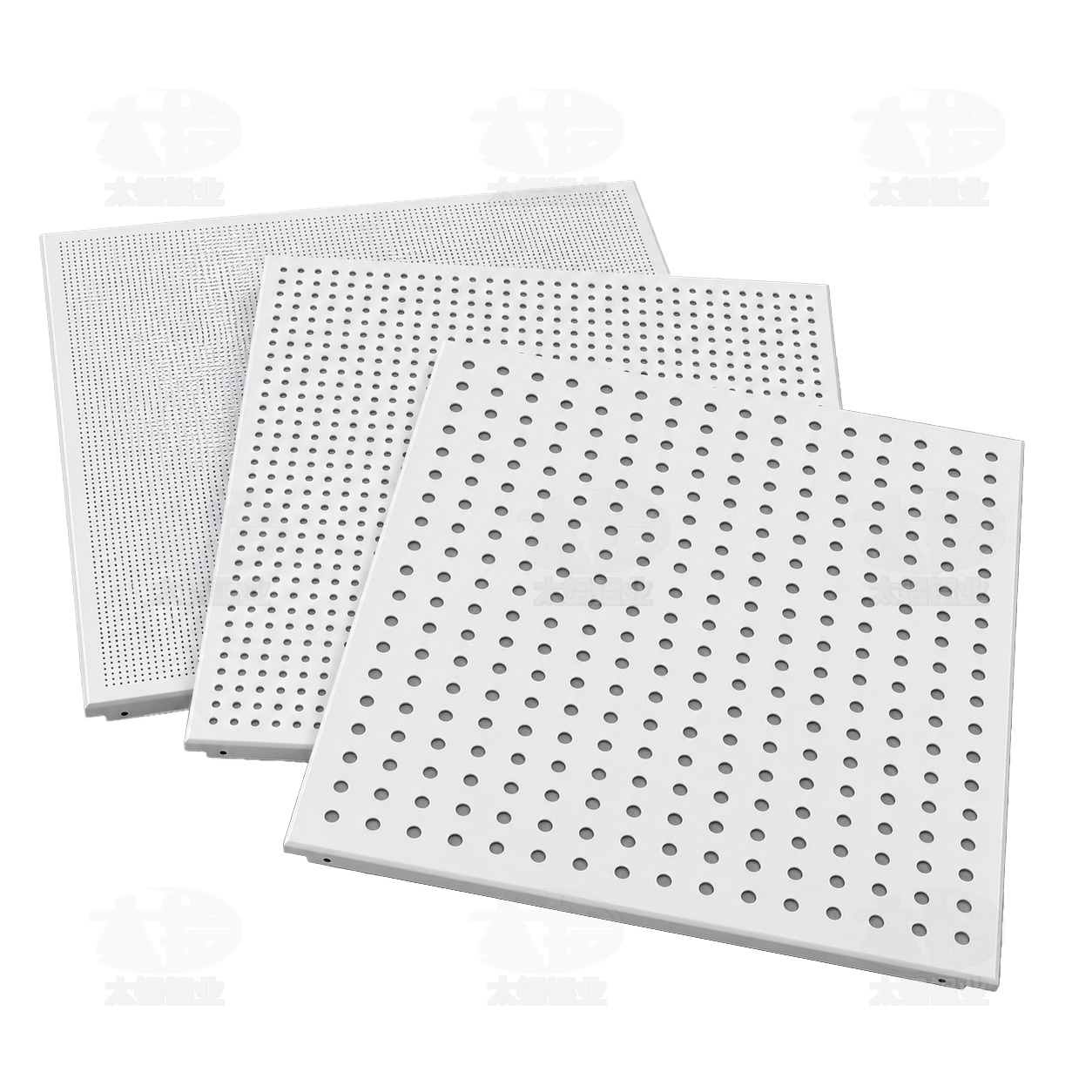
- Diverse designs & finishes for broad style compatibility Customizable sizes, hole patterns and surface treatments are available. Options include plain flat panels, perforated acoustic panels, as well as wood‑grain, stone‑grain and solid‑color surfaces. It fits a wide range of interior styles such as minimalist, industrial and Chinese decor.
- Stain‑resistant surface for easy cleaning and extended service life The dense, smooth top layer allows oil stains and dust to be wiped off directly. Under normal indoor conditions, its service life reaches 10–15 years, far longer than traditional ceiling materials like PVC and mineral wool boards.
Common Classification of Aluminum Gusset Ceilings
By Shape & Dimension Square aluminum gussets: The most popular type. 300×300mm and 300×600mm are widely used for residential projects; 600×600mm and 600×1200mm are common for commercial works. Neat installation and great compatibility with embedded electrical fixtures.
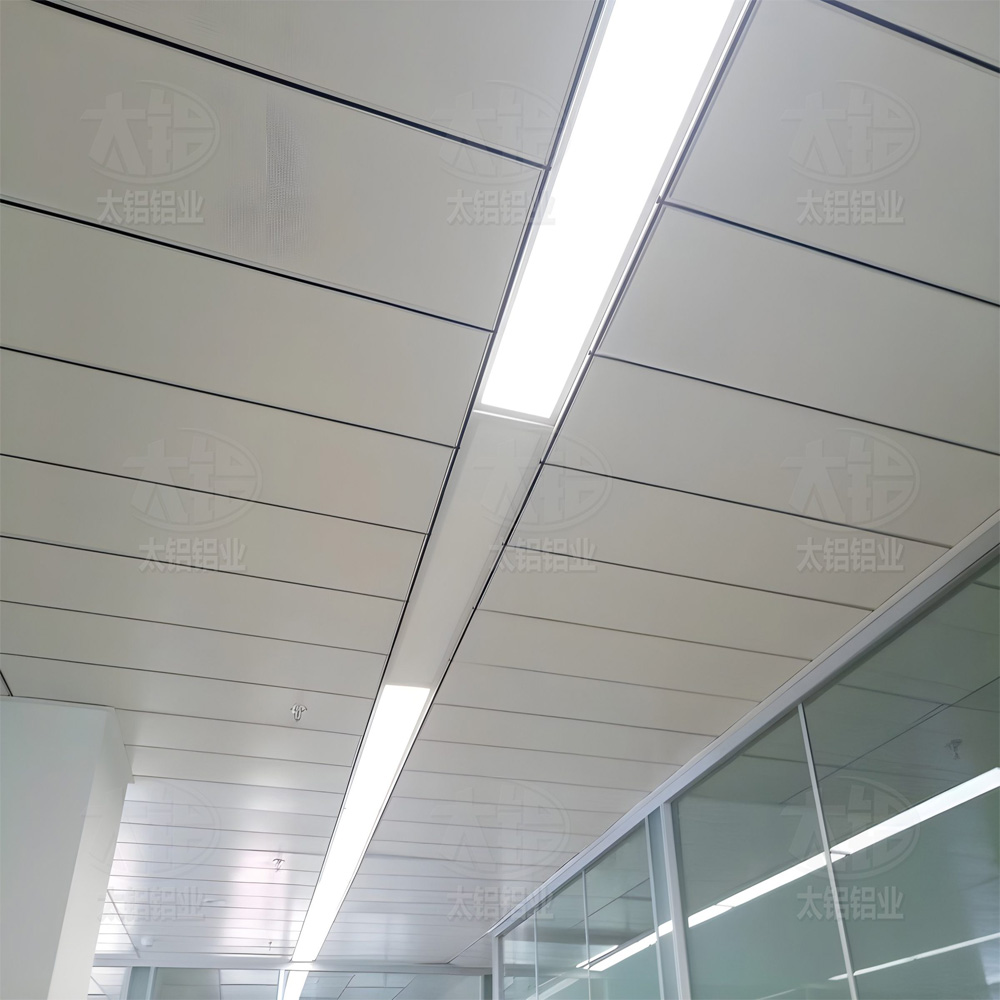
Linear aluminum strip ceilings: Long panels assembled continuously with narrow joints for an integrated look. Superior wind resistance compared to square panels, frequently used in corridors, stations and outdoor fascia.
Special‑shaped aluminum panels: Curved panels, custom patterns and bespoke profiles, mainly applied in distinctive commercial spaces and exhibition halls.
By Surface Finish Laminated panels: PVC decorative film bonded on surface. Wide color selections at lower cost, the basic residential option for budget‑limited projects.
Roller‑coated panels: Polyester paint applied by roller coating. Uniform coating with strong adhesion, oil‑resistant and anti‑yellowing, the mainstream mid‑to‑high‑grade choice for homes.
Fluorocarbon sprayed panels: Outstanding weather resistance and UV resistance. Designed for outdoor and semi‑outdoor areas with extended service life.
Anodized panels: High surface hardness, scratch‑abrasion resistance and prominent metallic texture, preferred for high‑end commercial buildings.
By Function & Structure Flat aluminum gussets: Good sealing performance, dustproof and waterproof. Basic option for kitchens, bathrooms and standard offices.
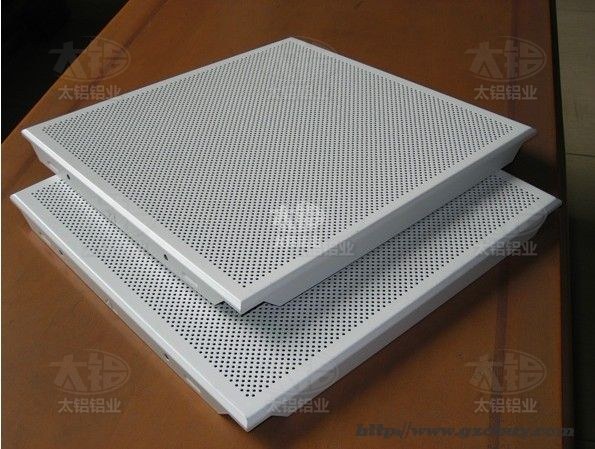
Perforated aluminum gussets: Regular perforations. Combined with acoustic fleece, they deliver noise reduction and ventilation, ideal for machine rooms, stadiums, meeting rooms and other acoustically sensitive areas.
Components of Standard Aluminum Gusset Ceiling Installation System
Concealed mounting (mainstream for residential projects): Suspender rods + Main keels + Triangle cross keels + Aluminum gussets + Edge trims.
Exposed mounting (commercial type for easy access): Suspender rods + T‑shaped main & cross keels + Aluminum gussets + Edge trims
For residential applications, electrical modules such as lighting, heating and ventilation units are often integrated to form a combined ceiling system, realizing integrated decoration and functional performance.
Application Scenarios of Aluminum Gusset Ceilings
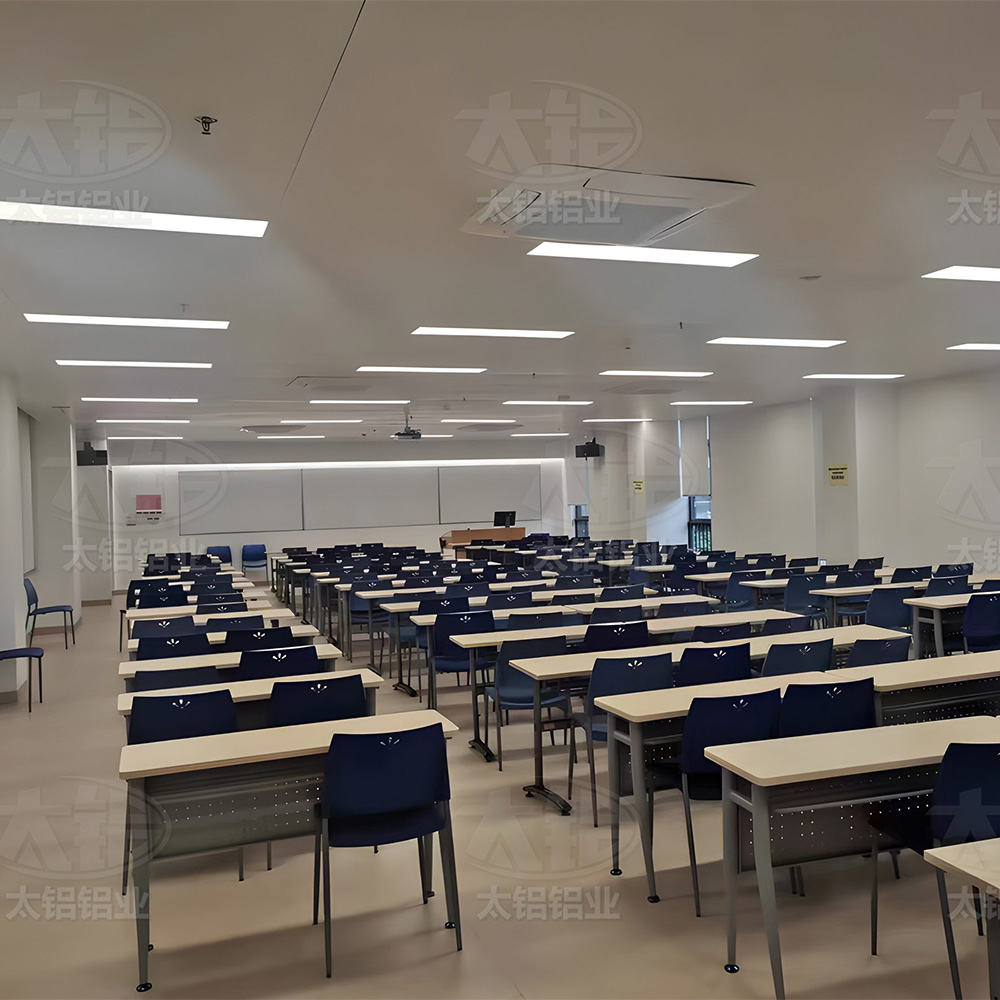
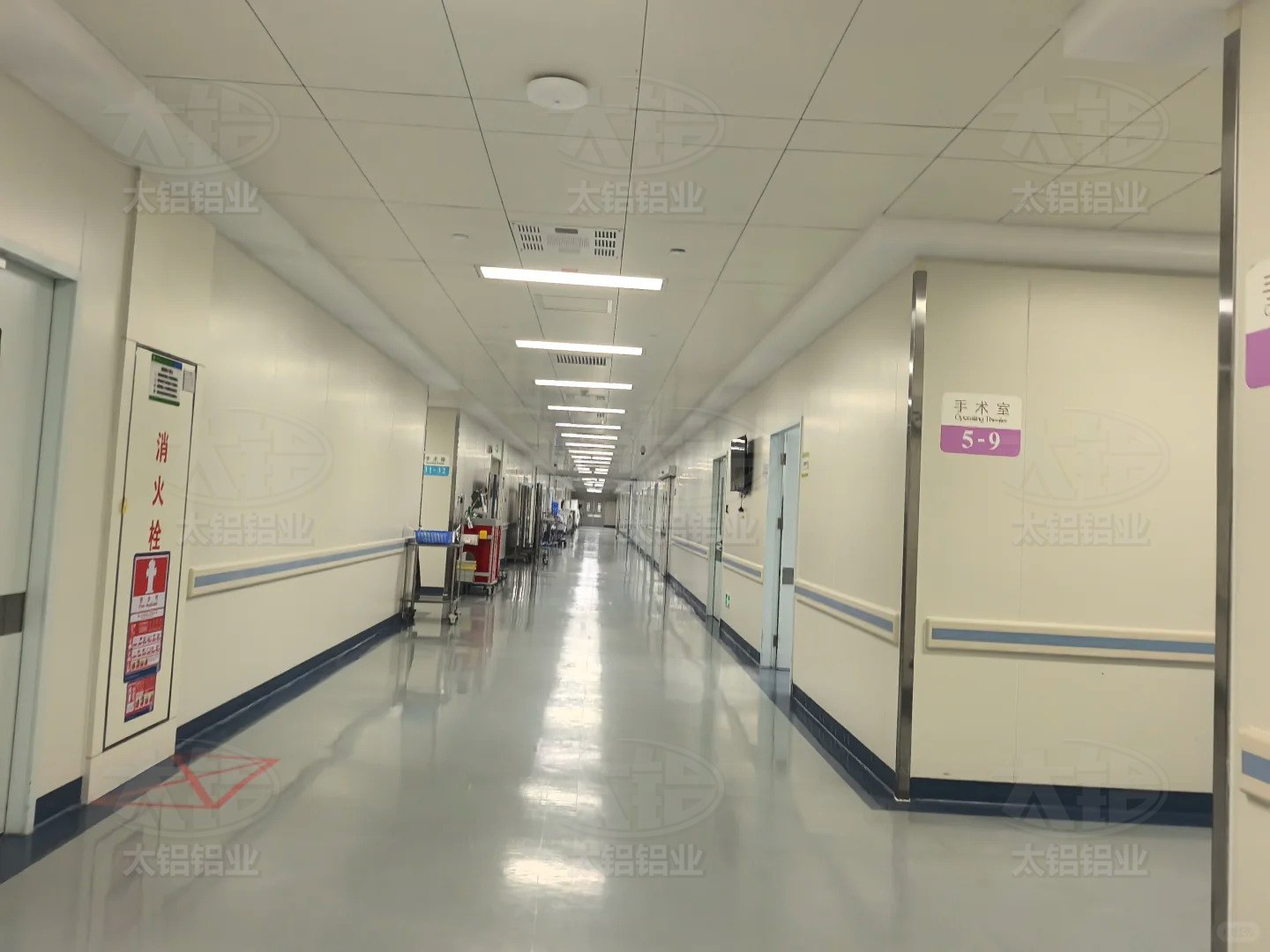
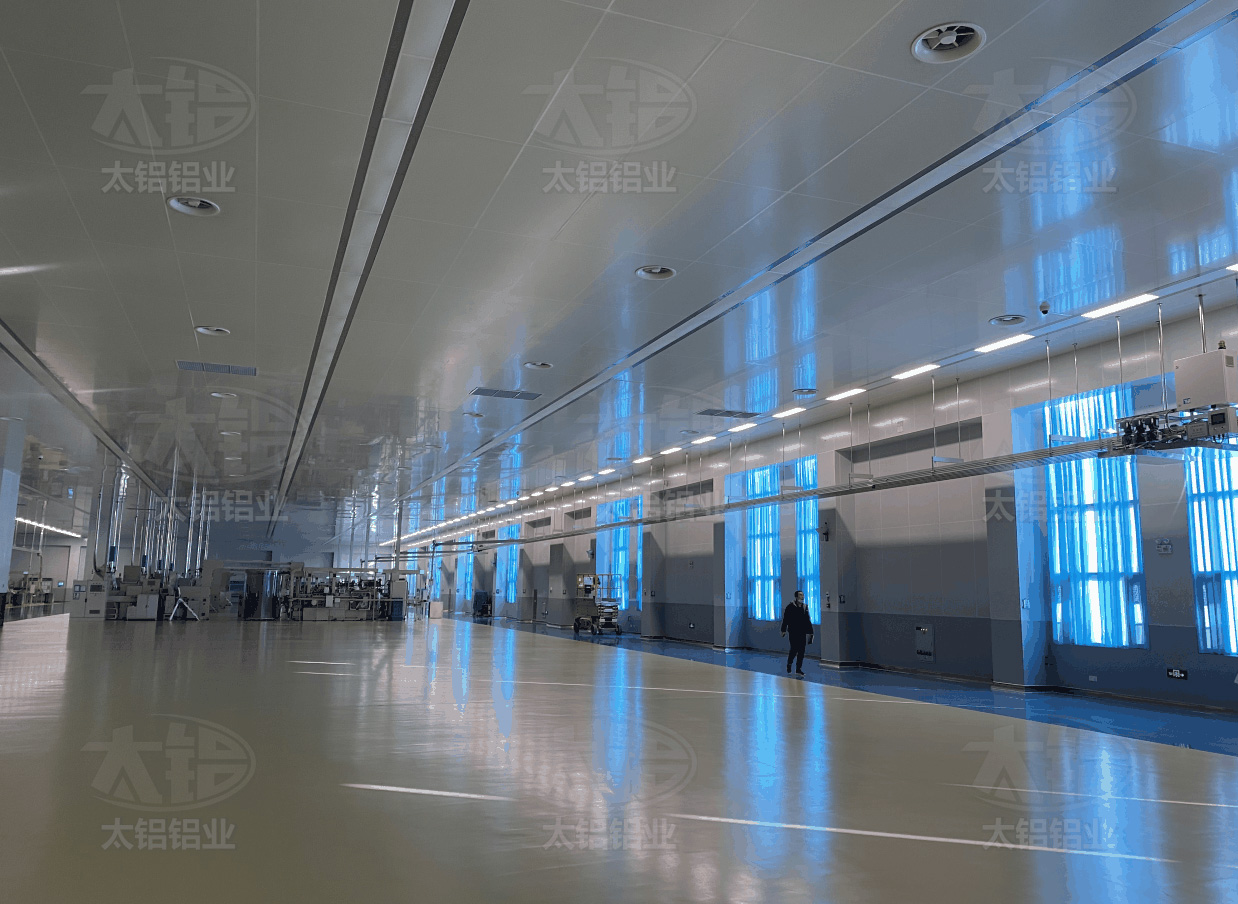
Residential Spaces: Kitchens, bathrooms, balconies, laundry rooms, entryways Commercial & Public Spaces: Offices, shopping malls, hospitals, schools, metro stations, airports, equipment rooms, public venues
FAQ
Q1. Are aluminum gussets and integrated ceilings the same thing?
A1.They have an inclusive relationship and are not identical concepts. An aluminum gusset is merely the decorative panel for ceilings. An integrated ceiling refers to a complete ceiling system, which uses aluminum gussets as face panels together with standardized modules such as lights, bathroom heaters and exhaust fans, enabling one‑step installation combining ceiling panels and functional appliances. It is the prevailing solution for residential kitchens and bathrooms. Simply put: aluminum gussets are the core component of an integrated ceiling.
Q2. What size and thickness are suitable for home use? Is thicker always better?
A2.Sizes: 300×300 mm is the universal size with the best compatibility with embedded appliances. 300×600 mm delivers smoother visual lines, ideal for large kitchens and elongated bathrooms for a spacious look.
Thickness: 0.5–0.7 mm is fully sufficient for residential projects; there is no need to blindly pursue thicker panels. Load‑bearing capacity and flatness mainly rely on the keel framework. The panel itself only needs good toughness and flatness. Excessively thick panels may sometimes be made from recycled aluminum with high impurities, poor flexibility and higher rust risk, less durable than properly sized premium aluminum‑magnesium alloy sheets.
Q3. What is the approximate cost per square meter for aluminum gusset ceilings?
A3.Prices vary greatly depending on dimension, thickness, surface finish and quality of accessories.
- Basic laminated residential grade (including keels, fittings & installation): CNY 80–150 /㎡
- Mid‑to‑high‑end roller‑coated / oil‑repellent residential grade (including fittings & installation): CNY 150–300 /㎡
- Standard 600×600 mm painted flat panels for commercial projects (including keels & installation): CNY 80–200 /㎡
- Special options such as fluorocarbon coating, perforated panels & custom shapes: above CNY 200 /㎡, quotation available upon request.
Q4. Aluminum Gusset Ceiling vs Gypsum Board Ceiling: Which Is Better? How to Choose?
A4.There is no absolute better option. The selection is mainly based on the application scenario:
| Comparison Item |
Aluminum Gusset Ceiling |
Gypsum Board Ceiling |
| Waterproof & Moisture Resistance |
Excellent, mildew‑proof and deformation‑free |
Poor; prone to peeling and mildew in humid environments |
| Fire Performance |
Class A non‑combustible, meets fire‑safety requirements |
Standard type is combustible; high cost for fire‑rated upgrade |
| Maintenance Convenience |
Single panel detachable, convenient for pipeline maintenance |
Cutting and patching required, damaging overall appearance |
| Visual Effect |
Modular assembly with visible seams |
High integrity, supports complex custom shapes |
| Service Life |
10–15 years or more |
Aging and cracking likely after 5–8 years |
| Application Scenarios |
Kitchens, bathrooms, balconies, equipment rooms, public spaces |
Living rooms, dining rooms, bedrooms and other dry spaces |
Q5. Will aluminum gussets turn yellow in kitchens and bathrooms? How to select oil‑resistant panels?
A5.Low‑cost laminated panels may turn yellow and suffer film delamination after 2–3 years of continuous exposure to oil fume and high temperature. Premium roller‑coated or nano oil‑repellent panels feature dense surface coatings with strong resistance to grease and ageing, showing no obvious yellowing after 5–8 years of normal use. For kitchens and bathrooms, roller‑coated or nano oil‑repellent aluminum gussets are recommended. Avoid cheap laminated panels. For routine cleaning, wipe with a soft cloth and neutral detergent. Do not use steel wool or strong acid/alkaline cleaners, which may scratch the coating.
Q6. How much ceiling clearance is required for aluminum gusset installation? Can it be fitted for rooms with low ceiling height?
A6.Aluminum gussets are ceiling‑height friendly and suitable for low‑clearance spaces.
- For flat panel lights or downlights only: 10–15 cm clearance
- For fan‑type bathroom heaters or exhaust fans: 15–20 cm clearance (adjust according to the actual appliance thickness)
Gypsum board ceilings generally need over 20 cm clearance. Therefore, aluminum gussets are a better choice for kitchens and bathrooms with limited ceiling height.
Q7. Can I install aluminum gusset ceiling by myself? What is the installation procedure?
A7.DIY installation is feasible for small residential areas if you have basic hands‑on skills. Main steps:
- Mark horizontal reference lines on walls to set finished ceiling elevation.
- Drill holes on the ceiling and fasten suspender rods and main keels.
- Mount triangle cross keels and adjust for overall flatness.
- Snap aluminum panels into place sequentially, then install edge trims.
For large commercial projects or ceilings with embedded electrical / fire‑fighting devices, professional installation is recommended to guarantee flatness and precise joints.
Q8. Can recessed appliances and fire‑safety devices be mounted on aluminum gusset ceilings?
A8. Yes. Residential use: 300‑size gussets directly match same‑dimension flat lights, bathroom heaters and exhaust fans, no extra cutting required. Commercial use: Custom cutouts can be made for downlights, sprinklers, smoke detectors, air vents, etc. Rust protection shall be applied to cut edges.
Q9. What advantages do aluminum gussets have over PVC panels and mineral wool boards?
A9.Versus PVC panels: Aluminum gussets have higher fire rating, better durability, anti‑deformation performance and superior environmental performance. PVC panels are cheaper but poor in heat resistance, prone to ageing and yellowing, with a service life of only 3–5 years.
Versus mineral wool boards: Aluminum gussets are waterproof, moisture‑proof, high‑strength and easy to clean with longer service life. Mineral wool boards offer good sound absorption yet are moisture‑sensitive, fragile and dust‑prone, mostly used in dry ordinary office spaces.
Q10. Can aluminum gusset ceilings fall down? Are they safe?
A10. Properly installed aluminum gusset ceilings are very secure and will not drop. Potential hazards mostly stem from inferior accessories and non‑standard construction, such as excessively wide suspender spacing, thin keels or poorly engaged clips. Use original matching keel accessories and hire professional installers to eliminate falling risks.
Q11. What is the service life of aluminum gusset ceilings? How to maintain them later?
A11.Under normal indoor conditions, premium aluminum gussets last 10–15 years. Fluorocarbon outdoor grades can also serve more than 10 years. Maintenance cost is minimal. Remove dust with dry cloth or feather duster. Wipe grease stains with diluted neutral detergent. If one panel gets damaged, simply replace it with a new panel of the same size; full ceiling renovation is unnecessary.