
Product Overview
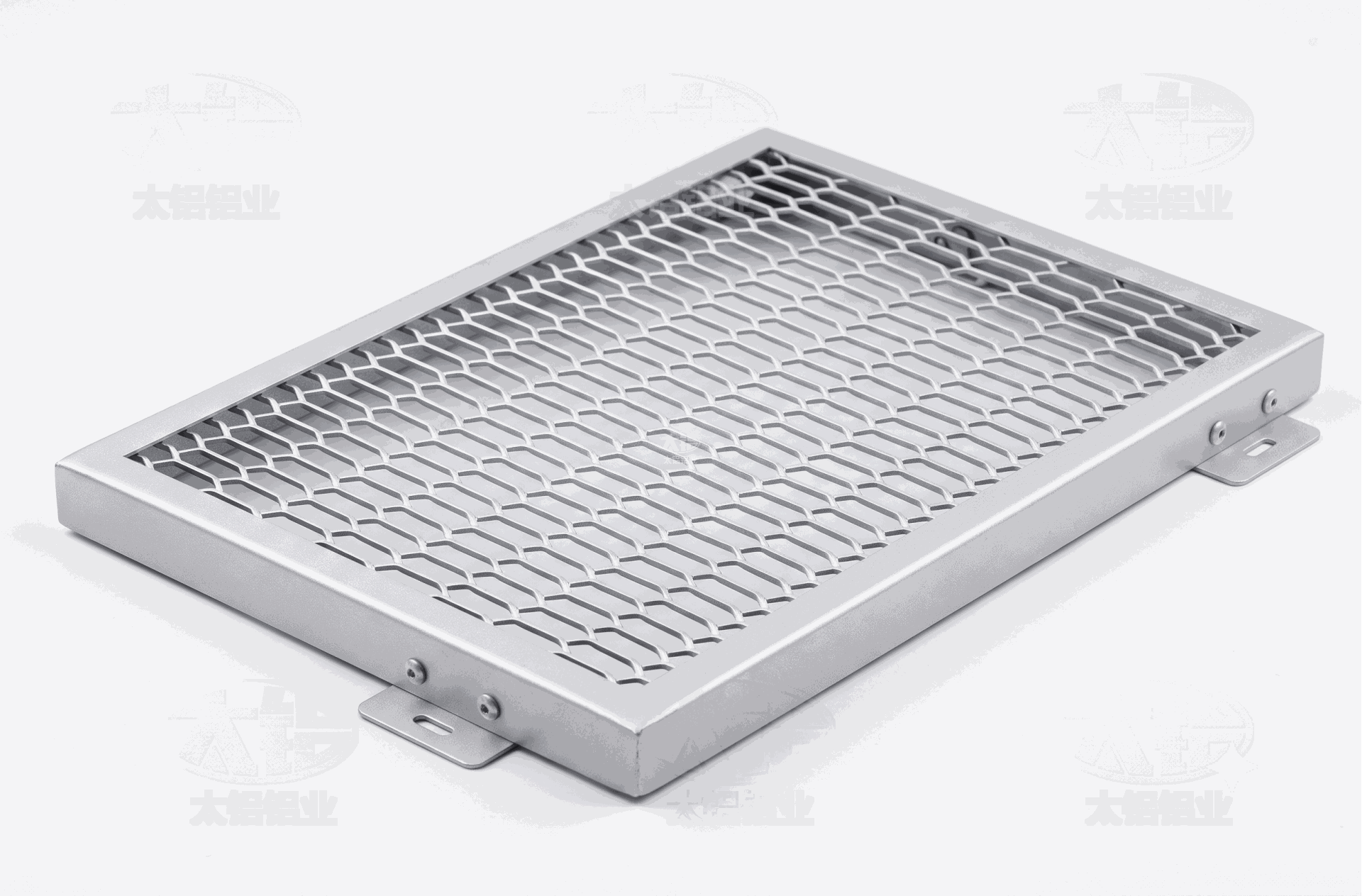
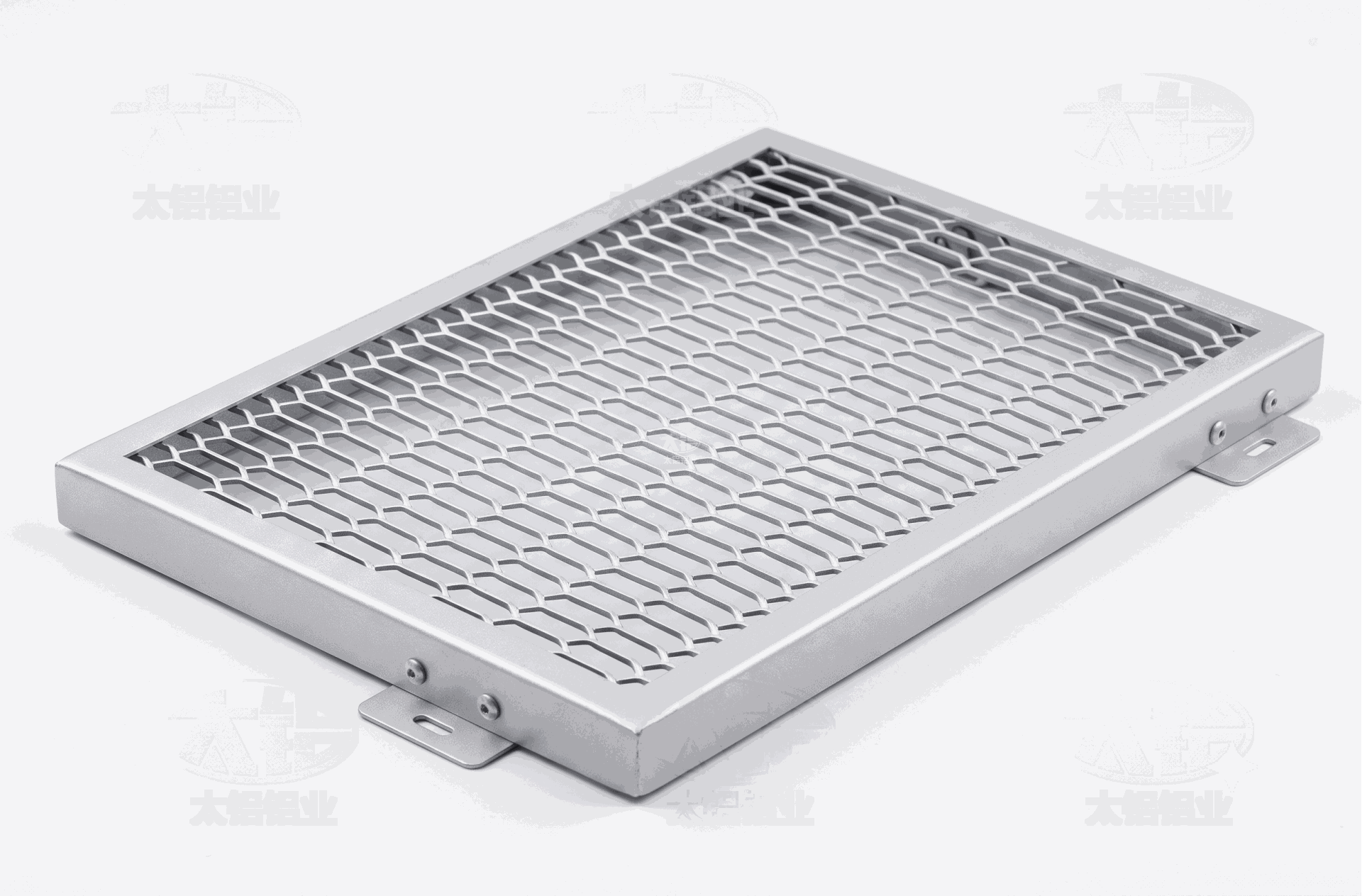
Aluminum wire mesh panels, also known as metal mesh ceilings or aluminum wire mesh ceilings, are one of the core products of Guangzhou Tailu Aluminum Industry's "Perga" series. The product is made from high-strength aluminum alloy plates as the base material, formed in one piece through precision stamping and stretching processes. The mesh surface is smooth and uniform, the structure is stable and reliable, combining an open view with modern industrial aesthetics.
The product surface can be combined with various treatment processes such as fluorocarbon spraying, anodizing, and polyester baked paint. It offers excellent weather resistance and a wide range of color options, easily creating a sense of spatial transparency and three-dimensional layering. Its unique diamond-shaped mesh structure combines ventilation, heat dissipation, sound absorption and noise reduction, and auxiliary fire smoke exhaust functions; It does not release toxic gases at high temperatures, is safe and environmentally friendly, has strong self-cleaning properties, and is easy to maintain. It is widely used in the ceilings and facade decorations of various large public buildings.
Core Advantage
1.Stable structure and excellent strength.
Formed by integrated stamping and stretching, with no weld seams, the overall structure is strong, the mesh surface is flat, and it resists deformation due to impact. Even during large-span installations, the board surface remains flat and straight.
2.Ventilation and heat dissipation, sound absorption and noise
reduction. The open mesh structure offers strong air circulation, allowing for rapid heat dissipation in spaces, suitable for scenarios with dense equipment and high cooling requirements; The back is paired with sound-absorbing materials to effectively reduce reverberation in the space and improve the indoor acoustic environment.
3.Strong weather resistance and long-lasting
durability The aluminum alloy base is corrosion and rust-resistant. The fluorocarbon/anodized surface coating offers excellent UV and corrosion resistance, making it stable for both indoor and outdoor use. Under normal conditions, it can maintain color stability and no fading or deformation for over 20 years.
4.Environmentally friendly and easy to clean, simple to operate.
The metal substrate is non-toxic and odorless, 100% recyclable, and meets green building material standards; The surface is dense and smooth, resistant to dust accumulation and dirt. Routine cleaning only requires wiping with clean water, with no special maintenance required.
5.Flexible customization and wide
adaptability, supporting full customization of mesh size, panel thickness, color texture, and overall shape. It can be adapted to various application forms such as ceilings, curtain walls, partitions, and storefronts, meeting the design needs of different spaces.
Product Classification & Selection Guide
1.Construction preparation instructions
- Before construction, compare with the framework design drawings and verify the quality of the main structure, focusing on verifying the verticality, flatness, and location of the exterior wall openings. Any deviations must be addressed in advance to ensure accurate frame installation references.
- On-site measurements of actual dimensions are conducted, with detailed verification of construction drawings and processing drawings to ensure the customized product matches the on-site dimensions exactly, guaranteeing installation accuracy.
- Based on the height and width of the curtain wall/ceiling framework, erect double-row scaffolding that meets safety standards, with at least 50cm of workspace reserved from the work surface to meet construction needs.
- Only after confirming that the plastering of the base layer of the exterior wall has been completed and accepted as passed, and the base meets installation requirements, can construction proceed to the site.
2.Application Scenarios
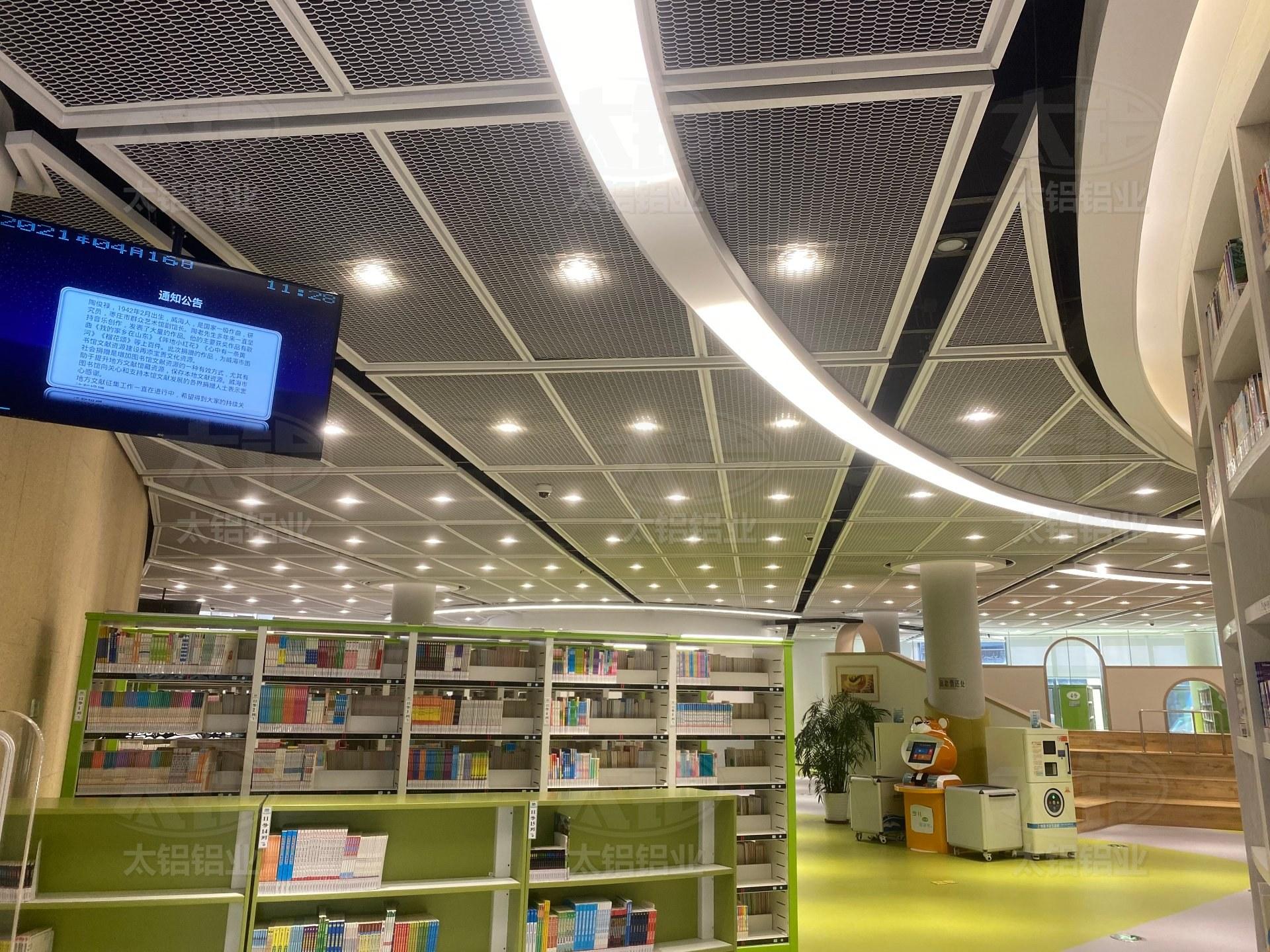
- Public transportation buildings: subway stations, airport terminals, high-speed rail stations, bus stations
- Commercial public spaces: shopping centers, exhibition centers, venue lobbies, office building lobbies
- Industrial functional spaces: factory workshops, equipment rooms, warehousing and logistics centers
- Building facades: commercial storefronts, building grilles, curtain wall decorations, sunshade facades
FAQS
1. What are the standard specifications of aluminum wire mesh panels? How to choose mesh and thickness?
- The base material thickness of conventional aluminum pulled mesh panels ranges from 1.0 to 3.0mm. Common mesh mesh sizes include 10×20mm, 15×30mm, 20×40mm, 30×60mm, 40×80mm, etc. The standard size per piece can reach 1220×2440mm, and larger sizes can be customized.
- Selection principle: For ceiling decoration and small spaces, choose small aperture and thin panels to balance transparency and economy; For exterior facades, large spans, and scenarios requiring load-bearing capacity, select large apertures and thick boards to ensure structural strength; For scenarios requiring concealed pipelines, choose small-diameter dense mesh styles.
2. What are the differences between aluminum wire mesh panels, aluminum grilles, and aluminum square tubes? How should you choose?
A: All three are open metal ceilings, with the core differences in structural texture and applicable scenarios:
- Structural texture: Aluminum stretched mesh panels feature an integrated stretched mesh, giving a stronger texture and highlighting modern industrial style; The aluminum grille uses a grid connecting both vertical and horizontal lines, making it neat and simple; Aluminum square tubes have parallel strips with strong lines that have a sense of extension.
- Ventilation performance: Aluminum stretched mesh panels have a higher opening ratio, providing optimal ventilation and heat dissipation; aluminum grille comes next; The transparency of aluminum squares varies with spacing.
- Applicable scenarios: Those seeking a personalized industrial style, choosing aluminum mesh panels for facade decoration; Aluminum grilles for Fangzheng large spaces and computer rooms and supermarkets; Narrow corridors and atriums are made of aluminum for passage.
3. Can aluminum pull mesh panels be used outdoors? How is its weather resistance?
- It is fully suitable for outdoor use, but products with the appropriate process must be selected.
- Ordinary polyester spray versions are only suitable for indoor use; For outdoor scenarios, aluminum stretch mesh panels with fluorocarbon spraying or anodizing processes are preferred, offering excellent UV resistance, acid and alkali resistance, and corrosion resistance. They can withstand sunlight, rain, and coastal salt spray corrosion, and can last 15-20 years under normal outdoor conditions.
4. Is the sound absorption effect of aluminum stretched mesh panels good? Do you need to pair it with sound-absorbing cotton?
- Simply aluminum pulled mesh panels only serve as transparent decorations and have weak active sound absorption capabilities; To achieve noise reduction and sound absorption, the back must be paired with fiberglass sound-absorbing cotton or non-woven fabric.
- When combined with sound-absorbing materials, the noise reduction coefficient (NRC) can reach 0.6-0.8, effectively improving spatial reverberation and meeting the acoustic needs of stations, venues, factories, and other spaces.
5. Is it difficult to install aluminum wire mesh panels? How long is the construction period?
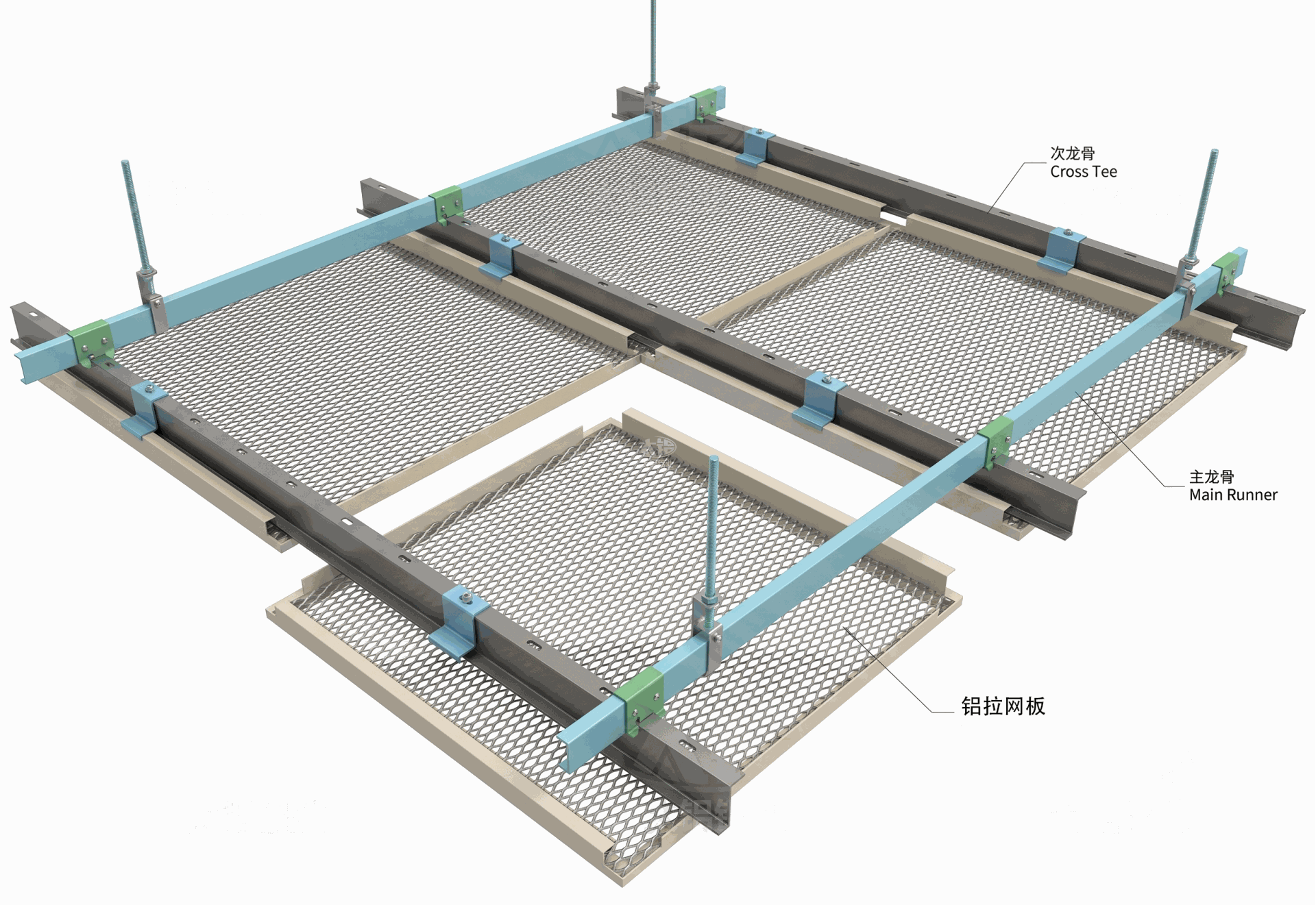
- The aluminum pull mesh panel is installed with a keel hanging method, which is a modular dry operation with mature construction techniques and moderate difficulty. The standard process is: line alignment→ installation of hangers and main keels→ fixed dedicated keels→ hanging of the drag mesh board→ leveling and edge finishing.
- For a standard space under 100㎡, 2-3 professional workers can complete it in 1-2 days; For large-scale projects, multiple teams can operate simultaneously, with construction efficiency higher than traditional curtain walls and enclosed ceilings, and is ready to use immediately with no maintenance cycle.
6. Can aluminum pull mesh panels be customized with hole shapes, colors, and shaped shapes?
A: Supports full-dimensional customization. In addition to standard diamond-shaped holes, custom mesh styles such as hexagonal holes, square holes, and irregular holes can be customized. Colors can be customized according to the color swatch, including solid colors, wood grain, stone grain, and other effects; It also supports irregular shapes such as curved, curved, and folded edges, adaptable to various personalized design schemes.
7. What is the approximate cost per square meter of aluminum pulled mesh panel?
A: Prices are greatly affected by substrate thickness, mesh size, surface craftsmanship, and dimension specifications:
- Indoor standard polyester spray model (including keel installation): labor and materials package about 120-200 RMB/㎡
- Mid-to-high-end fluorocarbon spray models (including keel installation): labor and materials included at about 200-350 RMB/㎡
- Thick plates, large sizes, and custom shapes: Higher prices and require separate calculation based on demand.
The denser the mesh, the thicker the board, and the more advanced the craftsmanship, the higher the cost per square meter.
8. How should aluminum pull mesh panels be cleaned and maintained daily? Is the accumulated dust easy to clean?
- Maintenance is very simple. The open mesh structure accumulates much less dust than the enclosed ceiling, and daily dust can be cleaned with a feather duster or vacuum cleaner; For oil stains and stubborn stains, you can mix a neutral detergent with water, wipe with a soft cloth, and rinse off with clean water.
- Do not use steel wool or strong acid and alkali cleaners to avoid scratching or corroding the surface coating; For outdoor models, it is recommended to perform a routine cleaning inspection once a year to effectively extend the lifespan.
9. Will large sizes cause sagging and deformation? How to ensure flatness?
A: Standardized material selection + standard construction can effectively prevent sagging and deformation issues:
- Material selection: For large-span and large-size scenarios, prioritize boards with thickness of 1.5mm or above, or welded reinforcement ribs on the back to enhance surface rigidity;
- Construction: The spacing of the keel is strictly set according to specifications, with even distribution of hangers. After installation, the tie line is leveled as a whole;
- Acceptance: After completion, use a ruler to check flatness; if the mesh surface has no obvious waves or sagging, it is considered qualified.
10. Can aluminum stretch mesh panels be shaped into curved shapes, column wrapping, and other special shapes?
A: Custom processing is possible. Through CNC bending and draw-bending processes, it is possible to produce specially shaped aluminum pull mesh panels such as curved, curved, and column-clad panels, suitable for complex space designs like round columns, curved walls, and curved ceilings, balancing transparency and aesthetic appeal, and are widely used in distinctive commercial spaces and public art buildings.