
Product Overview
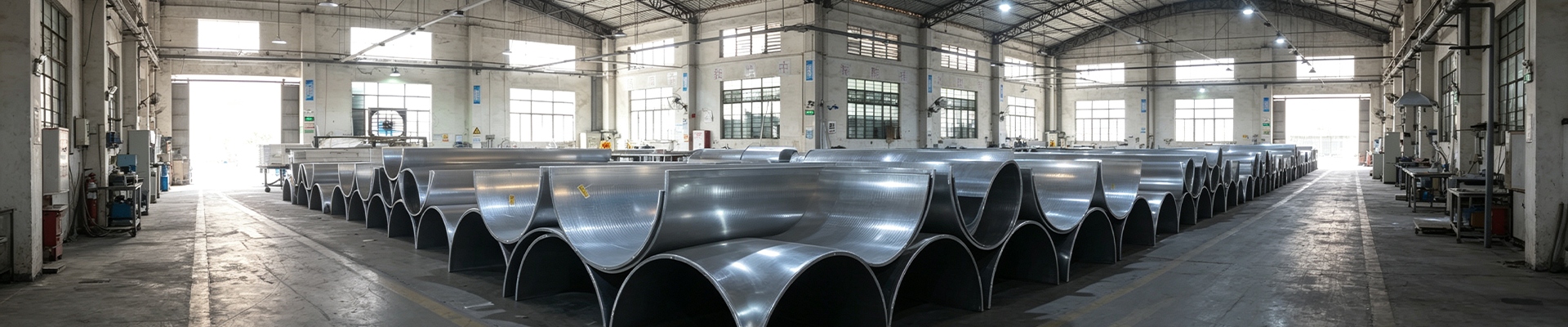
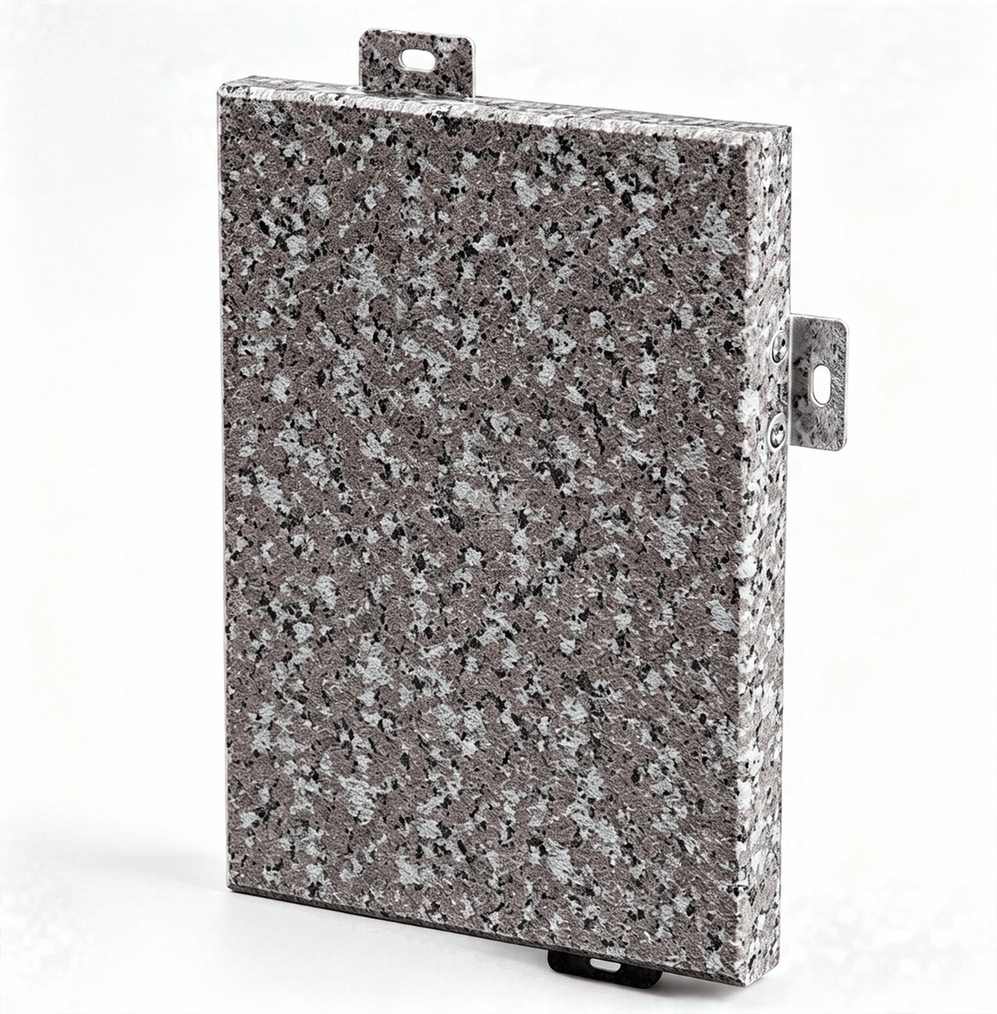
Natural stone is certainly noble and elegant, but its application pain points are equally prominent—granite can weigh 5 to 8 times more than aluminum panels per square meter, which not only increases building load but also poses safety risks of detachment; The mining process damages the ecological environment, causing sharp price fluctuations. In contrast, imitation stone-patterned aluminum panels weigh only about one-fifth of stone, yet their strength is equally impressive, and they can be processed into various complex geometric shapes such as flat, curved, and spherical shapes. For this reason, imitation stone-patterned aluminum panels have become the "new favorite" for architects—combining the aesthetics of stone with the structural strength of metal.
Core Advantage
1. Rich Stone Pattern Patterns With Realistic Effects.
Imitation stone-patterned aluminum panels can replicate the textures and colors of various natural stones such as marble, granite, and travertine, offering a variety of classic stone patterns including beige, elegant white, and Ultraman. High-end products use laser confocal microscopes to scan natural stone at a microscopic level, constructing a "stone DNA profile" with texture similarity exceeding 97%.
2. Lightweight, Good Rigidity, and High Strength.
The density of aluminum alloy material is only about one-third that of stone, significantly reducing building loads while ensuring the curtain wall's wind, shock, and impact resistance.
3. Excellent Weather Resistance and Long Service Life.
The fluorocarbon coating offers excellent weather resistance and UV resistance, long-lasting and stable color, and an outdoor service life of 15 to 25 years. The coating has high acid and alkali resistance and can withstand harsh winds and sunlight.
4. Fireproof and Flame-Retardant, Meeting Fire Safety Requirements.
The aluminum panels and fluorocarbon coatings have excellent flame retardancy and can fully pass fire safety inspections.
5. Green and Environmentally Friendly, Recyclable.
Compared to natural stone mining that reduces resource destruction, aluminum panels can be 100% recycled and reused. The product contains no formaldehyde, is non-toxic, and emits no harmful gases.
6. Easy Installation and Maintenance.
Using a process of processing before painting, aluminum sheets can be shaped into various complex geometric shapes. Flexible installation methods include leaving gaps for gluing, tight assembly, or dry hanging. The surface is resistant to dust and has excellent self-cleaning properties, requiring no special cleaning.
Product Classification & Selection Guide
1. Fluorocarbon Spraying Process to Imitate Stone Patterns
Fluorocarbon spraying is currently the most common method for treating stone-like grain. The core principle is to spray multiple colors with multiple spot coatings on the surface of the aluminum plate, based on fluorocarbon spraying, creating stone patterns on the surface. Generally, stone pattern spray spots are 4 to 5 coats; the more color types and more spray times, the richer the texture layers.
The Main Process Flow Includes:
- Step 1: Sheet Metal Processing: Using high-grade aluminum alloy plates (commonly A3003, A1100, A1060, etc., with plate thickness options ranging from 1.5mm to 5.0mm) as the base material, the sheet is formed through CNC bending processes such as computer cutting, punching and shearing, mechanical bending, planing and bending grooves, punching processes, and plate bending according to the on-site design dimensions, shapes, and structural forms.
- Step 2: Preparation After Forming The Billet: This includes steps such as dense welding, backing nail placement, welding position grinding, rebar installation, and fine polishing to ensure a flat surface and a solid structure.
- Step 3: Surface Pretreatment: The aluminum plates undergo acid washing and degreasing treatment, followed by chromification (anti-oxidation) treatment, providing a clean and well-adhering substrate for subsequent spraying.
- Step 4: Fluorocarbon Spraying And Baking: Polyvinylidene fluoride (PVDF) resin coating is sprayed and cured by baking at high temperatures of 224°C~255°C. Fluorocarbon coatings offer excellent weather resistance, corrosion resistance, and self-cleaning properties, allowing them to maintain bright colors over time and resist fading. The average coating thickness ≥ 40μm.
- Step 5: Sprinkle Some Spray To Imitate The Stone Pattern: On top of the fluorocarbon primer, a specially designed spray gun is used for multiple dot sprays, and through a computer-designed "texture script," colors are layered to create a subtle color difference effect on the stone. Finally, a 10μm thick varnish protective layer is applied to the surface.
The fluorocarbon spraying process for imitating stone patterns is mature and moderately cost, making it a reliable choice for most engineering projects.
2.Heat Transfer Printing Imitates Stone Patterns
- Heat Transfer Technology Pursues "Ultimate Simulation." The process process is: first, the surface of the aluminum panel is sprayed with a permeable baking paint, then an Italian stone texture film is applied, and after vacuum treatment, the stone texture film is transferred onto the baking paint layer of the aluminum panel using heat transfer technology. The texture after transfer is delicate and lifelike, with even the capillaries of the stone clearly visible.
- A more Advanced Nano-scale Thermal Transfer Process uses The "five-layer composite transfer film + gradient curing" technology: a 0.8μm anodized film is formed on the surface of 3003-H24 aluminum plates as the anchoring substrate, coated with nanoemulsion containing silane coupling agents for chemical bonding, then transferred onto the aluminum substrate by instantaneous hot pressing at 280°C, and finally cured at temperature gradients of 180°C→220°C→260°C. This process achieves a surface hardness of 5H (pencil hardness) on aluminum panels, and its adhesion has passed Baige Test Level 5B certification, extending its lifespan by three times compared to traditional spraying processes.
3.Pre-Rolling Stone Pattern Coating Process
- The pre-roll coating process completes the stone pattern treatment at the aluminum coil plate stage, using continuous rollers to press fluorocarbon paint and stamp the corresponding stone texture, usually using five coats and five bakes. This process offers high production efficiency and excellent texture consistency, making it suitable for large-scale standardized production.
- In addition, there are real stone paint spray-coated stone-patterned aluminum panels, where real stone paint is sprayed onto the base of aluminum panels to create a 3D tactile stone texture effect, usually done with three coats and one baking.
4.Application Scenarios
Faux stone-patterned aluminum panels are suitable for commercial buildings, airports, high-speed rail stations, subways, stadiums, schools, hospitals, office buildings, hotels, clubs, villas, and various other architectural scenarios. Whether it's outdoor curtain walls, indoor walls, suspended ceilings, or areas like column cladding or feature walls, doors, and other parts, the perfect unity of stone decorative effect and the practical performance of metal can be achieved.
FAQS
1. How Should You Choose Among the Three Mainstream Stone Pattern Techniques? What Scenarios are They Suitable For?
A: Fluorocarbon sprayed stone pattern imitation: offers the highest cost-performance ratio, mature and stable process, suitable for most outdoor curtain wall and tooling projects, suitable for small to medium batches and irregularly shaped panels, making it the first choice for general engineering applications. Heat transfer imitation stone pattern: highest texture realism, texture closest to natural stone, high hardness, suitable for high-end hotels, villa exterior walls, interior high-end feature walls, and fully decorated public buildings, suitable for scenarios requiring very high aesthetics and durability. Pre-rolled coated stone pattern: Fast production speed and good color consistency, suitable for large-scale standardized panel projects such as large factories, regularized office building exterior walls, and mass ceiling projects without complex shapes.
2. How Many Years Can the Imitation Stone-Patterned Aluminum Veneer Last Outdoors? Will It Fade Or Peel Off?
A: Standardized fluorocarbon and heat transfer process imitation stone-patterned aluminum panels have a normal outdoor service life of 15-25 years. High-quality PVDF fluorocarbon coatings have excellent UV and aging resistance, are resistant to high temperatures and acid and alkali corrosion, and are resistant to fading, powdering, and paint loss under long-term outdoor exposure and wind and rain conditions. The product lifespan of nano thermal transfer technology can be increased by three times compared to traditional spraying, with greater stability. Inferior powder coating products have a short lifespan, only 3-5 years and are prone to fading and peeling. It is recommended to choose fluorocarbon processes for engineering procurement.
3. What are The Advantages of Imitation Stone-Grain Aluminum Panels Compared to Natural Stone and Real Stone Paint?
A: Compared to natural stone: weighs only one-fifth of stone, greatly reduces building load, eliminates safety hazards from stone detachment, does not destroy ecological mining conditions, is recyclable and environmentally friendly, offers more stable pricing, and can be shaped into curved, spherical, and other complex shapes, offering stronger adaptability. Compared to real stone paint: the surface is smooth and dense, harder and more resistant to stains and self-cleaning. It does not suffer from cracking, peeling, dust accumulation, or mold in real stone paint, and its service life far exceeds that of real stone paint, with extremely low maintenance costs afterward.
4. What are the Commonly Used Thickness and Material Specifications for Aluminum Panels? How Should you Choose a Model?
A: The mainstream material is A3003 rust-resistant aluminum alloy, which offers high cost performance, good toughness, and is not easily deformed, making it a versatile material for workwear. A1100 and A1060 pure aluminum are lighter in texture and are suitable for interior decoration. Thickness selection: For indoor ceilings, walls, and column cladding, choose 1.5mm-2.0mm; for conventional outdoor curtain walls, choose 2.5mm-3.0mm; for high-rise, high-pressure areas, and large curtain walls, choose 3.0mm-5.0mm, reinforced with reinforcement ribs to ensure structural stability.
5. Is the Product Fire-Resistant and Environmentally Friendly? Can It Pass Fire Safety And Environmental Impact Assessment Acceptance?
A: Imitation stone-patterned aluminum panels are Class A fire-resistant and flame-retardant materials. The base aluminum alloy is non-combustible, and the fluorocarbon coating is heat-resistant but does not ignite flames. They fully comply with building fire safety standards and can successfully pass various tooling fire safety inspections. The product is manufactured with no harmful additives, contains no formaldehyde, benzene, or other harmful substances, emits no toxic gases, is 100% recyclable and reusable, environmentally friendly, and suitable for environments with strict environmental requirements such as schools, hospitals, and residences.
6. What Are The Installation Methods? Is The Construction Complex? How Long Is The Construction Period?
A: Mainstream installation methods include dry-hanging, gap-leaving sealing, tight assembly, and keel fixing, suitable for different scenarios such as exterior walls, interior walls, and suspended ceilings. The products are factory-prefabricated, requiring only fixed installation on site without secondary grinding or painting, making construction convenient and the process simple. Compared to stone and real stone paint construction, it can significantly shorten the construction period, and the batch construction of conventional projects can be accelerated by more than 30%, effectively reducing labor and construction costs.
7. Can The Color Difference And Texture Consistency Of The Panels Be Guaranteed? Does It Support Custom Textures?
A: Pre-roll coating process sheets have minimal color difference in entire batches and highly uniform textures, making them suitable for standardized batch projects; Fluorocarbon spraying and heat transfer printing processes use a computer numerical control texture system to maximize control over overall color variation. The product supports personalized customization, allowing for reproduction of various natural stone textures such as marble, granite, and travertine, as well as one-to-one customization of exclusive stone patterns based on customer samples and renderings.
8. Is Maintenance Troublesome Later? Will Dust Accumulate And Be Hard To Clean?
A: The surface coating of the stone-patterned aluminum panels is dense and smooth, featuring excellent lotus leaf self-cleaning effects. Outdoor rainwater can naturally wash away surface dust and stains, eliminating the need for frequent manual cleaning. Moreover, the coating is acid and alkali resistant and stain-resistant, preventing staining, mold, and stubborn stains. Maintenance costs are almost zero in the process, far exceeding the convenience of maintaining stone or real stone paint finishes.
9. Can Special, Curved, And Spherical Shapes Be Custom-Made?
A: Yes, you can. Aluminum panels are highly malleable and can be processed into various complex styles such as flat surfaces, curved shapes, spherical surfaces, hyperbolic curves, irregular column wrapping, and irregular shapes through CNC bending, stretching, welding, and grinding processes. They can meet various personalized architectural design needs and are perfectly suited for high-end special-shaped architectural decoration scenarios.
10. How long Is The Product Warranty? How Do You Handle After-Sales Service When Quality Issues Arise?
A: Products from reputable manufacturers can offer a 5-15 year warranty (with varying standards depending on process and working conditions). During the warranty period, non-human damage and quality issues such as paint peeling, fading, cracking, or peeling can be repaired or replaced free of charge. All products undergo multiple tests for flatness, adhesion, weather resistance, and dimensional accuracy before leaving the factory to ensure stable project quality.