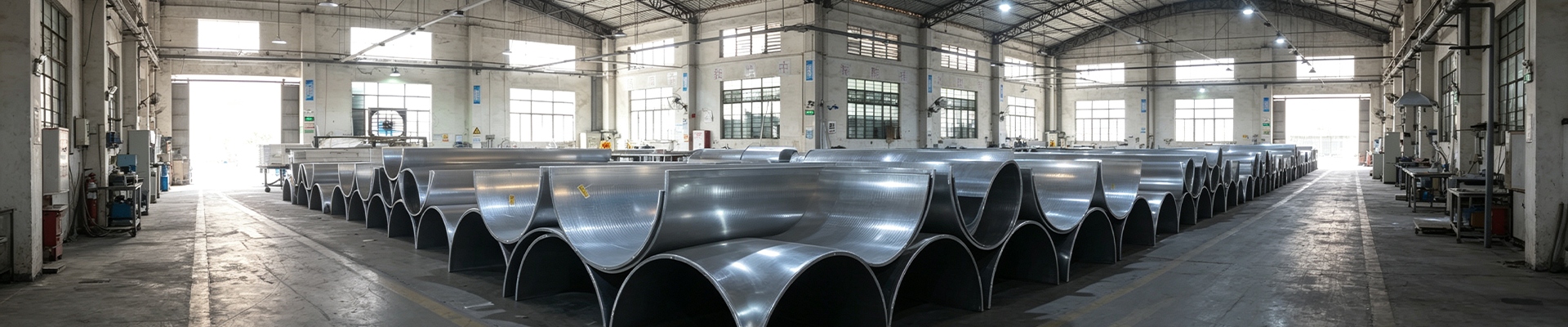
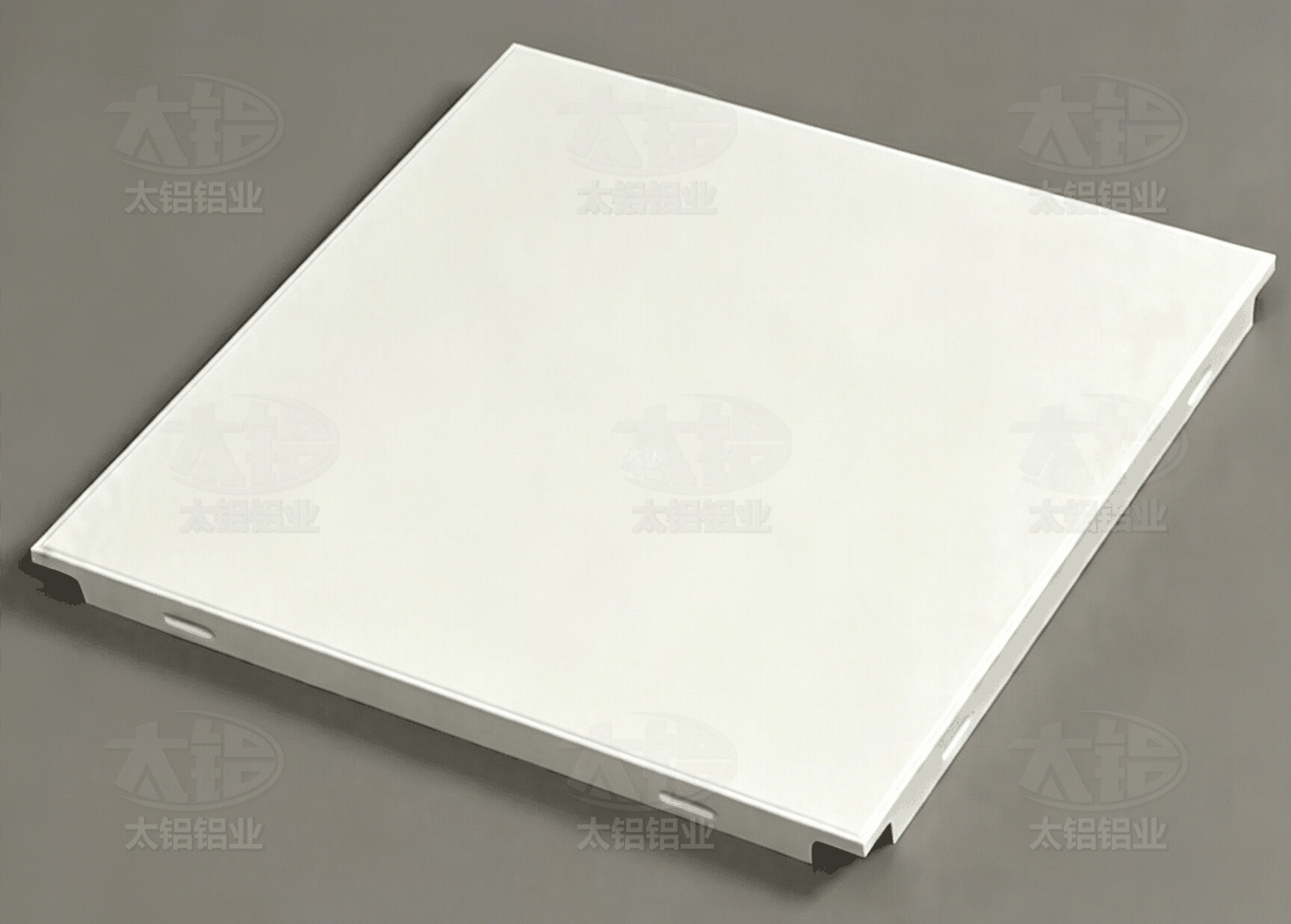
They are square aluminum alloy ceiling panels adopting a snap‑in concealed keel system. Named for fully hidden keels behind panels with no exposed framing after installation.
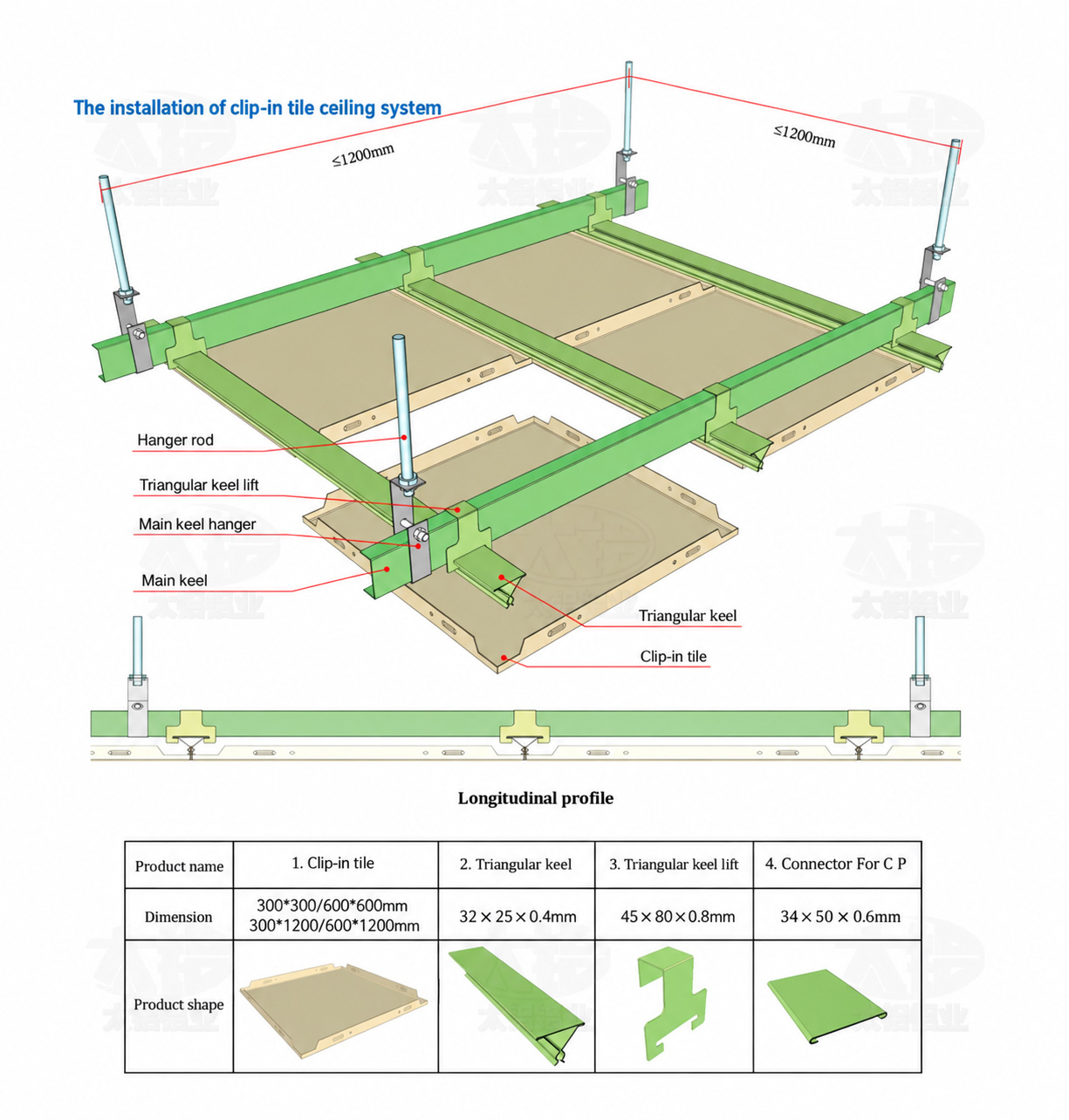
Fabricated from 3003 aluminum‑manganese alloy substrate via stamping and surface coating. The folded panel edges are clamped by triangle cross keels for fixation. The finished ceiling surface is smooth and continuous with narrow seams. Combining the reliable performance of metal ceilings and minimalist aesthetic, it is a widely adopted ceiling solution for commercial offices, public buildings and high‑end residential projects in Guangzhou and South China.
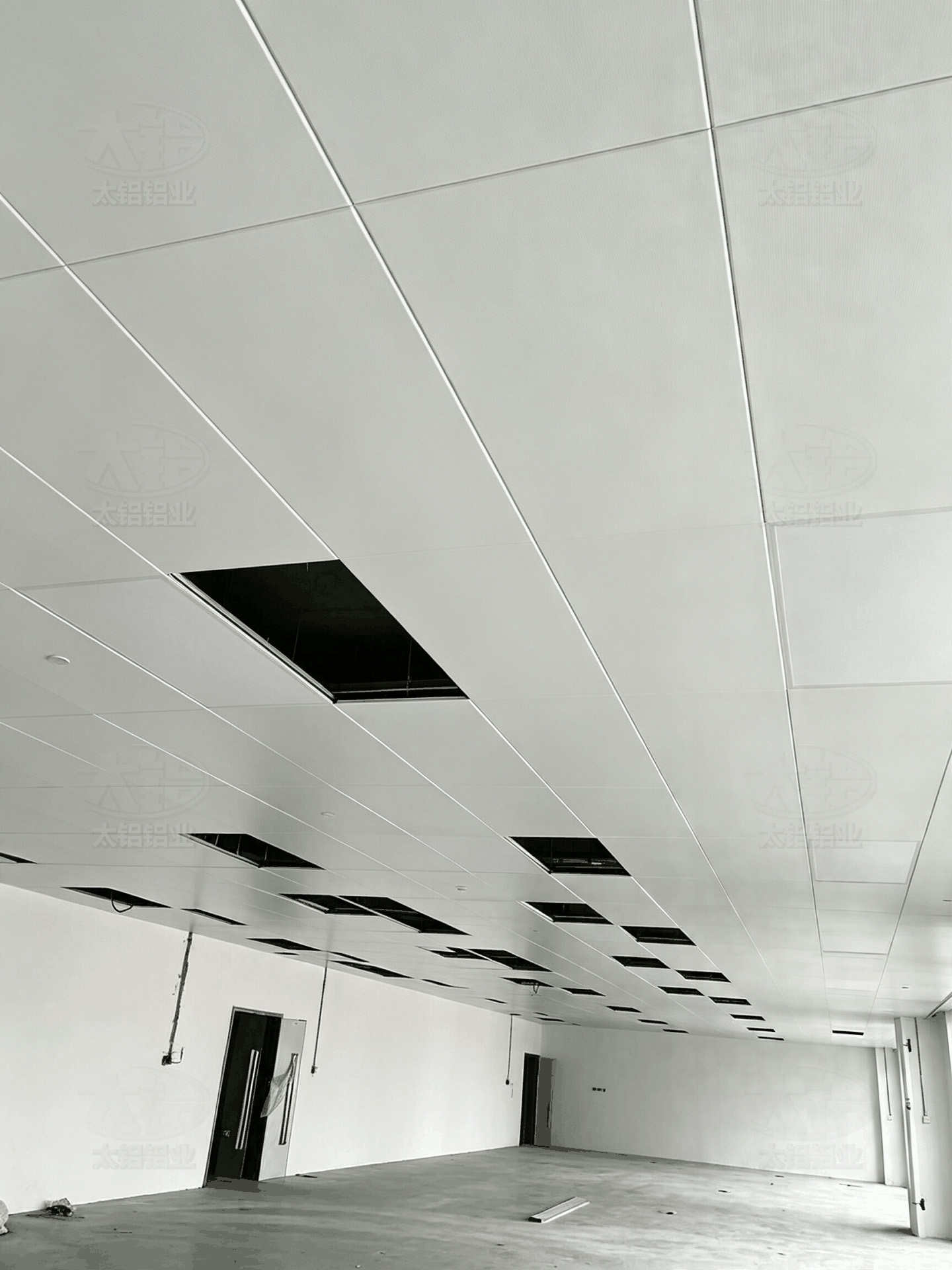
As an upgraded ceiling alternative to mineral wool boards and gypsum boards, concealed square aluminum panels retain the merits of modular ceilings — easy disassembly and convenient access for pipeline maintenance — while delivering a seamless flat visual effect comparable to monolithic ceilings. Available in flat, perforated, acoustic and other panel styles, they satisfy functional and design requirements for diverse spaces.
Core Features of Concealed Square Aluminum Panels
- Concealed keel structure, smooth and attractive ceiling surface Keels are fully hidden behind the panels. Only fine joint lines are visible after installation, creating a continuous, even ceiling surface with strong visual integrity. It delivers a clean, elegant flat‑ceiling look compatible with all modern interior styles.
- Secure snap‑in connection, safe and reliable structure Bent panel edges are equipped with dedicated notches that lock tightly onto triangle cross keels. Force is distributed evenly to prevent loosening. Together with the standardized suspender‑and‑keel system, it provides stable load‑bearing capacity with no risk of falling under normal service conditions.
- Individually detachable panels for easy inspection and maintenance Each panel can be lifted separately using a special suction cup without damaging surrounding ceiling sections. It facilitates later‑stage inspection and replacement of overhead pipelines, electrical fittings and fire‑safety equipment, lowering overall maintenance costs.
- Stable substrate performance for complex environments The aluminum alloy substrate is waterproof, moisture‑proof, corrosion‑resistant, rust‑proof, mildew‑free and dimensionally stable. It achieves Class A non‑combustible fire rating, suitable for offices, shopping malls, equipment rooms, kitchens, bathrooms and other spaces, and meets fire‑inspection standards.
- Diverse sizes & finishes, flexible for various applications A wide range of standard and custom dimensions are offered. Flat, perforated and acoustic panel options with multiple surface treatments are available to meet different requirements for decoration, sound absorption, ventilation and other functions.
FAQ
Q1. What is the core difference between concealed‑mount and exposed‑mount square panels?
A1.The main distinction lies in whether the keels are visible and the resulting visual effect.
Appearance: Concealed‑mount panels have fully hidden keels, delivering a smooth ceiling with fine narrow seams and strong visual integrity. Exposed‑mount panels feature visible T‑bar keels that form a grid pattern, giving an obvious industrial aesthetic.
Installation: Concealed panels adopt snap‑in interlocking and demand higher installation precision. Exposed panels rest on the T‑grid, simpler to install and easier to take apart.
Application scenarios: Concealed panels are preferred for offices, commercial spaces and residential interiors seeking clean, seamless flat ceilings. Exposed panels suit equipment rooms and factories requiring frequent inspections where ultra‑flatness is less critical.
Q2. What are the standard sizes of concealed square panels? Which size is recommended for commercial projects?
A2.300×300 mm and 300×600 mm are common for residential projects, perfectly matching integrated ceiling appliance modules. 600×600 mm is the mainstream commercial specification. For large open areas, 600×1200 mm long panels boost construction efficiency and visual continuity. Non‑standard sizes such as 400×400 mm and 500×500 mm can be custom‑made for special designs. Selection guideline: Smaller sizes for compact rooms; larger sizes for vast spaces. Choose 300‑modulus panels if embedded appliances will be fitted.
Q3. What is the installation sequence for concealed ceilings? Is installation difficult?
A3.Standard workflow: Mark layout lines → Install suspender rods and main keels → Fit triangle cross keels and level them → Snap concealed panels one by one → Mount edge trims and fine‑tune flatness. It is modular dry construction, easy for skilled professional crews. However, tighter tolerances for keel levelling and seam uniformity are required compared with exposed T‑grid ceilings. DIY installation is feasible for small residential areas if you have relevant experience. Professional contractors are recommended for large commercial projects to guarantee overall flatness.
Q4. Can recessed electrical and fire‑safety fixtures be fitted onto concealed square panels?
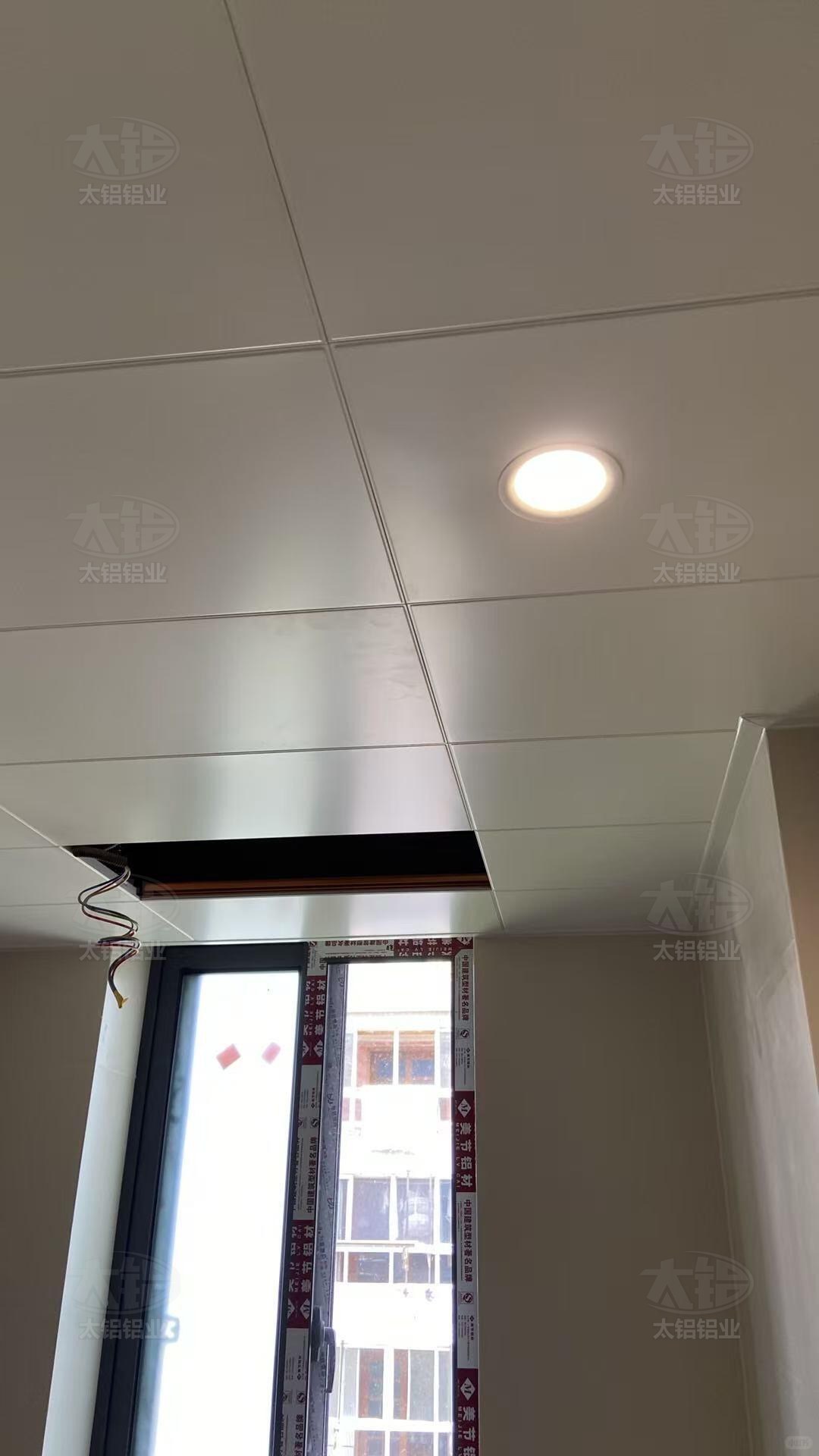
A4.Yes. Residential: 300‑modulus panels directly accept matching‑size flat panel lights, bathroom heaters and exhaust fans via simple snap‑in mounting. Commercial: Cutouts can be fabricated on‑site for downlights, sprinklers, smoke detectors, air diffusers, etc. Apply anti‑rust treatment to cut edges afterwards. Confirm fixture dimensions in advance for accurate cutting.
Q5. How to guarantee flatness of concealed ceilings? Will panel edges warp?
A5.Proper material selection and standard construction effectively prevent warping and uneven surfaces.
Material selection: For commercial works, choose panels ≥0.8 mm thick. Use thicker gauges for extra‑large formats to ensure panel rigidity.
Construction: Keep triangle cross keel spacing within specified limits, fully level main keels, and ensure panel notches are fully engaged into keel slots.
Inspection: Use a straightedge to check flatness after completion. Acceptable quality features evenly aligned seams without noticeable height differences.
Q6. Where can concealed square panels be used? Are they suitable for kitchens and bathrooms?
A6.Wide range of applications: Commercial & office: Office towers, meeting rooms, shopping malls, hotels, exhibition halls Public buildings: Hospitals, schools, metro stations, airports, factories Residential: Kitchens, bathrooms, balconies, entryways, full‑house flat ceilings
They work perfectly in kitchens and bathrooms. The aluminum alloy substrate is waterproof, moisture‑proof and rust‑free, while coated surfaces resist grease and wipe clean easily, outperforming gypsum and mineral wool boards for humid, greasy environments.
Q7. What advantages do concealed square panels have compared with gypsum board flat ceilings?
A7.Key benefits cover performance and long‑term maintenance:
Performance: Concealed panels achieve Class A non‑combustible rating, waterproof and mildew‑resistant, stable even in humid spaces. Gypsum boards are water‑sensitive and prone to peeling and mould in damp conditions.
Maintenance: Individual panels can be removed for pipeline access; damaged panels can be replaced separately. Gypsum board repairs require cutting and patching, leaving obvious visible marks.
Construction lead time: Pre‑fabricated modular aluminum panels enable fast installation and immediate occupancy. Gypsum boards need puttying and painting, with longer schedules and formaldehyde outgassing periods.
Q8. What is the approximate cost of concealed square aluminum panels per square meter?
A8.Prices vary by dimension, thickness, surface finish and accessory grade.
- Residential 300×300 mm standard roller‑coated panels (keels, fittings & installation included): CNY 100–180 /㎡
- Commercial 600×600 mm powder‑coated flat panels (keels & installation included): CNY 90–160 /㎡
- Perforated acoustic panels plus matching acoustic wool: CNY 150–220 /㎡
- Fluorocarbon finishes, custom sizes and special shapes cost more; quotation available upon request.
Q9. Is later‑stage disassembly for maintenance convenient for concealed ceilings? Will panels get damaged?
A9.Very convenient. Proper disassembly leaves no damage. Use a dedicated vacuum suction cup to grip the panel surface, pull down gently to release the single panel. After maintenance, push it back upward until the clip locks into place. No surrounding panels need removal, and no disassembly marks remain. Do not pry panels with screwdrivers or other hard tools, which may scratch surfaces or break folded notches.
Q10. What service life can concealed square panels deliver? How to clean them routinely?
A10. Under normal indoor conditions, premium concealed square panels last 10–15 years. Fluorocarbon‑coated versions offer even longer lifespans. Routine cleaning is simple: Remove dust with a dry cloth or feather duster. For greasy stains, dilute neutral detergent with water, wipe with a soft cloth, then rinse with clean water. Avoid steel wool, strong acid or alkaline cleaners, which scratch or corrode the coating.