Curved Aluminum Veneer
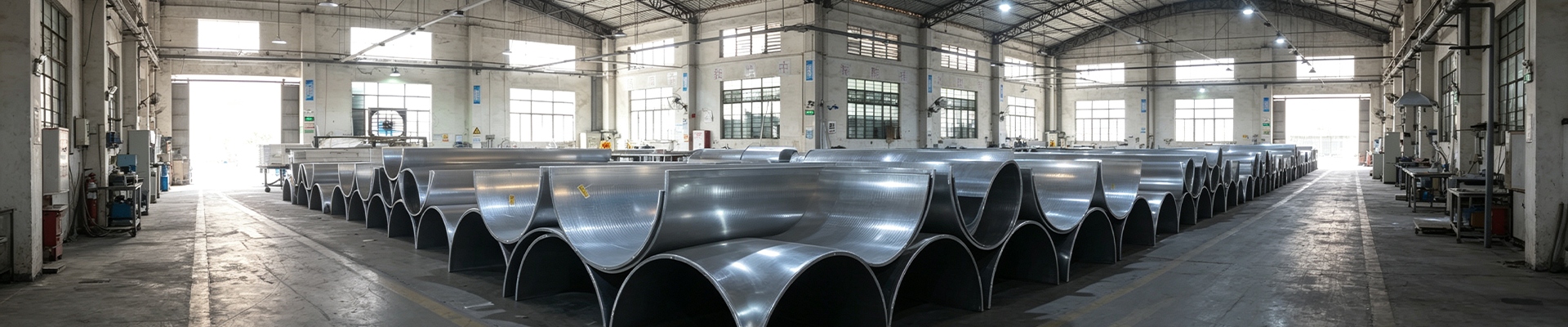
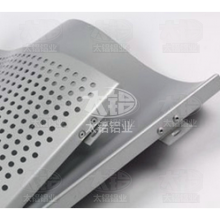
Curved aluminum veneer is made of high-grade aluminum alloy sheets. Flat panels are processed into metal decorative products with continuous curved radii via CNC roll bending, mould pressing, bending, welding, polishing and other processes, and finished by surface spraying.
While retaining the inherent advantages of aluminum veneers such as light weight, high strength, weather resistance, durability and flexible fabrication, the product breaks the visual constraints of conventional flat panels with smooth curved profiles. It can perfectly clad special-shaped building components including cylinders, domes, curved curtain walls and streamlined ceilings, serving as a core material for modern architecture to achieve "curved aesthetics + metallic texture".
According to different surface geometries, curved aluminum veneers are mainly divided into two categories: single-curved panels (curved only in one direction, e.g. cylindrical surfaces, curved walls) and double-curved panels (curved in two directions, e.g. spherical, saddle and twisted surfaces). Single-curved panels feature mature technology and controllable costs. Double-curved panels involve complex manufacturing and higher prices, yet can realize arbitrarily complex curved shapes. Together they form a complete product range covering standard curved surfaces to free-form surfaces.
| Category |
Curvature Features |
Manufacturing Process |
Core Advantages |
Typical Applications |
| Single-Curved Panel (Inner Arc / Outer Arc) |
Bent in only one direction; fixed or variable curvature radius |
CNC roll bending, bending |
Mature technology, low cost, good flatness & fast delivery |
Column cladding, curved curtain walls, curved ceilings, arched corridors |
| Single-Curved Panel (Variable Curvature) |
Gradually changing curvature radius along one direction (e.g. conical surface, olive shape) |
Segmented roll bending + mould calibration |
Smooth profile, capable of cladding columns with special-shaped cross-sections |
Irregular column cladding, conical tower caps, streamlined facades |
| Double-Curved Panel (Spherical / Ellipsoidal Surface) |
Curved in two directions, convex or concave shape |
Mould pressing, hydroforming |
Full & plump shape, achieves spherical / dome effects |
Domes, spherical buildings, artistic feature walls |
| Double-Curved Panel (Twisted / Saddle Surface) |
Opposite curvature directions on two axes, twisted geometry |
Multi-point mould pressing, 3D stretching |
Unique shape with strong visual impact |
Landmark building facades, artistic installations, irregular ceilings |
| Semicircular / Full-circle Column Cladding Panel |
Arc angle 90°–360°, for wrapping cylindrical columns |
Roll bending + welding / angle bracket splicing |
Tight wrapping, fewer seams, excellent integrity |
Lobby column cladding, porch columns, pier column decoration for bridges |
Structural & Installation Schematic
The curved aluminum veneer system adopts a dry-hanging installation structure, consisting of embedded parts, galvanized angle steel / square steel framework (curved keels custom-bent according to the arc radius), aluminum alloy subframes, curved veneer units and sealing gaskets. The four edges of panels are formed by CNC bending and fitted with dedicated angle brackets. During installation, angle brackets are fixed to the subframes of curved framework. Panels can be installed with reserved joints or tight joints. Backer rods are inserted into gaps and filled with weather-resistant sealant.
Key Installation Notes for Curved Panels
- Keels must be bent synchronously according to panel arc radius to ensure close fitting between framework and panel surface.
- Double-curved and twisted panels shall be pre-assembled and numbered in factory, and installed on site strictly following the sequence number.
- Column cladding panels are generally fabricated in upper & lower segments and spliced left and right. Tongue-and-groove joints or decorative trims are arranged at seams.
- Multi-person coordination is required for installation of panels with large curvature to avoid panel deformation caused by single-point stress.
Core Features
Smooth Curved Surface & Strong Styling Expression Curved aluminum veneer replaces rigid broken lines with continuous curved surfaces, perfectly interpreting the streamlined design language of buildings. Whether it is soft inner arc, plump spherical surface or dynamic twisted surface, it can accurately restore the design intent. Multiple curved panels can be assembled to form an integrated continuous curved curtain wall or dome. The visual effect is magnificent and smooth, greatly enhancing the artistic sense and recognition of the building.
High Customization Degree, Compatible with Any Curved Surface With 3D modeling, CNC unfolding and precision moulds, any complex curved surface can be converted into manufacturable single-curved or double-curved unit panels. Curvature radius can be flexibly customized from hundreds of millimeters to tens of meters. Special forms such as variable curvature, gradual shape and twisted surface are supported, satisfying full-scenario demands ranging from standard column cladding to free-form surfaces of landmark buildings.
Lightweight & High Strength, Low Structural Load It adopts anti-rust aluminum alloys such as 3003 and 5005. The curved structure itself features good mechanical self-stability. Its areal density is only 3–8 kg/㎡, far lower than traditional curved decorative materials such as stone and ceramic panels. It significantly reduces the structural load of buildings and consumption of keels, and delivers excellent seismic performance, especially suitable for large-span, high-rise and special-shaped structures.
Weather-resistant & Anti-corrosive, Long Service Life Optional professional coatings including PVDF coating, polyester coating and powder coating. PVDF coating can resist UV, acid rain and salt spray erosion, with color retention of 15–20 years. Aluminum alloy substrate is rust-proof, mildew-free and formaldehyde-free. Its normal outdoor service life can reach 20–30 years.
Tight Joints & Excellent Integrity Curved panels are precisely processed in factory with curvature error controlled within ±1mm/m. Panel joints are uniform and curved surfaces are smooth after on-site assembly. Full-circle tight splicing can be realized for column cladding panels. Matching color sealant or decorative trims are applied on seams, forming complete and unified decorative surfaces without obvious splicing traces.
Diverse Surface Finishes for Multiple Styles Surface treatments include solid-color PVDF / polyester coating, wood grain thermal transfer, stone grain film lamination, wire drawing, anodizing, mirror finish and other effects. It can be mixed and matched with flat aluminum veneers, glass, stone and other materials, adapting to various architectural styles such as modern, minimalist, European and natural styles.
Application Fields
Thanks to its unique capability to form curved surfaces, curved aluminum veneer is widely used in various architectural scenarios requiring special-shaped decoration:
Column Cladding: Cylinders, rounded square columns and irregular columns in hotel lobbies, shopping malls, office buildings and metro stations. Curved Curtain Walls: Curved facades and corner curved surfaces of commercial complexes, cultural venues and airport terminals. Dome / Spherical Surfaces: Spherical and ellipsoidal decorations for spherical buildings, dome halls, planetariums and exhibition halls. Curved Ceilings: Streamlined and arched ceilings in airports, high-speed railway stations, convention & exhibition centers and theatres. Special-shaped Walls: Curved and twisted walls in art galleries, brand flagship stores and theme parks. Porch / Canopy: Curved canopies at building entrances, arched porches and curved surfaces of connecting corridors. Landscape / Bridges: Urban furniture, bridge pier cladding, art installations and curved surfaces of pergolas.
FAQ
Q1: What is the difference between single-curved and double-curved panels? How to choose? A: Single-curved panels bend in only one direction (e.g. cylindrical surfaces). Featuring simple workmanship and lower cost, they are the most commonly used curved panels. Double-curved panels have curvature in two directions (e.g. spherical or saddle surfaces). They require mould forming with complex processes and higher costs. Selection guidance: Single-curved panels are sufficient for column cladding, ordinary curved walls and arched ceilings. Double-curved panels are mandatory for complex shapes such as domes, spherical surfaces and twisted surfaces. Where single-curved panels can meet requirements, avoid double-curved panels to cut costs significantly.
Q2: What is the minimum curvature radius of curved aluminum veneer? A: The theoretical minimum radius for single-curved panels is about 300 mm. Restricted by sheet thickness and processing equipment in actual production, the commonly used minimum radius is 500 mm. Too small a radius may cause wrinkling and coating cracking on the panel. The minimum radius of double-curved panels is generally ≥500 mm, subject to surface geometry and mould evaluation. It is recommended to communicate curvature feasibility with manufacturers at the design stage to avoid unworkable designs.
Q3: How many times more expensive are curved panels compared with ordinary flat aluminum veneers? A: Single-curved panels usually cost 1.5–2.5 times that of ordinary flat panels, depending on curvature radius and arc angle. Double-curved panels require mould opening, costing 3–8 times the price of flat panels; prices are even higher for complex twisted surfaces. Besides, unit price rises with smaller order quantity due to mould amortization. Mass production can greatly reduce unit cost. It is advised to request quotations in the project budgeting phase.
Q4: Will creases or wrinkles appear on curved panels? A: Qualified manufacturers adopt CNC roll bending or mould pressing processes, delivering uniform curvature and smooth transition without obvious creases. However, slight wrinkling or orange peel defects may occur if the curvature radius is too small, the sheet is too thick or processing techniques are improper. Choosing an experienced original factory and reasonably designing the curvature radius is the key to avoiding such problems.
Q5: Can curved aluminum veneer be made with wood grain or stone grain finishes? A: Yes. Surface treatment processes such as wood grain thermal transfer and stone grain film lamination are also applicable to curved panels. Please note: the uniformity of transfer printing/film lamination on curved surfaces is slightly inferior to flat panels. Texture stretching or color difference may occur on panels with large curvature. Sampling for effect confirmation before mass production is recommended.
Q6: Is curved panel installation difficult? What points need attention? A: Curved panels are harder to install than ordinary flat panels. Key points: ① Keels must be bent synchronously according to the arc to ensure close contact with panels. ② Double-curved and twisted panels shall be pre-assembled and numbered in factory, then installed on site following the serial numbers. ③ Reinforcing ribs shall be welded for large panels to prevent deformation during transportation and installation. ④ Professional teams with experience in special-shaped curtain wall construction are recommended for installation, to guarantee smooth curved surfaces and uniform panel joints.
Q7: How to guarantee the flatness of curved panels? A: The "flatness" of curved panels refers to curvature accuracy and surface smoothness instead of planar flatness. Qualified manufacturers use 3D modeling, CNC unfolding, precision moulds and pre-assembly before delivery to control curvature error within ±1–2 mm/m. Reinforcing ribs shall be welded on the back of large panels to avoid deformation. Accurate keel arc during installation is critical to final performance.
Q8: What is the service life of curved aluminum veneer? A: The aluminum alloy substrate itself is corrosion-resistant. With PVDF coating, it can serve 20–30 years for outdoor use under normal conditions. Polyester coating lasts roughly 10–15 years outdoors and 15–20 years indoors. Since sheets undergo bending deformation during fabrication, coating adhesion needs strict control. Reputable manufacturers carry out coating repair and inspection after processing to ensure the service life matches that of flat panels.