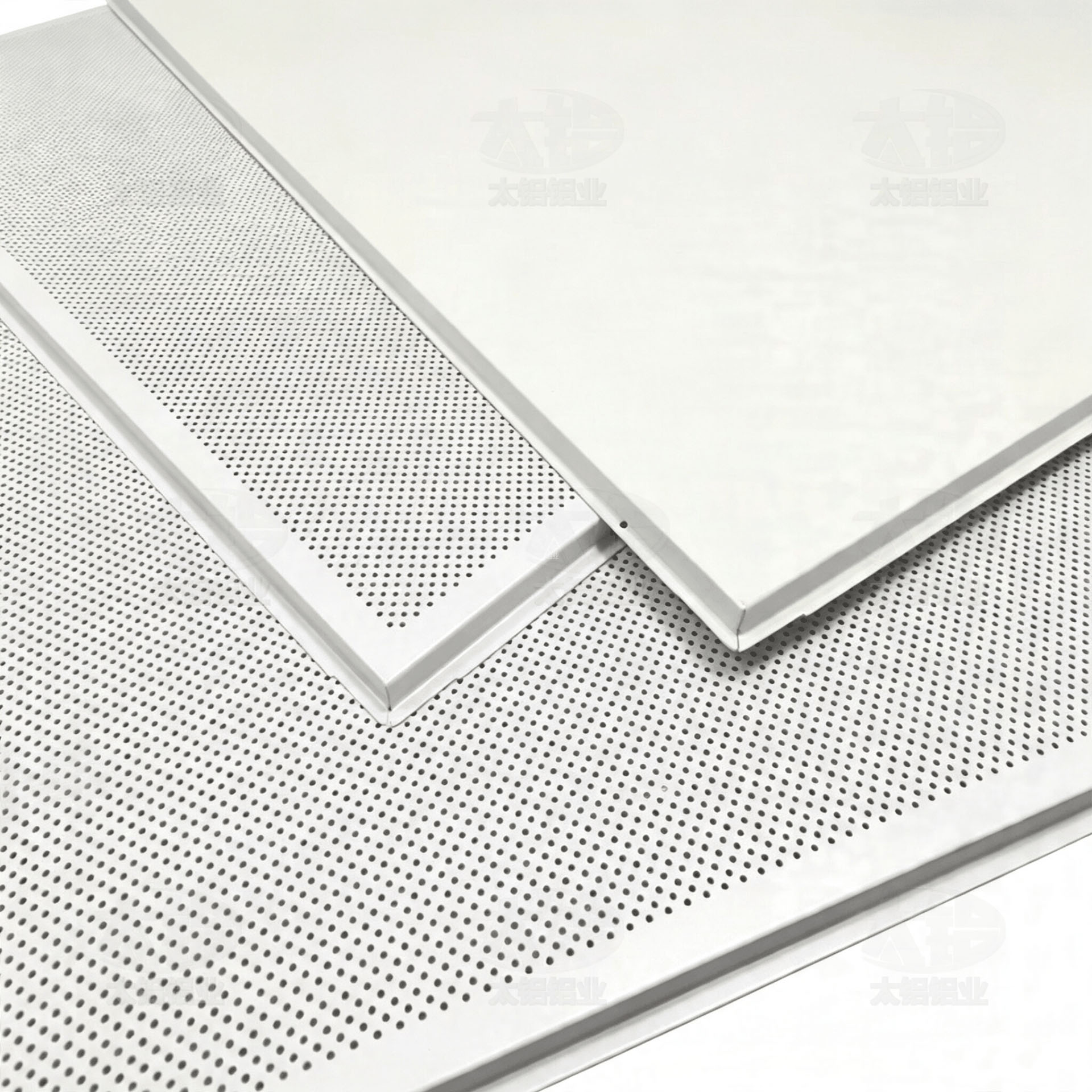
Exposed-grid aluminum ceiling panels (also known as exposed-mounted aluminum square panels, stepped exposed-grid aluminum ceilings) are square aluminum alloy ceiling boards adopting a T-type exposed keel system. The panels are designed with stepped folded edges and fixed by resting directly on keel flanges. They are named for the visible exposed keel lines after installation.
Made of 3003 aluminum-manganese alloy as base material, the panels are stamped and finished with surface coating. They combine the standardized advantages of modular ceiling systems with extremely convenient maintainability. As a mainstream ceiling solution for machine rooms, factories, office spaces and other ares requiring frequent maintenance, they are widely used in various industrial and commercial buildings in Guangzhou and South China.
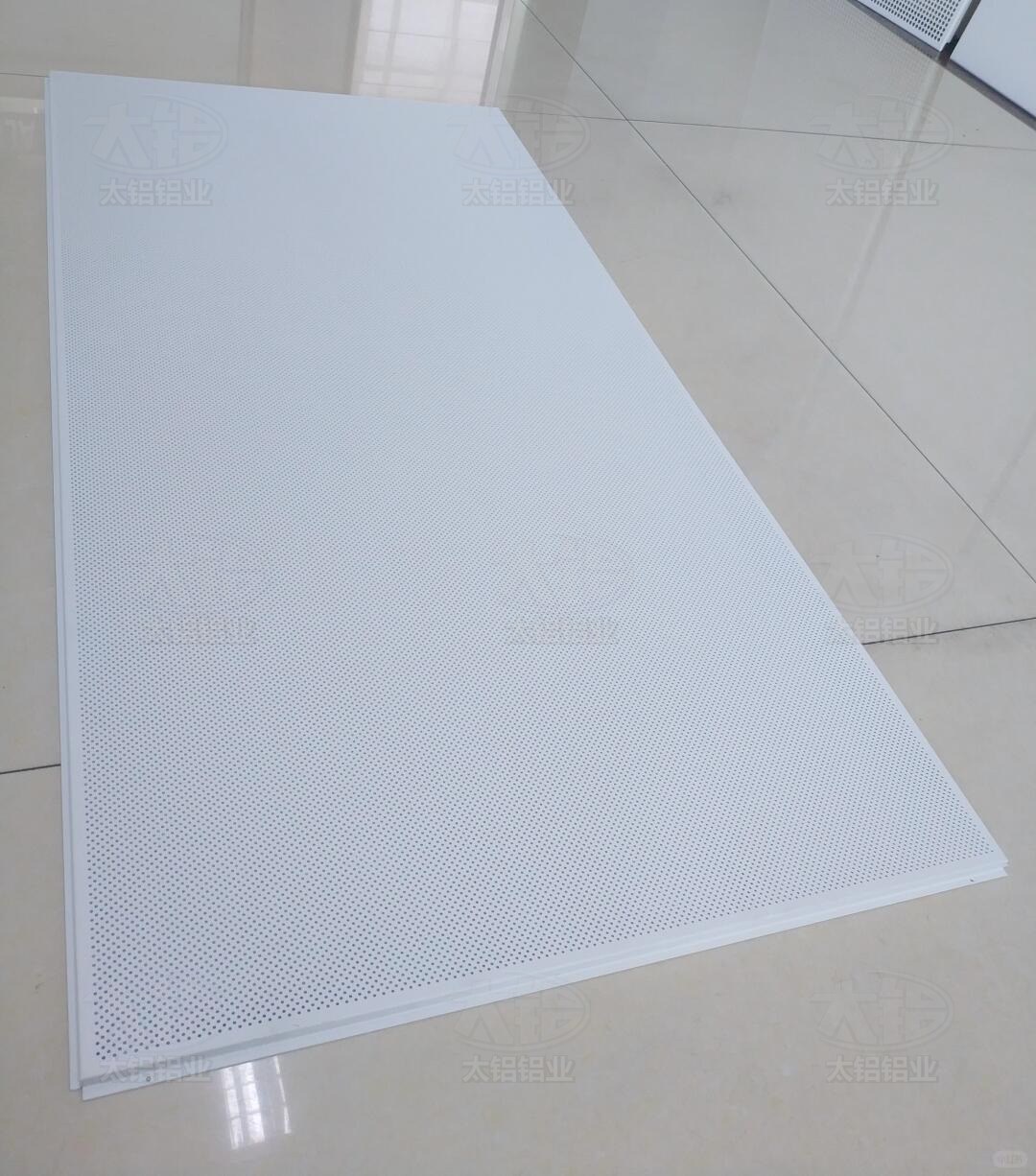
Compared with concealed-grid ceilings, exposed-grid aluminum ceiling panels feature simpler installation procedures and higher construction efficiency. Individual panels can be lifted and removed directly without special tools, which makes them ideal for functional spaces with dense pipelines and frequent equipment inspection. Multiple panel styles including plain and perforated acoustic types are available to meet decorative and functional requirements of different application scenarios.
Core Features of Exposed-Grid Aluminum Ceiling Panels
- Lay-in Exposed Structure, Extremely Convenient for Installation, Removal and Maintenance Panels are laid directly on T-bar keels without clip fasteners. A single panel can be taken out by gently lifting it upwards. No special tools are needed, and the surrounding ceiling will not be damaged. It is particularly suitable for machine rooms, equipment rooms and other areas with dense pipelines and frequent equipment maintenance.
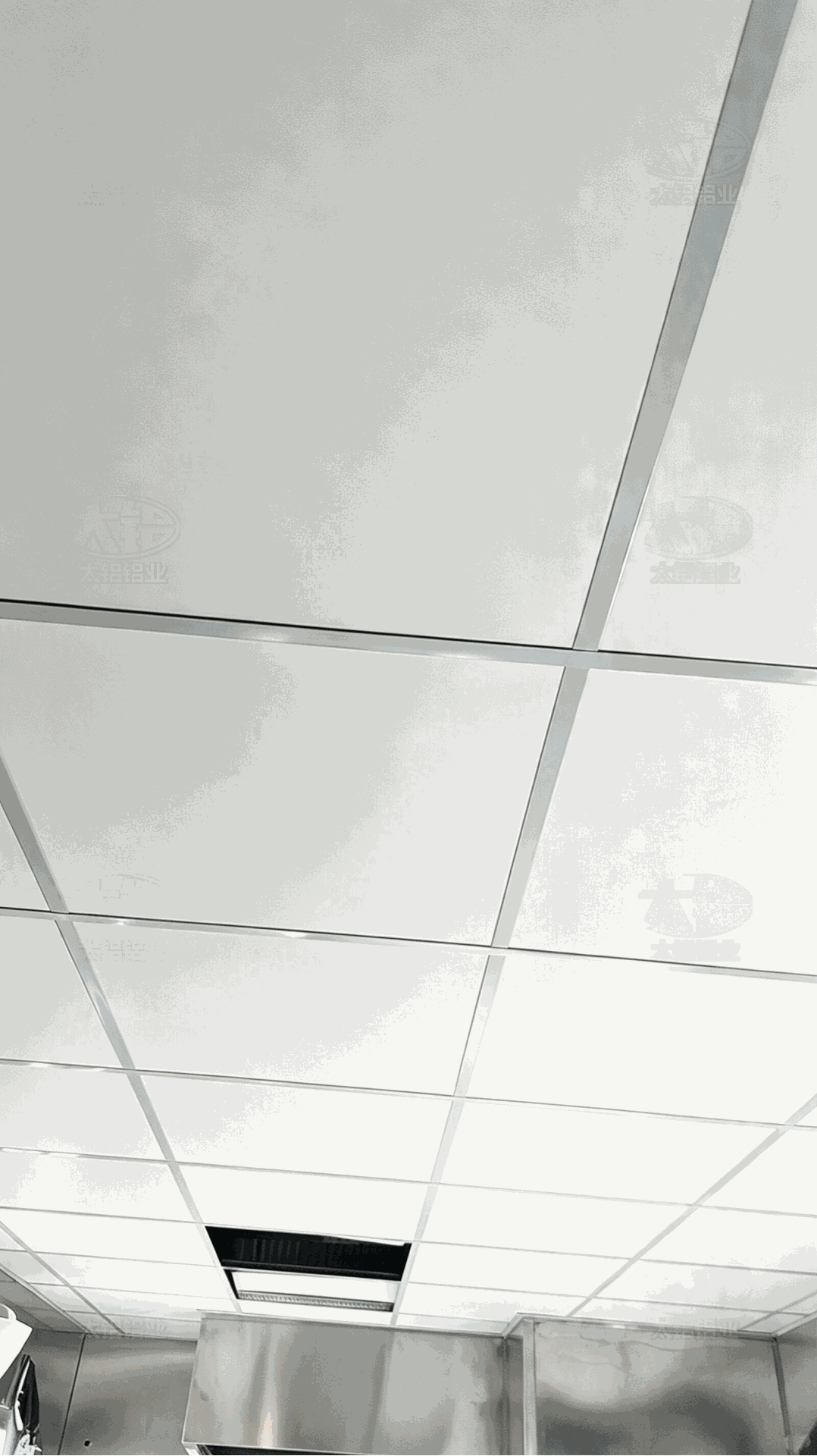
- Exposed T-bar Keels, Three-dimensional Grid Visual Effect Clearly exposed keel lines form neat square grids. Keels available in white, black and other colors can create industrial, minimalist and other visual styles. The finished ceiling surface looks tidy and elegant with strong stereoscopic perception, suitable for large-scale public spaces.
- Modular & Standardized Construction, High Efficiency and Low Cost The keel system adopts universal standard components. Simple installation steps reduce technical requirements for workers, delivering remarkably higher construction efficiency than concealed-grid ceilings. Good interchangeability between panels and keels brings low replacement cost in later use and better overall project economy.
- Stable Aluminum Alloy Substrate, Fireproof, Moisture-proof and Long-lasting The aluminum alloy base material features Class A non-combustibility, waterproof, moisture-proof, anti-corrosion and rust-resistant properties. It resists mildew and deformation, adapting to harsh environments with humidity, dust and high temperature, and meets fire acceptance requirements of various public spaces.
- Diversified Panel Functions, Flexible Scenario Adaptation Available in plain, perforated and acoustic panel types. Compatible with keels of different thicknesses and colors, it is widely used in offices, machine rooms, factories, corridors, supermarkets, hospitals and other locations, balancing decorative and functional performance.
Components of Exposed-Grid Aluminum Ceiling Installation System
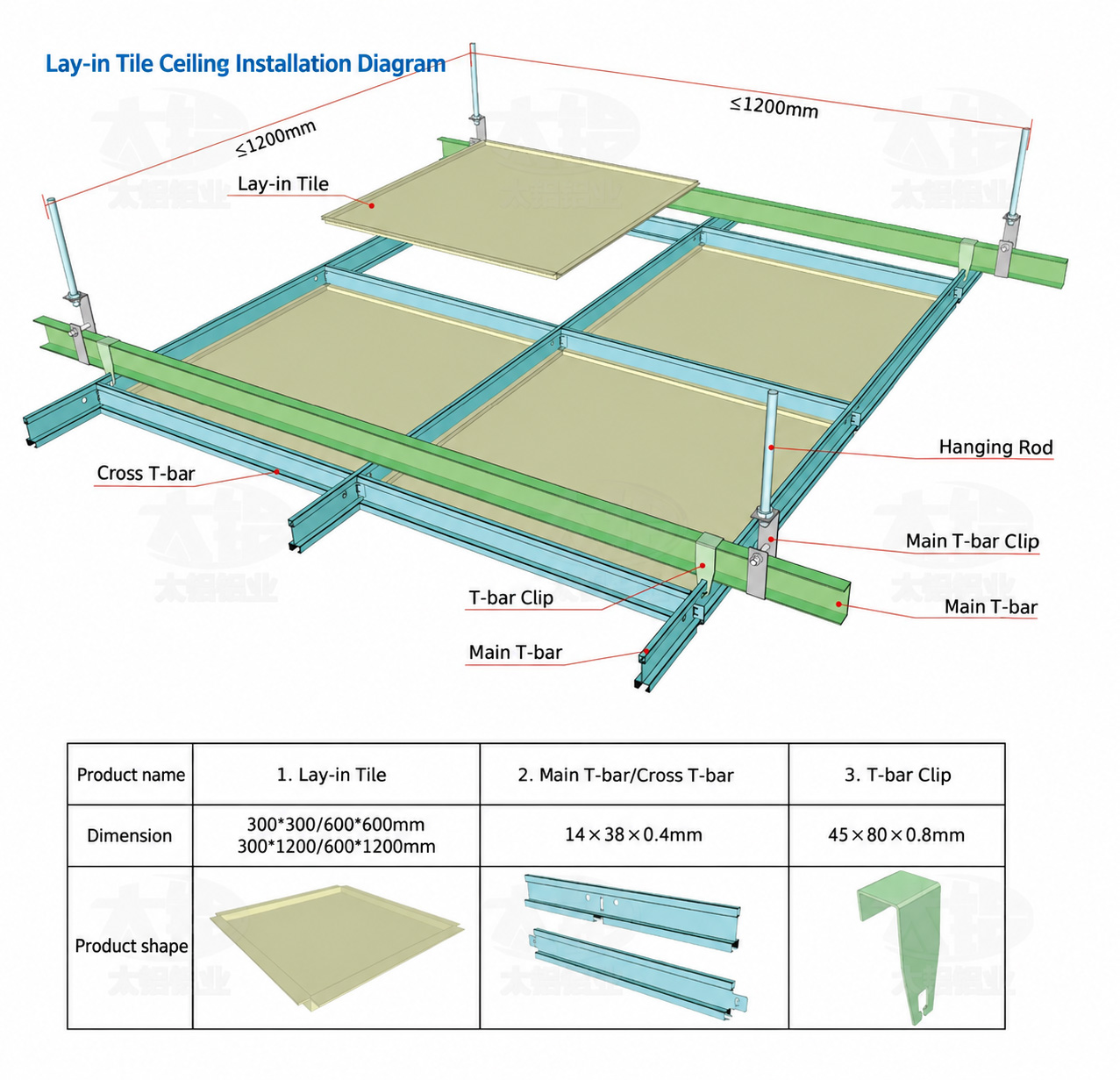
A standard exposed-grid ceiling system consists of five parts: hanger rods, light steel main keels, painted T-type secondary keels, exposed-grid aluminum ceiling panels and perimeter trim. Acoustic materials such as acoustic wool and non-woven fabric can be optionally configured as required.
During installation, build the grid of main keels and T-type secondary keels first, then place aluminum panels one by one into the grid cells. No additional clip fasteners are needed for fixing. T-bar keels are available in white, black, silver and other colors to match various design styles.
Application Scenarios of Exposed-Grid Aluminum Ceiling Panels
Functional Spaces: Computer rooms, power distribution rooms, equipment rooms, factories, warehouses Commercial & Office Spaces: Offices, shopping mall corridors, supermarkets, exhibition halls, office buildings Public Buildings: Hospitals, schools, metro stations, airports, underground parking lots, passage corridors.
FAQ for Exposed-Grid Aluminum Ceiling Panels
1. What are the core differences between exposed-grid and concealed-grid aluminum ceiling panels?
The main differences lie in whether keels are exposed and the convenience of disassembly and maintenance:
- Appearance: Exposed-grid panels feature visible T-bar keels, creating square grid patterns on the ceiling with strong three-dimensional effect. Concealed-grid panels have fully hidden keels with only fine seams visible and superior overall flatness.
- Installation: Exposed-grid panels adopt lay-in installation with simple procedures and high efficiency. Concealed-grid panels use clip-in interlocking structure and demand higher installation precision.
- Maintenance: Exposed-grid panels can be lifted and removed by bare hands for easy inspection. Concealed-grid panels require a dedicated suction cup for removal and suit spaces with low maintenance frequency.
- Application scenarios: Exposed-grid panels are ideal for machine rooms, factories and other spaces requiring frequent maintenance. Concealed-grid panels are used for offices, commercial and residential spaces pursuing neat and smooth appearance.
2. What are the common specifications of exposed-grid aluminum ceiling panels? How to select sizes?
Mainstream engineering sizes are 595×595mm and 603×603mm, compatible with standard 600-module T-bar keels. 600×1200mm long panels can be adopted for large spaces to boost construction efficiency and visual extension. Non-standard custom sizes are available for special projects. Selection guide: Choose standard 595×595mm panels for small spaces with frequent maintenance. Select 600×1200mm long panels for large open areas to reduce seams.
3. What is the installation process of exposed-grid ceiling? Is construction difficult?
Standard installation steps: Mark positioning lines → Install hanger rods and light steel main keels → Mount and level T-type secondary keels to form grids → Lay exposed-grid aluminum panels one by one → Install perimeter trim and make fine adjustments. It belongs to standardized dry construction with low difficulty and easy operation. It requires less skilled workers than concealed-grid ceilings and shows obvious efficiency advantages in large-scale projects.
4. Will exposed-grid aluminum ceiling panels fall off? Can they be used in windy areas?
In normal indoor windless environments, panels rest on keels relying on self-weight, with sufficient stability and no spontaneous falling. However, it is not recommended for outdoor or semi-outdoor sites with direct strong wind. Continuous air impact may cause panel displacement or blow-off. For outdoor and air outlet locations, clip-in concealed-grid or interlocking ceiling systems are recommended.
5. Can exposed-grid ceilings adopt perforated acoustic panels? How is the acoustic performance?
Yes. Exposed-grid aluminum panels can be perforated, fitted with acoustic wool and non-woven fabric on the backside for noise reduction. The Noise Reduction Coefficient (NRC) can reach 0.4–0.8, meeting acoustic requirements of offices, meeting rooms, stadiums and other spaces. Thanks to the easy disassembly of exposed-grid structure, replacement and maintenance of acoustic wool are more convenient than that of concealed-grid ceilings.
6. What scenarios fit exposed-grid aluminum ceiling panels? Are they suitable for home decoration?
It is mainly used in engineering spaces such as machine rooms, factories, offices, corridors, hospitals and supermarkets, especially for projects with frequent maintenance and tight budget. Generally not recommended for residential use. The industrial look of exposed keels poorly matches home decoration styles. For small spaces like kitchens and bathrooms, concealed-grid aluminum ceiling panels are preferred for cleaner and neater visual effect.
7. Is exposed-grid ceiling convenient for maintenance? Will panel removal damage surrounding panels?
It is extremely convenient, which is the core advantage of exposed-grid ceilings. For maintenance, simply lift a single panel upward to take it out from the keel grid. No surrounding panels need to be removed, and no damage will be caused to panels or keels. Put it back after inspection; no loss or repair marks will be left.
8. What is the approximate cost of exposed-grid aluminum ceiling panels per square meter?
The price varies according to specification, thickness, surface finish and keel grade:
- Popular 600×600mm plain powder-coated panel for engineering (including keels & installation): approx. ¥80–150 /㎡
- Perforated acoustic panel with matching Class A acoustic wool: approx. ¥120–200 /㎡ Special options such as PVDF finish, thickened panels and custom sizes cost more and need separate quotation. Generally, its total cost is 10%–20% lower than concealed-grid aluminum ceiling panels of the same specification.
9. Are T-bar keels available in black, white and other colors? Can colors be customized?
Standard T-bar keels have three mainstream colors: white, black and silver, matching various interior styles. Custom keel colors and sizes are available for special design requirements. Black keels deliver strong grid definition, suitable for industrial and minimalist spaces. White keels create softer visual effect, blending with white panels for brighter overall look.
10. What is the service life of exposed-grid aluminum ceiling panels? How to clean and maintain daily?
In normal indoor environments, high-quality exposed-grid aluminum ceiling panels can serve 10–15 years; PVDF-finished versions have better weather resistance. Daily maintenance is simple: wipe surface dust with dry cloth or feather duster. For oil stains, dilute neutral detergent with water, wipe with soft cloth and clean with fresh water afterwards. Dust accumulated in keel gaps can be cleared with vacuum cleaner or soft brush, bringing ultra-low maintenance cost.
11. Can lamps, sprinklers and other equipment be installed on exposed-grid ceilings?
Yes. Lights, smoke detectors, sprinklers and other devices can be embedded directly into the keel grid as long as sizes match the panels. For non-standard sized equipment, cut and open holes on panels at corresponding positions. The edges will be supported by keels after installation without affecting overall structural stability.